A cooling tower biocide program is essential for controlling microbial growth, preventing biofilm formation, and reducing Legionella risk. Oxidizing biocides such as chlorine and bromine provide fast, broad-spectrum disinfection, while non-oxidizing biocides penetrate biofilms and target resistant organisms.
The most effective strategy combines both approaches through biocide rotation, controlled dosing, and residual monitoring. By balancing oxidizing and non-oxidizing treatments, operators maintain system hygiene, improve heat transfer efficiency, and ensure regulatory compliance in industrial cooling tower operations.
Why Biocide Programs Are Critical in Cooling Towers
Cooling towers are ideal environments for microbial growth. Warm water, abundant sunlight, and constant airflow introduce endless nutrients into the system. Without a proper cooling tower biocide program, bacteria multiply rapidly and cause catastrophic system failures.
Biofilm Formation and Its Impact
Microorganisms attach to surfaces, secreting a protective slime layer called biofilm. This biofilm significantly reduces heat transfer efficiency by trapping dirt and scale.
- Reduces Heat Transfer: Biofilm acts as an insulator, drastically lowering cooling efficiency.
- Traps Debris: The slime layer catches dirt and scale, further compromising the system.
- Impacts Entire Network: Efficiency loss is not isolated, affecting the whole cooling network.
Legionella Risk (Critical Section)
Cooling towers generate drift, which carries tiny water droplets into the surrounding atmosphere. This creates a severe airborne exposure risk if dangerous bacteria are present. Regulatory importance mandates strict monitoring and treatment. Biocide treatment is essential to minimize Legionella risk and protect public health.
Operational Impact
Unchecked microbial growth directly harms the physical equipment. Operators face severe fouling that blocks water flow. This leads to corrosion under deposits, which destroys expensive metal components.
Ultimately, the system experiences increased energy costs as it works harder to maintain target temperatures.
Understanding Oxidizing Biocides (Fast-Acting Control)
An oxidizing biocide provides the first line of defense in water treatment. These chemicals react quickly with organic matter. They are highly popular due to their low cost and fast action.
How Oxidizing Biocides Work
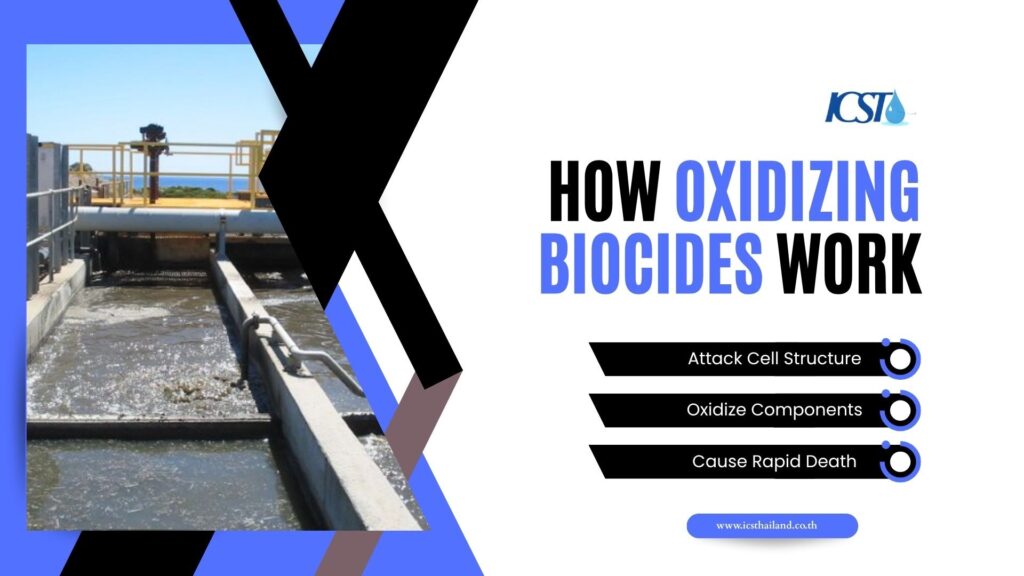
These chemicals attack the outer structure of microbial cells, destroying them through oxidation. This process rapidly kills microorganisms by oxidizing their cellular components, causing swift cell death.
How Oxidizing Biocides Work:
- Attack Cell Structure: They target and disrupt the outer walls of microbial cells.
- Oxidize Components: They destroy essential cellular components through oxidation.
- Cause Rapid Death: This leads to the quick elimination of harmful microorganisms.
Common Oxidizing Biocides
Several different chemicals fall into this category. Each offers specific benefits depending on the water chemistry. Operators select the best option based on local availability and system requirements.
- Chlorine: The most common and cost-effective choice, widely used for its proven effectiveness in various water treatment applications.
- Bromine: Ideal for systems with elevated pH levels, where it maintains higher efficacy than chlorine, making it a valuable alternative for specific water chemistries.
- Chlorine dioxide: Particularly effective at penetrating and destroying biofilms (slimes), making it a superior choice for systems where microbial growth is a persistent issue.
- Ozone: A highly powerful oxidizing agent generated on-site, providing rapid and potent disinfection without leaving behind chemical residuals.
Widely used due to effectiveness and cost efficiency, these chemicals form the foundation of most treatment plans.
Key Advantages
Facilities rely on these chemicals for immediate results. They offer a rapid kill rate against free-floating bacteria. They remain highly cost-effective for large-volume systems. They also provide continuous disinfection when properly dosed.
Limitations
Despite their benefits, these chemicals have significant weaknesses, particularly when dealing with stubborn contamination.
- Weak Against Biofilm: They struggle to break down biofilm, the slimy protective layer that allows bacteria to thrive on surfaces.
- Sensitive to Water Conditions: Their effectiveness plummets in water with high pH levels or a large amount of organic material, leaving the system at risk.
Understanding Non-Oxidizing Biocides
Non-oxidizing biocides function entirely differently from their oxidizing counterparts. They act like targeted medicine rather than a broad chemical burn. They require more time to work but offer exceptional longevity.
How Non-Oxidizing Biocides Work
Non-oxidizing biocides operate by disrupting the internal functions of microorganisms. Instead of immediate destruction, they work from the inside out to neutralize threats.
- Cell Penetration: These chemicals pass through the cell wall without causing immediate damage.
- Metabolic Disruption: Once inside, they interfere with essential life processes like metabolism and reproduction.
- Internal Neutralization: By disrupting these vital cellular functions, the biocide effectively neutralizes the bacteria from within.
Common Non-Oxidizing Biocides
Manufacturers offer several highly specialized compounds. Each targets specific types of biological threats. Facilities often rotate these chemicals to maximize their effectiveness.
- Glutaraldehyde (a fast-acting metabolic inhibitor)
- DBNPA (breaks down quickly to minimize environmental impact)
- Isothiazolinones (provide excellent long-term control)
- THPS (highly effective against sulfate-reducing bacteria)
Key Advantages
These specialized chemicals excel where traditional oxidizers fail. They successfully biofilm to reach hidden bacteria. They are highly effective against resistant bacteria. They also boast a longer residual life. They remain active longer in the system, providing extended protection.
Limitations
Operators must account for a few drawbacks when using these specialized chemicals. They carry a higher cost per dosage. They exhibit a slower action compared to oxidizers. They require a proper dosing strategy to prevent waste and ensure efficacy.
Oxidizing vs Non-Oxidizing Biocides
| Factor | Oxidizing Biocide | Non-Oxidizing Biocide |
| Action speed | Very fast | Moderate |
| Mechanism | Oxidation (cell destruction) | Metabolic disruption |
| Biofilm penetration | Limited | Strong |
| Residual effect | Short | Long |
| Cost | Low | Higher |
| Dosing method | Continuous / shock | Intermittent |
| Best use case | Bulk water disinfection | Resistant bacteria & biofilm |
The Best Practice: Combined Biocide Program Strategy
A comprehensive cooling tower biocide program combines the strengths of multiple chemicals. This synergistic approach eliminates the weaknesses of individual treatments. Industry experts uniformly recommend this advanced methodology.
Oxidizing + Non-Oxidizing Combination
Pairing these chemicals delivers maximum protection. The oxidizer handles the bulk water, while the non-oxidizer attacks the hidden threats. This creates broad-spectrum coverage. Industry standards recommend using both types together to ensure total system hygiene.
Biocide Rotation Strategy
Using multiple non-oxidizing chemicals prevents bacterial adaptation. Biocide rotation keeps the microbial population off balance. This strategy prevents resistance. It significantly improves effectiveness over time. Alternating biocides ensures consistent microbial control.
Continuous vs Shock Dosing
Different chemicals require different application methods to work properly. Oxidizers demand continuous dosing to maintain steady protection. Conversely, non-oxidizers require periodic shock dosing to overwhelm the biological mass.
Chlorine Residual Control
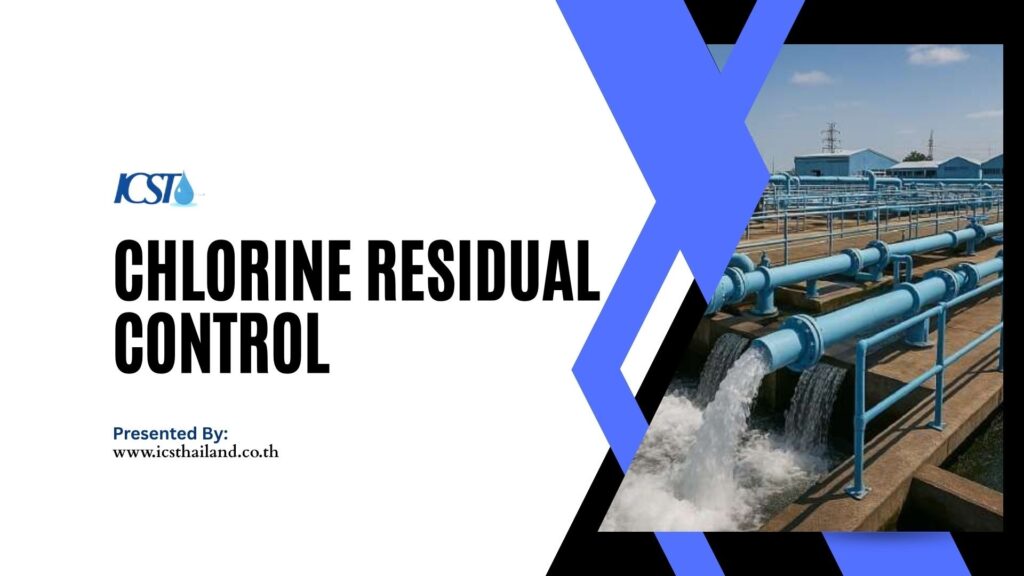
Maintaining the correct chemical concentration is a daily operational necessity. Chlorine residual acts as your primary indicator of system health. Without proper residual control, the system quickly falls out of compliance.
What Is Chlorine Residual?
When you add chlorine, some of it reacts instantly with contaminants. The remaining active disinfectant is your residual. This leftover chemical stands ready to kill new bacteria entering the system.
Why It Matters
Monitoring this specific metric guarantees ongoing safety. It ensures continuous protection against sudden biological spikes. It actively prevents regrowth during periods of heavy organic loading.
Typical Control Range
Operators must carefully balance the chemical levels. They must maintain safe residual levels to kill bacteria. Simultaneously, they must avoid overdosing, which causes rapid metal corrosion.
Legionella Control and Regulatory Compliance
Health authorities closely monitor industrial water systems. A proper cooling tower biocide program is your primary defense against legal and ethical liabilities.
Why Legionella Is a Major Risk
Legionnaires’ disease is a severe form of pneumonia. It represents a massive health hazard to the public and facility workers. Consequently, health departments enforce strict regulations on cooling tower operations.
Standards and Guidelines
Industry organizations provide exact frameworks for safe operation. Facilities must follow ASHRAE 188 guidelines strictly. They also rely on CTI recommendations to structure their maintenance programs.
How Biocide Programs Ensure Compliance
A robust biocide program is your first line of defense, ensuring your cooling tower operations meet all health and safety regulations. These programs are designed to prevent the growth of harmful bacteria like Legionella, safeguarding both public health and your facility’s reputation.
Here’s how a well-documented chemical program provides tangible proof of safe, compliant operation:
- Rigorous Monitoring: Continuously tracks chemical levels to ensure they remain within safe and effective ranges.
- Detailed Record-Keeping: Creates a comprehensive log of all treatments, tests, and maintenance activities, serving as verifiable proof of compliance.
- Regular Biological Testing: Verifies the efficacy of your biocide program by confirming that harmful bacteria are being controlled, keeping your facility in line with all health and safety standards.
Final Insight: Biocide Program = Performance + Safety System
An effective cooling tower biocide program is more than a microbial control measure; it’s a comprehensive strategy for maintaining system efficiency, ensuring safety, and preventing costly downtime. Facilities that adopt a data-driven treatment plan combining biocide rotation with strict chlorine residual management see significant improvements in both performance and long-term reliability.
By prioritizing advanced Legionella control, you not only protect your personnel but also safeguard your operational profits. To ensure your system performs at its best while meeting all compliance standards, it is crucial to partner with experts.
For a professional evaluation and to discover a customized biocide program that adds value to your operations, visit our website and see how our tailored solutions can enhance your facility’s performance and safety.
Frequently Asked Questions
What is a cooling tower biocide program?
A cooling tower biocide program is a structured chemical treatment strategy designed to control microbial growth, prevent biofilm formation, and reduce risks such as Legionella contamination in industrial water systems.
What is the difference between oxidizing and non-oxidizing biocides?
Oxidizing biocides kill microorganisms quickly through chemical oxidation, while non-oxidizing biocides target cellular functions and are more effective against resistant bacteria and biofilms.
Why is biocide rotation important?
Biocide rotation prevents microbial resistance and ensures broader protection by using different mechanisms to kill bacteria, improving overall treatment effectiveness.
Which biocide is best for cooling towers?
No single biocide is best. A combination of oxidizing and non-oxidizing biocides provides the most effective and reliable microbial control strategy.
How do biocides help control Legionella?
Biocides eliminate bacteria in cooling water, including Legionella, reducing the risk of airborne contamination and ensuring compliance with safety regulations.