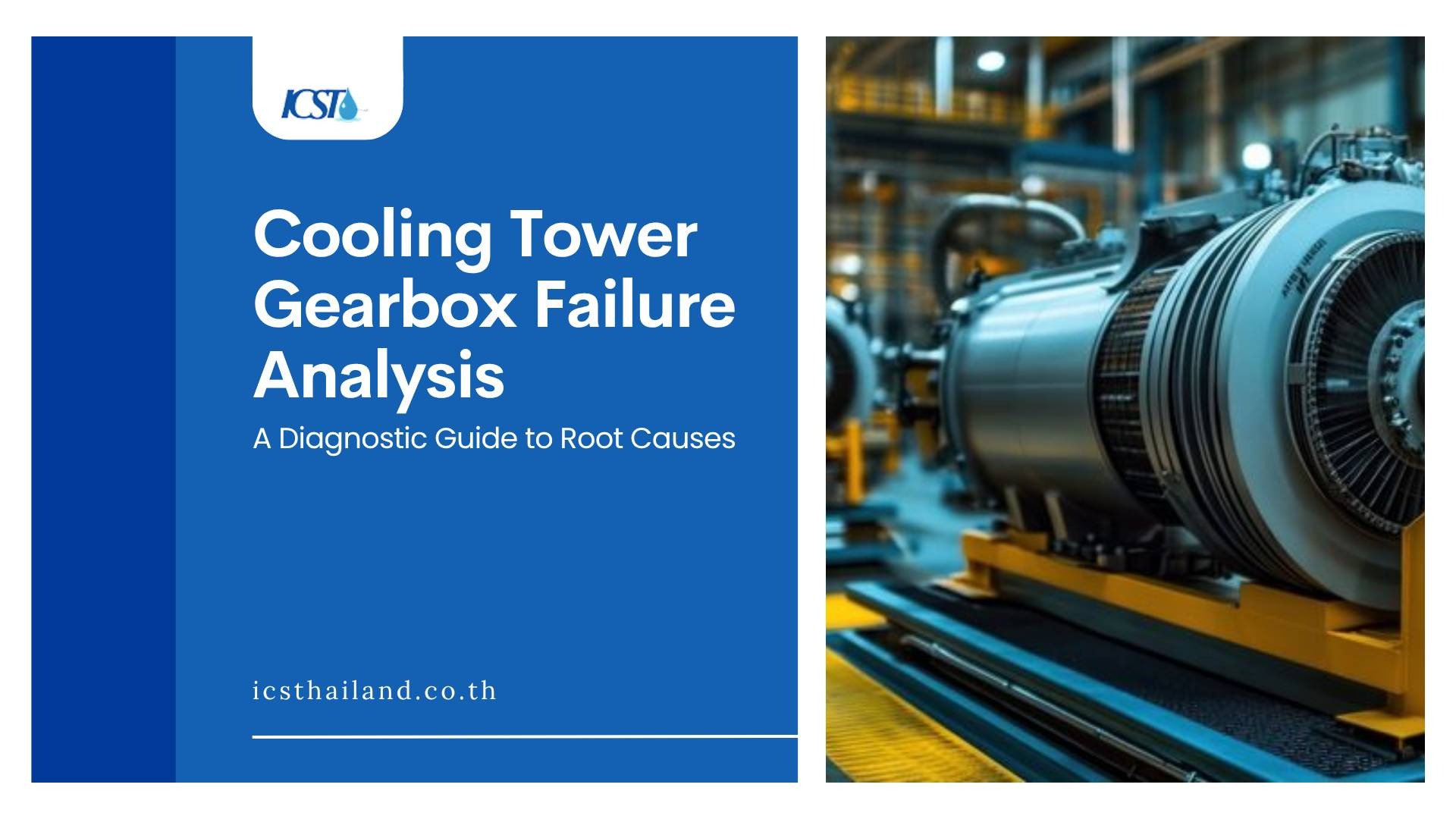
Cooling tower gearbox failure analysis identifies the root causes of mechanical breakdowns, such as contact fatigue, oil contamination, and bearing wear. By examining visual evidence like pitting, brinelling, or oil emulsification, engineers can pinpoint issues like misalignment, vibration resonance, or lubrication failure.
Advanced techniques, including oil analysis, vibration monitoring, and metallographic inspection, provide actionable insights to prevent recurring failures. Implementing predictive maintenance strategies, such as synthetic oil use and VFD soft-starts, ensures long-term reliability and reduces unplanned downtime in cooling tower operations.
This guide walks you through the root causes of gearbox failures. We will explore common failure modes, hidden operational risks, and forensic diagnostic techniques you can use to improve reliability.
The High Stakes of Gearbox Reliability
The gearbox serves as the critical link in your cooling tower system. It acts as the high-torque bridge between the motor and the fan, translating high-speed rotational energy into massive pulling power. When this bridge collapses, your cooling capacity drops to zero.
The true cost of a failure goes far beyond the price of a replacement unit. You must factor in the hidden expenses of lost production capacity, expensive crane rentals, and emergency labor rates. Unplanned downtime directly impacts your bottom line.
Adopting a “post-mortem” mindset is essential. Replacing a broken gearbox without understanding why it broke guarantees a repeat breakdown. You must investigate the physical evidence to fix the underlying system issue.
Common Failure Modes: A Forensic Diagnostic Table
Visual inspections often reveal the first clues of a mechanical problem. Use this quick-reference guide to identify issues during your routine checks.
| Failure Mode | Visual Evidence | Primary Root Cause |
| Pitting & Spalling | Small craters on gear teeth | Contact fatigue from system overload or a thin oil film. |
| Bearing “Brinelling” | Regular indentations in bearing races | Vibration during standstill or severe start-stop shocks. |
| Oil Contamination | Milky or dark, “glittery” sludge | Water ingress through breathers or lip seal failure. |
| Tooth Fracture | Complete shearing of gear teeth | Sudden torque spikes or severe shaft misalignment. |
| Scuffing/Galling | Smearing of metal on gear surfaces | High operating temperatures and lubrication starvation. |
The “Silent Killers” of Cooling Tower Gearboxes
Mechanical parts rarely fail without a catalyst. Certain operational realities act as silent killers, degrading your equipment over time.
Lubrication Contamination
Cooling towers create extremely harsh environments for mechanical equipment. The 100% humidity inside a tower acts as a constant threat. As a gearbox cools down, it draws in this moist air through the breather trap. This moisture mixes with the lubricant, causing oil emulsification. Water destroys the protective oil film and rapidly accelerates gear wear.
The High Frequency of Startups
Turning your fans on and off frequently destroys gears. Increasing shutdown frequency for cleaning or basic maintenance subjects the internal components to massive alternating loads. During startup, the unit experiences “boundary lubrication,” meaning metal grinds against metal before the oil fully circulates. This startup friction accounts for a significant percentage of premature failures.
VFD Resonance and Vibration
Variable Frequency Drives (VFDs) offer great energy savings, but they can introduce severe mechanical stress. Running a gearbox at its natural resonant frequency amplifies vibration. This resonance shakes the internal components violently, leading to accelerated bearing failure and rapid gear degradation.
Methodology of a Forensic Failure Analysis
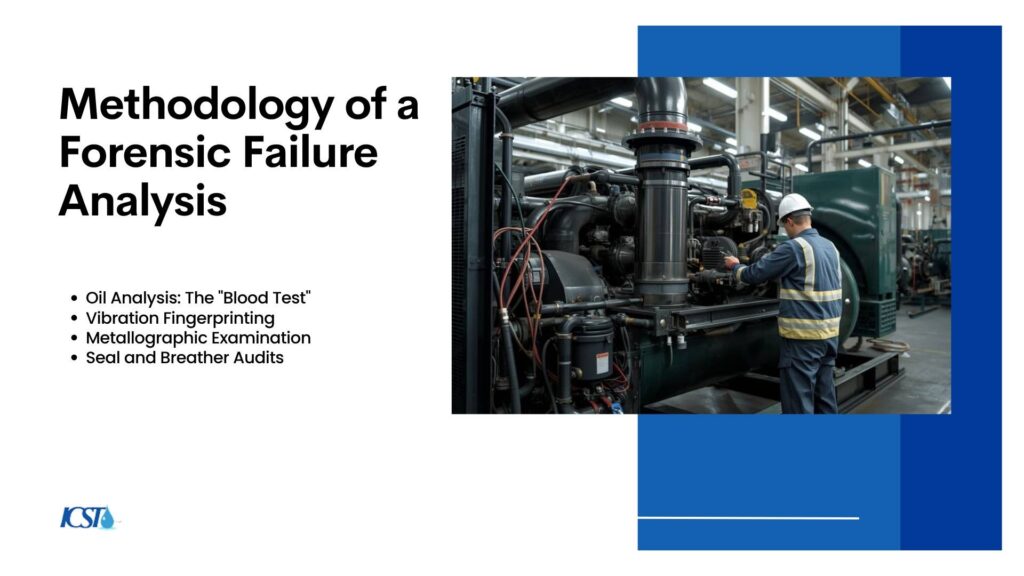
A true diagnostic investigation requires scientific methodology. Forensic engineers use specific testing protocols to determine the exact sequence of a failure.
Oil Analysis: The “Blood Test”
Used oil holds the secrets of your gearbox’s health. Engineers use spectroscopy to detect microscopic wear metals like iron, copper, and lead. They also use Karl Fischer Titration to measure moisture content in parts per million (PPM). These tests identify active wear before parts actually break.
Vibration Fingerprinting
Every mechanical issue produces a unique vibration signature. By analyzing G-levels and frequency peaks, technicians can pinpoint the exact bearing or gear stage that is failing. This fingerprinting allows for highly targeted repairs.
Metallographic Examination
Sometimes, the manufacturing process itself is to blame. Engineers inspect the cross-section of a failed gear tooth under a microscope. This reveals whether the case-hardening (carburizing) process was sufficient to handle the required loads.
Seal and Breather Audits
Chemical cleaning agents often degrade rubber lip seals and labyrinth seals. A forensic audit checks if compromised seals allowed water to flood the gearbox casing.
Prevention Strategy: Moving from Reactive to Predictive
You can stop failures before they start by upgrading your maintenance strategy. Shifting from reactive repairs to predictive reliability saves time and money.
The 1,000-Hour Flush
The first oil change on a new unit remains the most critical maintenance task. You must flush the gearbox after 1,000 hours of operation to remove “run-in” metallic particulates. Leaving these microscopic metal shavings in the oil acts like liquid sandpaper on your bearings.
Synthetic Oil Migration
Standard mineral oils break down quickly in high temperatures. Upgrading to an ISO VG 220 full synthetic oil provides a stronger protective film. Synthetic oils handle extreme ambient heat and high humidity far better than conventional lubricants.
Wireless Monitoring (PdM)
Install 24/7 wireless vibration sensors on your critical units. This predictive maintenance (PdM) technology detects microscopic gear wear months before a catastrophic failure occurs. Real-time data allows you to schedule repairs during planned outages.
VFD Soft-Starts
Protect your helical gears from the “hammer blow” of direct-on-line motor starts. Program your VFDs to ramp up torque slowly over several seconds. This soft-start approach drastically reduces mechanical shock and extends the life of your equipment.
Stop the Cycle of Recurring Failures
Unplanned downtime costs you thousands of dollars in lost production. Do not simply swap out broken parts and hope for a better result.
At International Cooling Solutions (Thailand), we provide specialized cooling tower gearbox failure analysis and proactive reliability engineering. We help you fix the operational problems that cause mechanical breakdowns.
Frequently Asked Questions (FAQs)
What causes cooling tower gearbox failure?
Cooling tower gearbox failure often results from factors like contact fatigue, oil contamination, and bearing wear. Operational issues such as frequent startups, misalignment, and vibration resonance also contribute. Identifying the root cause through forensic analysis, including oil testing and vibration monitoring, is essential to prevent recurring failures and ensure long-term reliability.
How can oil contamination damage a gearbox?
Oil contamination introduces water and debris into the lubrication system, leading to emulsification and loss of protective oil film. This accelerates gear wear, causes rusting, and increases friction. Regular oil analysis and proper breather maintenance are critical to preventing contamination and extending gearbox life.
Why is vibration monitoring important for gearboxes?
Vibration monitoring detects early signs of mechanical issues like bearing failure or gear misalignment. By analyzing vibration patterns, you can identify problems before they escalate into catastrophic failures. This predictive maintenance approach minimizes downtime and reduces repair costs.
What is the role of synthetic oil in gearbox maintenance?
Synthetic oil provides superior protection against extreme temperatures and high humidity, common in cooling tower environments. It forms a stronger lubrication film, reducing wear and extending the lifespan of gears and bearings. Switching to ISO VG 220 synthetic oil is especially beneficial in harsh climates.
How can frequent startups damage a cooling tower gearbox?
Frequent startups subject gears to alternating loads and boundary lubrication, where metal surfaces grind before oil circulation stabilizes. This increases wear and shortens the gearbox’s lifespan. Using VFD soft-starts can mitigate this issue by gradually ramping up torque, protecting internal components.