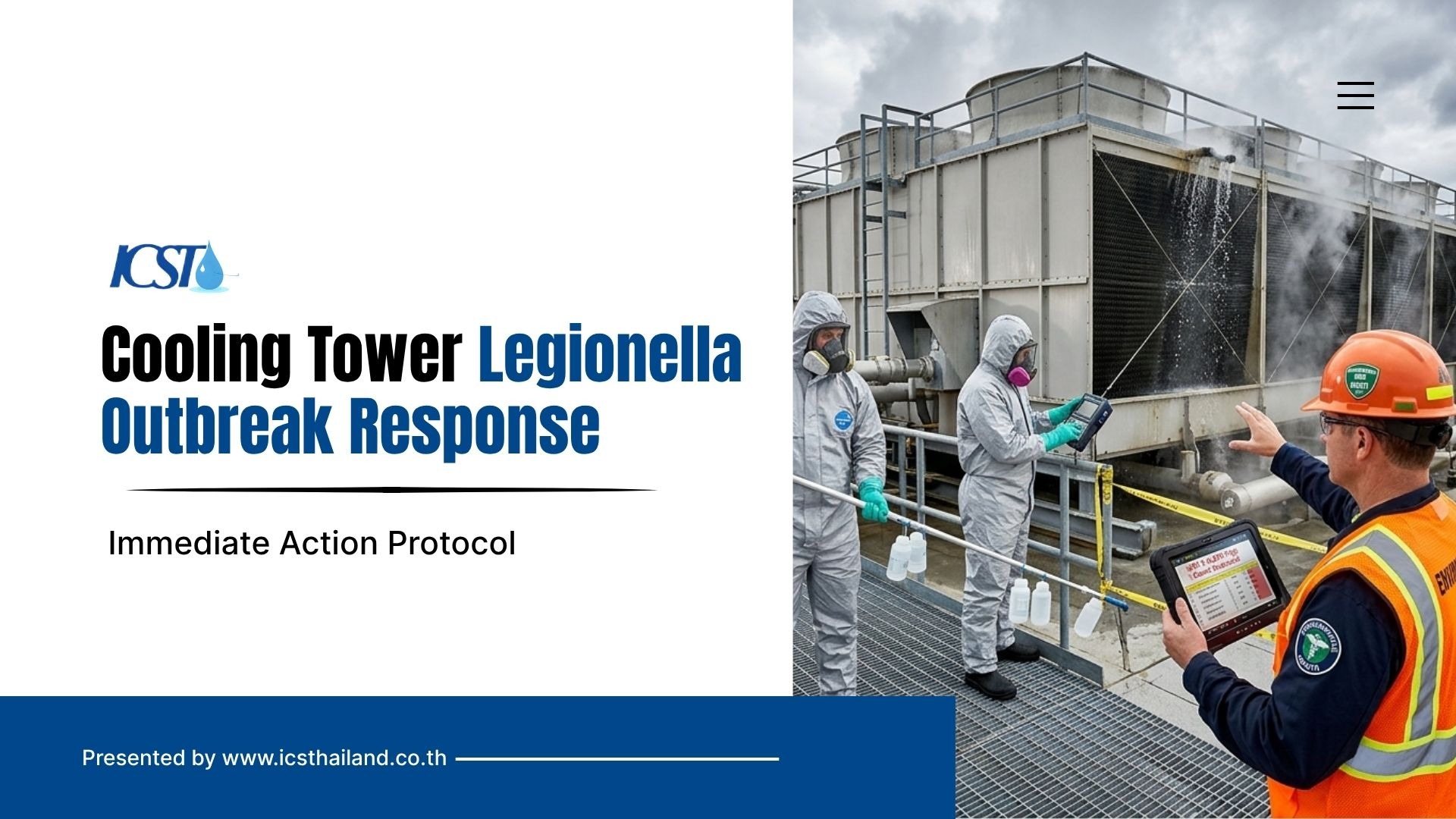
A cooling tower Legionella outbreak response demands immediate containment to prevent severe illness. Operators must shut down the system rapidly to stop contaminated aerosol transmission. This limits the exposure radius and protects public safety. Implementing an immediate disinfection procedure destroys microbial threats before they spread further.
Facility managers must also execute a rapid health authority notification to comply with local regulations and coordinate public health efforts. Prompt interventions ensure regulatory compliance and immediate risk reduction.
Why Cooling Towers Become Legionella Transmission Sources
Conditions That Promote Legionella Growth
Cooling towers provide the perfect environment for dangerous bacteria to multiply. Water temperatures between 77 degrees and 113 degrees Fahrenheit accelerate bacterial reproduction.
- Stagnant Water: Areas in the basin with little to no water flow, known as “dead legs,” become breeding grounds where bacteria can settle and multiply.
- Sediment Buildup: The accumulation of sediment serves as a food source and a protective layer for harmful pathogens.
- Biofilm Formation: A slimy layer of biofilm can develop, acting as a barrier that shields bacteria from chemical disinfectants.
- Inadequate Biocide Control: If biocide levels are not properly managed, bacterial colonies can grow unchecked.
How Aerosol Drift Spreads Contamination
Cooling towers continuously generate fine airborne droplets during operation. If Legionella contaminates the circulating water, these droplets become bacterial carriers.
Contaminated aerosols spread through:
- Fan discharge airflow
- Drift eliminator bypass
- Wind-driven drift movement
- Nearby HVAC air intakes
- Personnel exposure near the tower
This airborne transmission mechanism explains why outbreaks can affect individuals who never physically contact tower water.
Common Industrial Facilities at Risk
Due to their extensive cooling needs, certain industries are at a much higher risk of Legionella contamination. These facilities often have systems that create ideal environments for bacterial growth.
- Chemical Plants: Operate massive, constantly running cooling towers under heavy heat loads, increasing the potential for bacterial proliferation.
- Manufacturing Facilities: Generate significant amounts of organic dust, which can act as a food source for bacterial colonies within cooling systems.
- Hospitals: Rely on complex HVAC systems with many cooling units, posing a direct risk to vulnerable patient populations if contamination occurs.
- Commercial Buildings: Often have cooling towers located near fresh air intakes, creating a direct pathway for contaminated aerosols to enter the building.
Immediate Response Actions After Suspected Legionella Detection
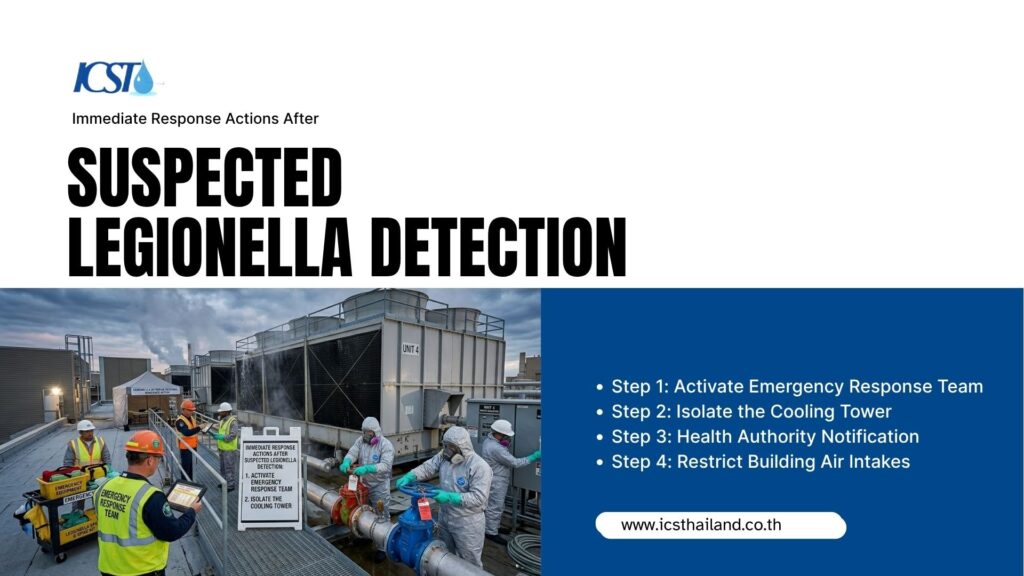
Step 1: Activate Emergency Response Team
A successful cooling tower Legionella outbreak response requires rapid team coordination. Facility management must take immediate command of the situation, and the water treatment vendor should arrive on-site to adjust chemical dosing.
Environmental health personnel need to review safety protocols. Maintenance supervisors must coordinate physical system inspections.
Step 2: Isolate the Cooling Tower
Reducing aerosol generation becomes the top operational priority. Immediate actions include:
- Shut down cooling tower fans
- Remove thermal load if possible
- Isolate affected tower cells
- Restrict personnel access
- Stop unnecessary maintenance activities nearby
Some facilities continue water circulation during chemical treatment while disabling fan operation to minimize airborne exposure.
Step 3: Health Authority Notification
Many jurisdictions legally require immediate reporting after suspected or confirmed Legionella detection. Notification procedures typically involve:
- Local public health departments
- Occupational safety agencies
- Environmental authorities
- Building management stakeholders
Accurate documentation becomes critical during outbreak investigations.
Incident records should include:
- Sampling results
- Operational conditions
- Water treatment logs
- Maintenance history
- Corrective actions performed
Step 4: Restrict Building Air Intakes
Nearby HVAC systems can pull contaminated aerosols into occupied spaces. Emergency containment measures include:
- Closing nearby fresh air intakes
- Isolating rooftop ventilation systems
- Increasing indoor filtration where necessary
- Restricting access to contaminated zones
This step dramatically reduces secondary indoor exposure risk.
Emergency Hyperchlorination and Disinfection Procedure
What Is Hyperchlorination
Hyperchlorination is an emergency shock treatment process that rapidly increases oxidizing disinfectant concentration throughout the cooling system. The objective is immediate bacterial destruction across all water-contact surfaces.
This procedure targets:
- Free-floating bacteria
- Biofilm organisms
- Contaminated sludge deposits
- Internal piping surfaces
Without aggressive oxidizing treatment, Legionella can survive within protected biofilm layers.
Hyperchlorination Target Levels
Effective treatment requires precise chemical concentrations. Operators must achieve 20 to 50 parts per million of free oxidizing disinfectant. They need to maintain a 10 parts per million residual for 24 continuous hours. Strict pH adjustment requirements ensure the chlorine remains highly active.
Full Emergency Disinfection Procedure
For an effective cooling tower Legionella outbreak response, the chemical treatment must follow a strict operational sequence. Missing a step compromises the entire disinfection procedure.
- Isolate the System: Start by completely shutting off the blowdown valve to contain the treatment chemicals.
- Ensure Full Circulation: Keep the circulation pumps active to guarantee the disinfectant is evenly distributed throughout the entire system.
- Apply Disinfectant: Introduce the selected disinfectant into the system until you reach the target concentration of 20-50 ppm.
- Penetrate Biofilms: Add a biodispersant to break down and expose the protective biofilm layers, allowing the disinfectant to reach hidden bacteria.
- Maintain Residual Levels: Continuously monitor and add more chemicals as required to maintain a residual of at least 10 ppm for 24 hours.
- Perform a Safe Drain: Once the disinfection is complete, drain the system in compliance with all environmental safety regulations.
Mechanical Cleaning Requirements
Many outbreak responses fail because operators rely only on chemical disinfection.
Biofilm protects surviving bacteria deep within the system surfaces. Mechanical cleaning removes these protective layers physically.
- Remove and clean the fill pack material thoroughly.
- Scrub the basin to remove all visible sludge.
- Inspect the drift eliminator for blockages or damage.
- Extract heavy sediment from all low-flow zones.
- Scrub away visible biofilm from all accessible surfaces.
Why Incomplete Cleaning Causes Recolonization
Partial cleaning guarantees the bacteria will return. Surviving biofilm acts as a seed for new bacterial colonies. Hidden dead legs harbor microbes that evade the initial chemical shock. This recontamination risk forces operators to repeat the entire process if done incorrectly.
Action Levels and Legionella Testing Interpretation
Understanding Legionella Action Levels
Laboratory results guide the specific response intensity. An action level dictates exactly what engineers must do next. Detectable counts require system review and minor adjustments. Elevated counts trigger immediate chemical shock treatments
When Corrective Action Becomes Mandatory
Certain triggers demand an immediate and aggressive Legionella outbreak response. For example, a positive culture result proves that the bacteria are present in the system, while suspected cases of illness linked to the facility can escalate the situation into a public health emergency.
Mandatory corrective action occurs during:
- Confirmed positive Legionella culture results
- Suspected illness linked to the facility
- Loss of disinfectant residual control
- Heavy biofilm contamination
- Repeatedly elevated bacterial trends
Facilities cannot rely on temporary chemical adjustments during active outbreak conditions.
Why False Negatives Occur
Negative laboratory results do not always confirm system safety. False negatives may occur because of:
- Improper sampling locations
- Heavy biofilm interference
- Sample handling delays
- High bacterial overgrowth masking Legionella colonies
Sampling strategy directly affects testing reliability.
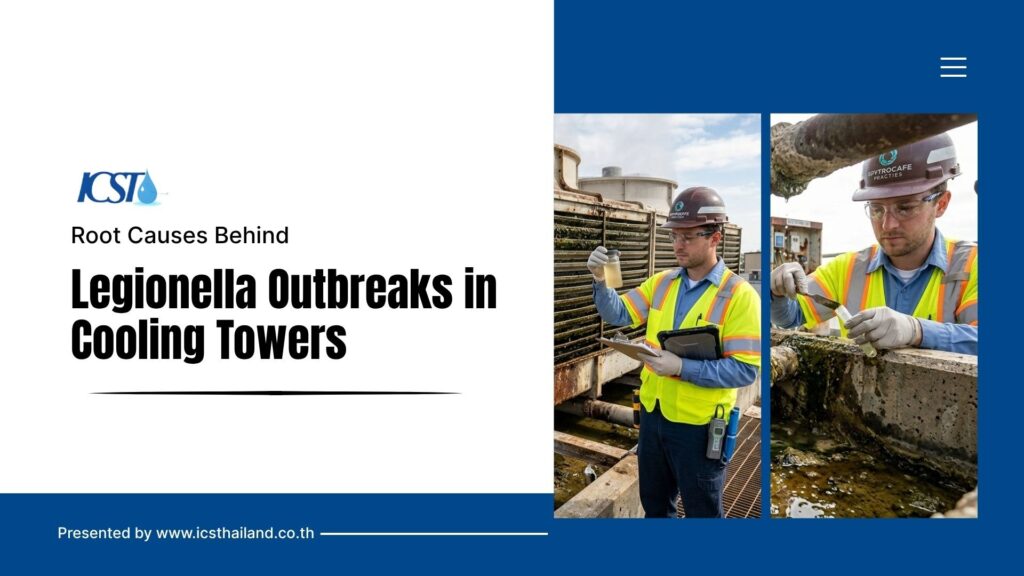
Root Causes Behind Legionella Outbreaks in Cooling Towers
Inadequate Water Treatment Programs
Poor chemical treatment remains the leading outbreak contributor. Common failures include:
- Inconsistent biocide dosing
- Poor oxidizer residual control
- Lack of monitoring
- Incorrect chemical selection
- Insufficient biodispersant usage
Stable water chemistry is essential for bacterial suppression.
Biofilm and Scale Accumulation
Biofilm provides a protected bacterial environment that resists disinfectants, complicating any cooling tower Legionella outbreak response. Scale deposits worsen the problem by trapping organic contamination, further shielding the bacteria.
Major contributing factors include:
- Calcium scale buildup
- Corrosion deposits
- Organic slime formation
- Sediment accumulation
Mechanical Design Problems
Engineering flaws make some systems impossible to keep clean. Dead legs hold stagnant water where chemicals never reach. Low-flow zones allow suspended solids to settle into the basin. Poor basin turnover prevents the biocide from mixing properly. Inefficient drift eliminators let contaminated water escape the tower shell.
Maintenance Failures
Neglected maintenance often precedes outbreak conditions. High-risk maintenance failures include:
- Missed inspections
- Irregular cleaning schedules
- Lack of microbial testing
- Poor recordkeeping
- Delayed repairs
Corrective Action Plan After an Outbreak
Updating the Water Management Program
An outbreak proves the current management plan does not work. Engineers must rewrite the strategy to prevent a recurrence. They must align the new plan with ASHRAE Guideline 12 standards. Monitoring procedures need strict upgrades to catch issues earlier. Control limits require tighter parameters to ensure biological safety.
Improving Continuous Water Treatment
Modern outbreak prevention relies heavily on automation. Recommended upgrades include:
- Automated biocide feed systems
- Online ORP monitoring
- Conductivity control
- Remote alarm systems
- Automated chemical dosing
Continuous monitoring reduces human error dramatically.
Mechanical Upgrades That Reduce Risk
Physical improvements make the system much easier to maintain. High-efficiency drift eliminators stop droplets from leaving the tower. Side-stream filtration constantly removes the suspended solids that feed bacteria.
Basin cleaning systems sweep sediment toward the drain continuously. Automated monitoring alerts operators to problems immediately.
Staff Training and Documentation
Operators must understand outbreak prevention procedures thoroughly. Training should include:
- Water chemistry basics
- Sampling procedures
- Emergency shutdown protocols
- Chemical safety
- Recordkeeping requirements
Well-trained operators identify problems much earlier.
Cooling Tower Outbreak Response Timeline
First 2 Hours
Immediate actions focus entirely on containment and communication. Operators execute complete system isolation to stop aerosol drift. Managers perform required notifications to local health authorities. The team focuses entirely on risk containment above all else.
First 24 Hours
The focus shifts to aggressive biological destruction. The vendor initiates the hyperchlorination protocol. Crews begin emergency cleaning procedures on all wetted surfaces. Technicians take extensive water sampling to document baseline conditions.
First 72 Hours
Engineers evaluate the success of the initial attack. The team conducts verification testing to ensure the bacteria are dead. Management implements the required corrective action steps. Operators finalize the restart planning phase.
Long-Term Monitoring Phase
Vigilance prevents the problem from returning weeks later. Staff conducts weekly testing to verify system control. Engineers analyze trend monitoring data to spot early warning signs. Outside consultants perform preventive audits to ensure strict program compliance.
Routine Treatment vs Emergency Outbreak Response
| Parameter | Routine Water Treatment | Suspected Legionella Event | Confirmed Outbreak Response | Engineering Insight |
| Chlorine Residual | 0.5 to 2.0 ppm | 5.0 to 10.0 ppm | 20 to 50 ppm | Emergency levels destroy base metals if maintained too long. |
| Inspection Frequency | Weekly | Daily | Continuous | Outbreaks require constant visual monitoring of chemical feeds. |
| Tower Operation | Full load | Reduced load | Complete shutdown | Shutting fans stops aerosol drift instantly. |
| Cleaning Intensity | Annual basin sweep | Targeted scrubbing | Full mechanical breakdown | Biofilm removal requires aggressive physical scrubbing. |
| Sampling Requirements | Monthly dip slides | Targeted lab cultures | Extensive multi-point testing | Lab handling dictates the accuracy of outbreak testing. |
| Notification Procedures | Internal logbook | Management alert | Public health reporting | Legal requirements mandate external reporting during outbreaks. |
Conclusion
A cooling tower Legionella outbreak response requires aggressive, coordinated action to protect public health. The moment contamination is suspected, operators must initiate a disinfection procedure immediately. Executing hyperchlorination destroys the biofilm and kills the pathogens before they spread.
Facility managers must execute a proper health authority notification to remain compliant with the law. Once the emergency passes, engineers must implement a robust corrective action plan to prevent recurrence. Understanding the proper action level dictates exactly how severely you must respond to future threats.
For emergency cooling tower service, repair, or maintenance, visit the ICST website for effective and value-added help.
Frequently Asked Questions
What should you do first during a suspected Legionella outbreak?
The first step in a cooling tower Legionella outbreak response is for facility engineers to isolate the cooling tower immediately to stop aerosol generation. This involves shutting down the fans and removing the heat load. Restrict nearby building air intakes to protect indoor occupants. Finally, assemble the emergency response team to coordinate the next steps.
What is hyperchlorination in cooling towers?
Hyperchlorination is an emergency shock disinfection process used to destroy severe microbial contamination. Operators elevate free chlorine levels to between 20 and 50 parts per million. You must maintain at least a 10 parts per million residual for 24 hours.
When should health authorities be notified?
You must notify health authorities immediately upon confirming an outbreak or discovering linked illness cases. Local reporting requirements trigger a coordinated public health investigation. Authorities will dictate specific documentation procedures and help you trace the potential exposure radius.
How long should emergency disinfection last?
Emergency disinfection requires maintaining high chemical concentrations for at least 24 continuous hours. You must hold a minimum of 10 parts per million of free chlorine residual throughout this period. Dropping below this residual requires you to restart the clock entirely.
What causes Legionella growth in cooling towers?
Cooling towers provide warm water environments that perfectly support bacterial reproduction. Thick biofilm layers and heavy scale accumulation protect the bacteria from routine chemical treatments. Dead legs and low-flow zones allow the pathogens to multiply without disruption.
How can cooling towers prevent future outbreaks?
Facilities must adopt strict water management programs that include automated chemical dosing. Operators must perform mechanical cleaning to remove scale and biofilm regularly. Installing side-stream filtration and replacing inefficient drift eliminators drastically reduces the overall biological risk.