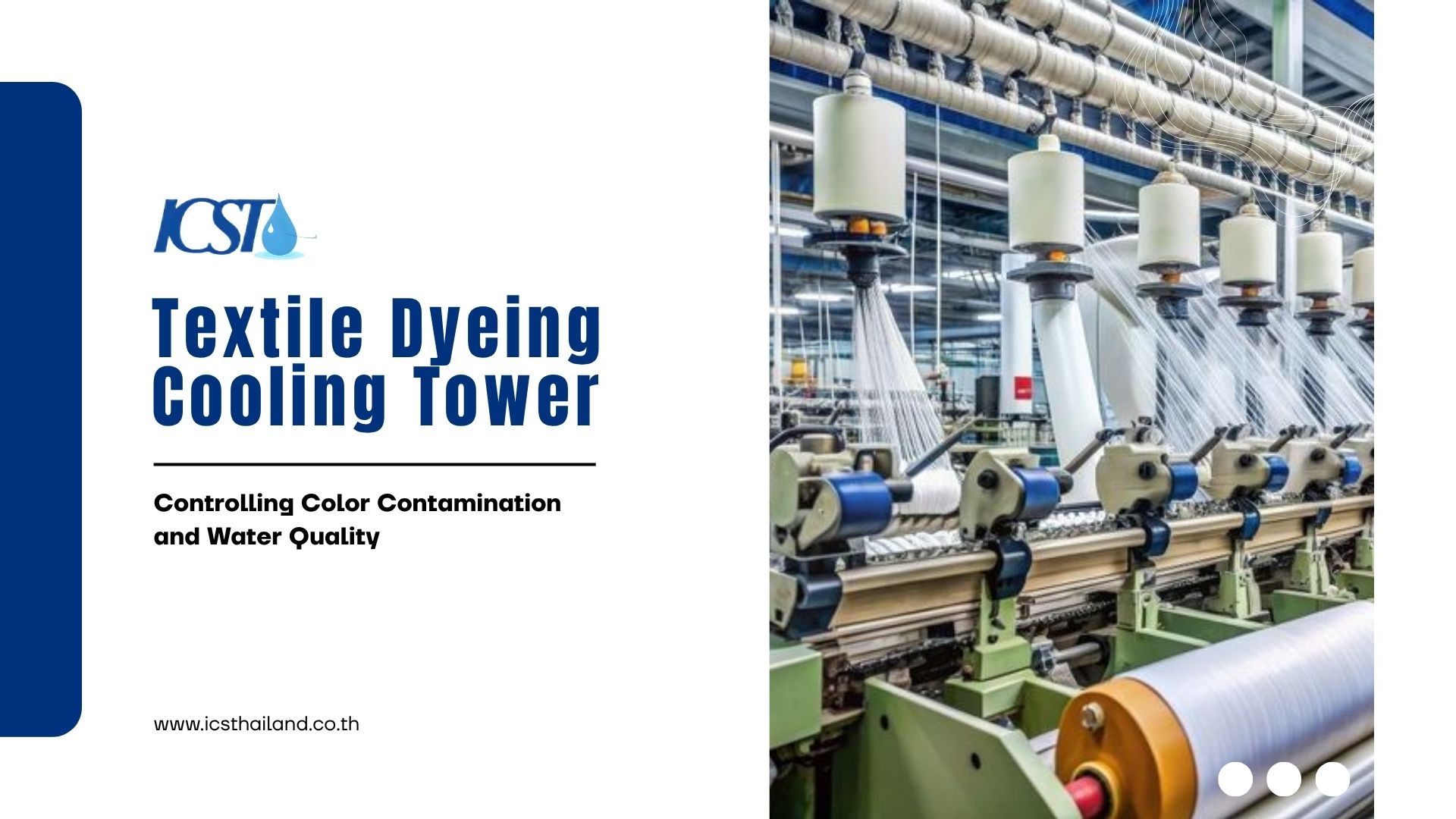
A textile dyeing cooling tower helps dye houses control process heat, protect dye bath stability, and maintain repeatable fabric color. Textile dyeing depends on consistent water quality because pH, hardness, turbidity, suspended solids, sediment, iron, copper, zinc, chlorine, dissolved minerals, and process-water color can affect dyeing results and final fabric appearance.
Strong process isolation, stainless heat exchangers, filtration, foaming control, and continuous color monitoring reduce dye contamination risk and protect batch-to-batch shade consistency.
Why Cooling Systems Directly Affect Textile Color Quality
Cooling systems influence far more than just basic equipment temperature. They dictate shade consistency, control dye uptake rates, and directly determine final product quality. Facility managers must view cooling infrastructure as an active component of the dyeing process itself.
Temperature Stability Influences Dye Absorption
A reliable textile dyeing cooling tower helps remove heat at a controlled rate. It supports predictable cooling curves and gives operators better control over dye bonding.
Operators should track specific thermal values because each reading tells a different story. Strong thermal monitoring helps teams identify cooling drift before fabric reaches final inspection.
- Dye bath stability: Stable thermal curves support predictable color bonding across fabric types.
- Cooling rate precision: Controlled temperature reduction reduces premature fixation and streaking risk.
- Batch uniformity: Repeatable cooling profiles help the same recipe produce the same shade.
- Heat exchanger delta-T: A stable temperature difference shows good heat transfer.
- Cooling water supply temperature: A consistent water supply helps dyeing machines follow the recipe profile.
Temperature control turns utility performance into a direct quality factor.
Water Quality Impacts Color Accuracy
Water quality affects dye solubility, dye reaction, washing performance, and fabric appearance. CottonWorks lists water hardness, pH, turbidity, suspended solids, sediment, organic matter, dissolved minerals such as iron, copper, and zinc, chlorine, and process-water color as key issues for textile dyeing.
Hardness creates a major dyeing risk. Research on reactive dyeing reports that wash fastness stayed excellent at low hardness, near 9 ppm, but deteriorated as hardness increased.
- Suspended solids: Particles can settle on fibers and create specks or stains.
- Dissolved minerals: High conductivity can signal mineral buildup and chemical interference.
- Iron and copper: Metals can dull the shade, stain fabric, or disrupt dye chemistry.
- pH drift: Poor pH control changes dye behavior and fixation.
- Turbidity: Cloudy water can carry dirt, fibers, or corrosion products into the system.
Clean water helps the dye house protect color formulas and reduce guesswork.
How a Textile Dyeing Cooling Tower Supports the Dyeing Process
A textile dyeing cooling tower removes heat from dyeing machines, heat exchangers, compressors, chillers, and process loops.
Cooling Tower Role in Heat Rejection
Cooling towers reject heat by using evaporative cooling. Warm circulating water flows through the tower, air passes across it, and a small portion evaporates to remove heat from the remaining water.
This process lets the plant return cooler water to heat exchangers and process utilities. Cooling tower treatment guides identify scale, fouling, microbiological growth, and corrosion as core risks that proper water treatment must control.
A textile plant needs reliable heat rejection for three reasons:
- Stable process temperature: Cooling water must support repeatable recipes.
- Continuous machine operation: Dyeing machines need a dependable heat sink.
- Efficient utility use: Clean towers use less fan and pump energy for the same cooling duty.
- Lower fouling risk: Treated water protects heat exchangers and nozzles.
- Better batch scheduling: Predictable cooling supports planned production flow.
Cooling tower efficiency becomes part of dye house reliability.
Dye Contamination: The Hidden Risk Many Facilities Overlook
Many facilities ignore the relationship between cooling water and dye chemistry until a disaster occurs. Dye contamination ruins equipment, destroys fabric, and forces expensive emergency shutdowns.
How Dye Contamination Occurs
Leaking heat exchangers allow pressurized process fluids to mix directly with clean cooling water. Cross-contamination spreads rapidly through the plant as pumps push the polluted water into other systems.
Even tiny cracks in process equipment introduce highly concentrated dyes into the utility water. Once introduced, the dye coats pipe interiors and cooling tower fill media.
Stopping contamination requires identifying the physical failure points. Operators must inspect these specific areas to prevent fluid mixing.
- Heat exchanger breaches: Internal corrosion creates microscopic holes that let colored process fluids escape into utility water.
- Improper fluid separation: Poorly designed piping manifolds allow clean and dirty water streams to accidentally combine.
- Pressure differential failures: Unexpected pressure drops pull contaminated dye bath water backward into the clean cooling circuit.
Signs of Dye Contamination in Cooling Systems
Operators should not wait for the water to become visibly colored. By that point, contamination may already have spread.
Early detection requires visual checks, water testing, and automated alarms.
Warning signs include:
- Basin water discoloration: Cooling water starts matching the dye shade in production.
- Foaming: Surfactants or wetting agents create excessive foam in the basin.
- Unusual odor: Process chemicals create a new smell around the tower.
- Sticky deposits: Dye residues coat fill media, basin walls, or strainers.
- Water chemistry swings: pH, conductivity, or turbidity changes suddenly.
A fast response can prevent a small leak from becoming a plant-wide contamination event.
Process Isolation: The Foundation of Contamination Prevention
Direct contact between utility water and process fluids creates unacceptable manufacturing risks. Process isolation eliminates this danger by placing a physical barrier between the cooling tower and the dye bath.
What Process Isolation Means
Process isolation demands the strict physical separation of process fluids and cooling water. Closed-loop design concepts utilize secondary heat exchangers to transfer temperature without transferring fluids. This strategy ensures that the textile dyeing cooling tower water never comes into contact with the fabric or dye.
If a leak occurs in an isolated system, the damage remains confined to a small, manageable loop. Facilities can quickly isolate the problem without shutting down the main cooling tower.
Implementing isolation protocols protects the plant’s primary utility infrastructure. Engineers design these barriers to maximize safety and efficiency.
- Physical fluid separation: Dedicated barriers ensure utility cooling water and chemical process water never physically mix.
- Closed-loop architecture: Sealed secondary water circuits transfer heat safely without exposing the main cooling tower to contaminants.
- Risk confinement strategy: Isolation loops keep accidental chemical leaks contained to a small, easily flushed pipe section.
Why Direct Contact Systems Create Risk
Direct contact between utility water and process water creates a high-risk path. If one dyeing machine leaks, the entire shared system may become contaminated and spread to other machines.
Open systems also expose sensitive process water to dust, lint, biological growth, and dissolved solids from the cooling tower.
Direct contact creates three main risks:
- Fast cross-contamination: One leak can affect several dyeing machines.
- Uncontrolled quality impact: Dirt or rust can enter sensitive dye baths.
- Harder wastewater control: Mixed streams can complicate treatment and discharge.
Modern dye houses should reduce these risks with closed loops and exchanger-based cooling.
Why Stainless Heat Exchangers Are Preferred in Textile Dyeing Plants
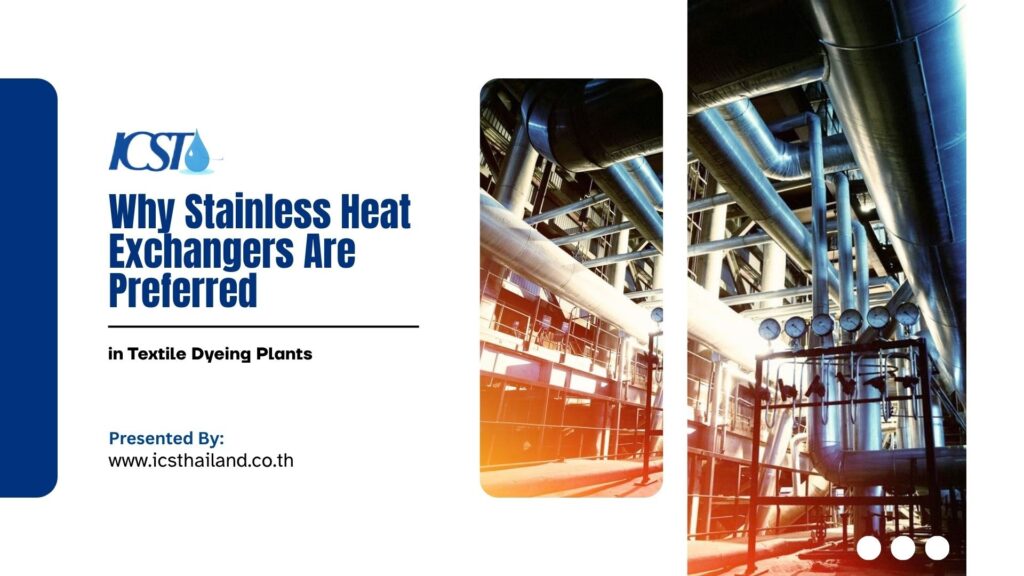
Textile chemicals destroy standard carbon steel equipment in a matter of months. Engineers specify a stainless heat exchanger to survive the aggressive operating environment and protect product purity.
Corrosion Resistance Benefits
Stainless steel resists many aggressive textile chemicals better than carbon steel. It also reduces rust contamination in water systems.
Corrosion matters because rust can stain fabric, block passages, and create exchanger leaks.
A stainless heat exchanger helps protect:
- Equipment life: Better corrosion resistance reduces premature replacement.
- Process purity: Less rust lowers metal contamination risk.
- Thermal performance: Cleaner plates maintain better heat transfer.
- Leak prevention: Stronger materials reduce breach risk.
- Maintenance planning: Durable exchangers support planned service instead of emergency repair.
Material choice directly supports water quality control.
Contamination Prevention Advantages
Stainless surfaces stay smoother than corroded carbon steel. Smooth surfaces reduce residue buildup, old dye retention, and under-deposit corrosion.
This helps prevent historical color bleeding, where residues from older production runs release later and affect newer batches.
Stainless materials also reduce metal leaching and support easier cleaning.
Water Quality Control Strategies for Textile Cooling Systems
Effective water quality management keeps the textile dyeing cooling tower running efficiently. Strict control strategies prevent scale, stop biological growth, and remove physical debris from the cooling loop.
Controlling Suspended Solids
Filtration systems capture airborne dust and process fibers before they settle in the cooling tower basin. Side-stream filtration pulls a portion of the circulating water through a high-efficiency media filter to remove microscopic debris.
Deploying mechanical filters protects the entire cooling infrastructure. Facilities use these specific methods to remove physical contamination.
- Side-stream filtration integration: Automated filters continuously clean 10% of the water flow to remove dust and fabric fibers.
- Basin sweeping systems: High-velocity water jets push settled mud and sediment directly toward the filtration intake piping.
- Filter media selection: Fine sand and specialized glass media capture microscopic particles that normally bypass standard cooling tower strainers.
Managing Biological Growth
Cooling towers provide warm water, oxygen, sunlight, and nutrients. These conditions can support algae, biofilm, and bacteria.
Biofilm creates an insulating layer on heat transfer surfaces. It also traps dirt, scale, and corrosion products.
Water treatment programs should use controlled biocide strategies, routine cleaning, and biological monitoring. Industrial cooling water guidance identifies microbiological growth as one of the key treatment concerns, along with scale, fouling, and corrosion.
Preventing Scale Formation
Scaling mechanisms trigger when dissolved minerals precipitate out of the warm water and bond to hot metal. This hard rock layer causes massive heat transfer losses and forces the cooling tower to run constantly. Chemical treatment strategies use polymer dispersants to keep these minerals dissolved in the fluid.
A plant cannot cool its dye baths if scale insulates the heat exchangers. Operators must blow down the tower water regularly to remove concentrated minerals.
Preventing scale formation saves thousands of dollars in energy costs. Technicians monitor these specific parameters to stop mineral deposits.
- Mineral precipitation control: Advanced scale inhibitors keep calcium and magnesium dissolved in the water, even at high temperatures.
- Heat transfer protection: Clean metal plates ensure thermal energy moves instantly from the hot process fluid into the cooling water.
- Blowdown automation: Conductivity controllers automatically flush concentrated, mineral-heavy water out of the system and replace it with fresh makeup water.
Common Cooling Tower Problems That Affect Textile Dyeing Operations
Even well-designed systems experience mechanical wear. Knowing how to troubleshoot these common problems keeps the textile dyeing cooling tower running efficiently and prevents unexpected downtime.
Heat Exchanger Leakage
Heat exchanger leakage can allow dye liquor to enter the cooling loop. Operators may notice color change, foaming, conductivity spikes, or unusual deposits.
Recommended response steps include:
- Isolate the suspected exchanger: Stop contamination from spreading.
- Perform pressure testing: Confirm the leak location.
- Replace damaged plates or gaskets: Restore physical separation.
- Flush affected loops: Remove residual dye.
- Review pressure balance: Prevent repeat backflow.
Never ignore a small exchanger leak because it can grow into a major contamination event.
Poor Temperature Control
Poor cooling can come from fouled fill, clogged spray nozzles, low flow, fan problems, or heat exchanger scaling. The dye house may notice longer cooling times or inconsistent shades.
Operators should inspect airflow, tower fill, water distribution, heat exchangers, and pump performance.
Water Quality Deterioration
Rising conductivity, unstable pH, turbidity, foaming, or visible solids show that the water program needs attention.
Corrective action may include blowdown, chemical adjustment, filtration checks, basin cleaning, and sensor calibration.
Contamination Events
A major contamination event needs quick source tracing. The team should isolate production zones, drain affected water, replace fouled filters, and clean the tower.
Documentation helps prevent repeat failures.
Textile Dyeing Cooling Tower Performance Benchmark
Operators use this framework to evaluate their cooling system health. By tracking these KPIs against industry targets, a facility can identify weaknesses in its thermal management strategy.
| KPI | Target Objective | Business Impact | Evaluation Method | Corrective Action |
| Cooling Water Temperature | Stable | Consistent dye quality | Hourly thermal logs | Clean tower fill media |
| Water Quality Compliance | High | Reduced defects | Automated sensor data | Adjust chemical dosing |
| Dye Contamination Events | Zero | Product protection | Color monitoring alarms | Repair heat exchangers |
| Foaming Incidents | Minimal | Stable operation | Visual basin inspections | Inject antifoam agents |
| Color Consistency Rate | Maximum | Higher customer satisfaction | Fabric quality checks | Optimize cooling curves |
Conclusion
A textile dyeing cooling tower plays a direct role in water quality control, temperature stability, and color consistency. Poor cooling water control can introduce rust, solids, dye residues, foam, biological growth, and chemical imbalance into the utility system.
Textile plants can reduce color contamination risk by maintaining strong process isolation, using a durable stainless heat exchanger, controlling suspended solids, preventing scale, managing biological growth, and using continuous color monitoring.
Strong water quality control protects dye house reliability and helps every batch meet customer shade expectations. For more effective cooling tower maintenance, repair, and cleaning services, visit the ICST website.
Frequently Asked Questions
Why is process isolation important in a textile dyeing cooling tower?
Process isolation creates a physical barrier between the clean cooling water and the harsh process chemicals. This separation prevents accidental dye contamination, protects the cooling equipment from corrosion, and ensures the utility water remains clean and efficient.
How does dye contamination affect the cooling system?
Dye contamination coats the cooling tower fill media and heat transfer surfaces with sticky chemical residue. This destroys the tower’s evaporative efficiency, disrupts the water treatment chemistry, and causes aggressive foaming that forces the system to shut down.
Why do textile plants use a stainless heat exchanger?
Textile plants use a stainless heat exchanger because the metal resists the aggressive acids, bleaches, and salts found in dye baths. Stainless steel prevents corrosion, stops metal ions from leaching into the fabric, and provides a smooth surface that is easy to clean.
What causes foaming in a textile cooling tower?
Foaming control issues occur when soapy surfactants and wetting agents from the dye process leak into the highly agitated cooling water. High dissolved solids and biological decay also contribute to thick foam, which causes pump cavitation and massive water loss.
How does color monitoring protect product quality?
Continuous color monitoring uses optical sensors to detect microscopic dye leaks in the cooling water before humans can see them. This early warning system allows operators to isolate the leaking equipment immediately, preventing the contaminated water from ruining other fabric batches.