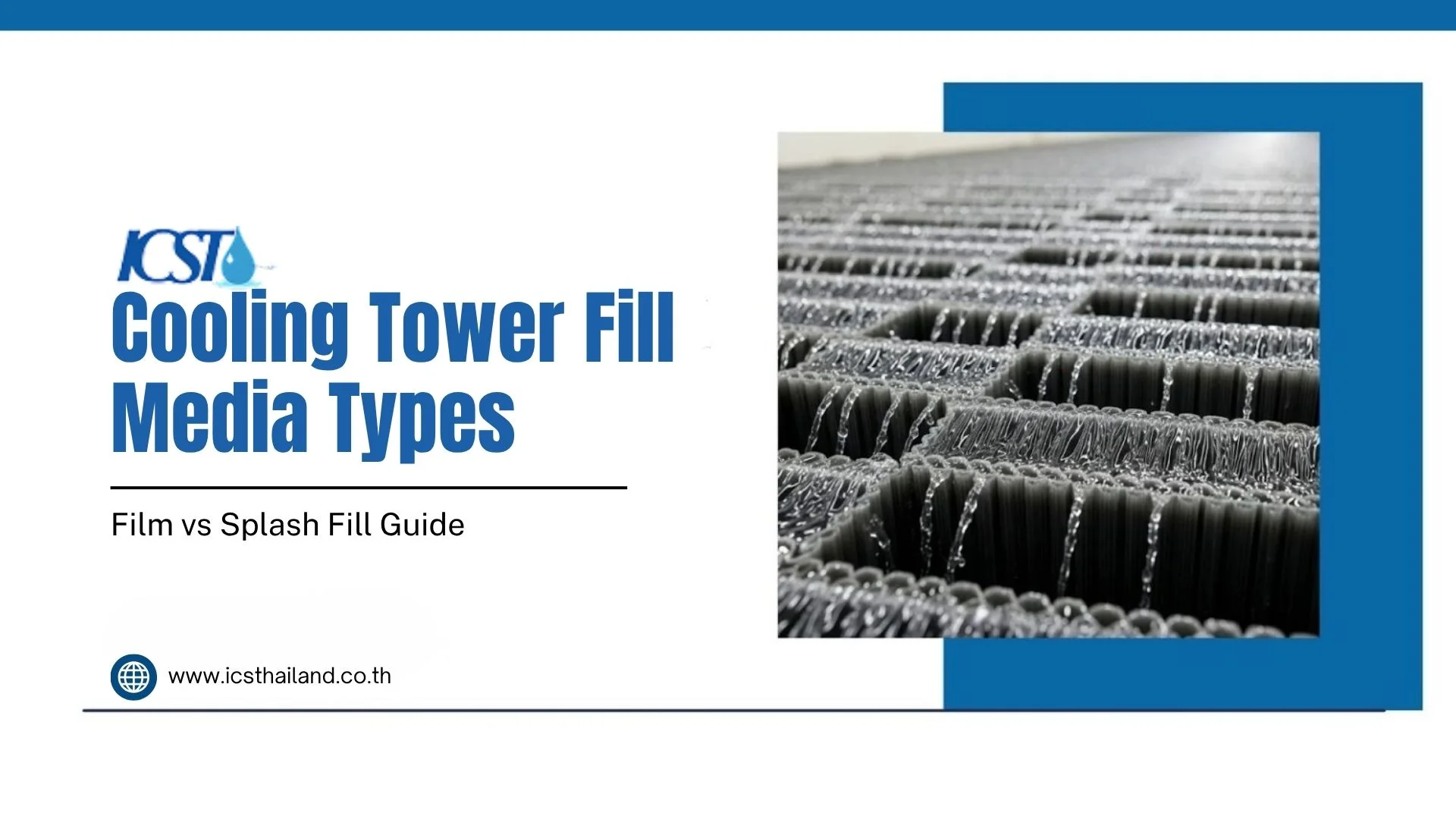
Cooling tower fill media types fall into two main categories: film fill and splash fill. Film fill spreads warm water into a thin layer across specially shaped sheets to maximize surface contact with air, delivering high efficiency in clean water systems.
Splash fill breaks water into droplets using bars or slats, sacrificing some efficient heat transfer for far better resistance to fouling in demanding conditions. Choosing the right fill media for your site depends entirely on your water quality, maintenance capacity, and performance goals.
What Are Cooling Tower Fill Media Types?
Understanding the available cooling tower fill media types is essential for optimizing your cooling operations. These structures directly impact cooling efficiency and system performance, functioning as the tower packing that does most of the actual heat rejection work. Which materials make up these critical components?
- They are internal structures that increase the heat transfer surface area, sometimes called cooling tower packing in engineering documentation.
- The market primarily offers two main types.
- These are film fill and splash fill.
- Their key function is to improve evaporation efficiency within the tower, and the fill material chosen directly shapes how well the tower performs over its lifespan.
How Cooling Tower Fill Media Function: The Core Cooling Principles
Before comparing film and splash fill directly, it helps to understand the basic cooling tower fill principles both designs rely on, since every fill type exists to solve the same underlying problem.
- The core job is removing waste heat: A cooling tower exists to reject waste heat from a process loop, and the cooling tower fill function is to make that heat transfer as efficient as possible before the water returns to service.
- Evaporative cooling drives the process: As hot water cascades through the fill, evaporative cooling pulls heat out of the circulating water and releases it as warm air rising through the tower.
- Air flow determines performance: Fans draw cool air in and push it through the fill against the falling water, and how well that air flow contacts the water determines how efficiently the cooling tower operates.
- Surface area and contact time matter most: Fill media works by increasing water’s surface area and the contact surface between water and air, which is exactly what lets fill prolong residence time long enough for real cooling to happen.
- Temperature drives the physics: The gap between incoming water temperature and the ambient air, along with the actual water flow rate, sets how much of the evaporation process can realistically occur inside a given tower footprint, especially during high temperatures in summer.
Film Fill Explained: High Efficiency Cooling Performance
What Is Film Fill?
Film fill represents the industry standard for clean water applications. It is engineered to maximize surface area within a compact space. What exactly does this media look like?
- It consists of thin sheets, usually manufactured as PVC fill, arranged as stacked fill sheets inside a fill pack assembly.
- The design forces water to spread into a very thin film across the thin PVC sheets.
- This structure maximizes air exposure.
How Film Fill Works
Film fill is engineered to optimize heat exchange by forcing close interaction between air and water. The process works as follows:
- The thin sheets create a large surface area for water to spread across, maximizing its exposure to the air.
- This design increases the duration of direct contact between air and water.
- The structure also slows the water’s descent through the cooling tower, allowing for more effective heat transfer.
Advantages of Film Fill
Many engineers prefer this media for its impressive thermal capabilities. It allows facilities to achieve high cooling targets in smaller physical footprints, often running at close to peak efficiency when water stays clean. What specific benefits does it offer?
- It provides the high thermal performance available from any standard fill design.
- The system requires lower energy consumption to operate, helping the tower reach optimal performance without oversized fans.
- It allows for a highly compact tower design.
Limitations of Film Fill
Despite its efficiency, this material requires specific operational conditions to function properly. Dirty environments quickly compromise its structural advantages. What drawbacks should you consider?
- The material is highly sensitive to fill fouling.
- It is not ideal for dirty water or industrial processes with heavy contaminant loads.
- The system requires frequent and rigorous maintenance, and neglecting it can mean higher energy costs as fouled sheets restrict airflow.
Splash Fill Explained: Durability in Harsh Conditions
What Is Splash Fill?
Industrial environments with poor water quality require robust solutions. This media type sacrifices some efficiency for extreme durability. What defines this rugged material?
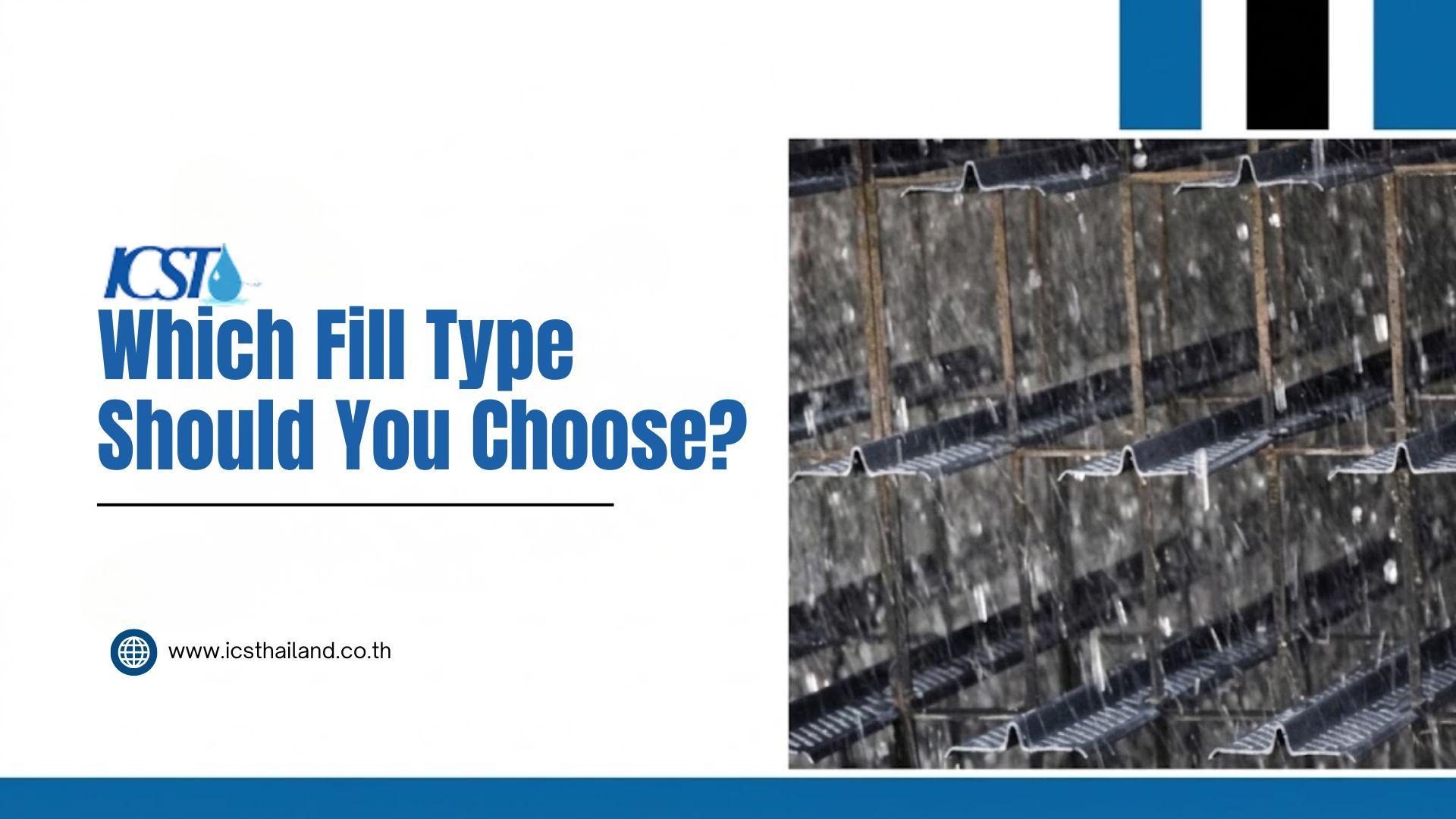
- It consists of individual bars or slats.
- The design physically breaks falling water into small droplets.
- It relies on gravity and impact rather than surface spreading.
How Splash Fill Works
This medium uses kinetic energy to facilitate cooling. As water drops through the tower, it hits multiple layers of material. How does this action cool the water?
- Water splashes across successive layers of horizontal bars.
- The impact enhances evaporation through constant turbulence.
- It creates new droplets continuously as water falls.
Advantages of Splash Fill
Facilities processing contaminated water rely heavily on this robust design. It maintains consistent performance even when debris enters the system, and it tolerates poor quality water far better than film fill. What makes this media so reliable?
- It is highly resistant to fill fouling and scaling.
- The material works exceptionally well with poor water quality, protecting other components downstream from scale carryover.
- It offers a very long operational lifespan even in challenging environments.
Limitations of Splash Fill
The rugged nature of this media comes with noticeable performance trade-offs. Facilities must accommodate these compromises during the design phase. What are the main limitations?
- It delivers lower film fill efficiency compared to alternative designs.
- The system requires more energy to meet cooling goals.
- It requires a significantly larger physical footprint.
Splash fill is ideal for industrial environments with contaminated water.
Film Fill vs Splash Fill Performance: Comparison Table
| Feature | Film Fill | Splash Fill |
| Efficiency | Very high | Moderate |
| Water Quality Tolerance | Low | High |
| Fouling Resistance | Low | High |
| Maintenance | High | Low |
| Heat Transfer Surface | Maximum | Moderate |
| Energy Consumption | Lower | Higher |
| Lifespan | Moderate | Long |
| Best Use Case | Clean systems | Dirty/industrial systems |
Which Fill Type Should You Choose?
Making the correct choice between different cooling tower fill media types prevents unnecessary expenses. The wrong fill choice leads to higher costs and severely reduced performance.
Choose Film Fill If:
Certain operational conditions make this high-performance media the obvious choice. You must guarantee pristine water conditions to maintain its benefits. When is this the right option?
- You need maximum thermal efficiency.
- Your water quality is highly treated and exceptionally clean, supported by proper water treatment upstream of the tower.
- Your facility has limited physical space for the tower.
Choose Splash Fill If:
Industrial applications frequently demand a more forgiving cooling solution. This media thrives where other designs fail prematurely. When should you specify this robust option?
- The cooling water contains impurities or suspended solids.
- Your facility has limited maintenance access.
- You prioritize long-term durability over compact design.
The Hidden Factor: Fill Fouling and Its Impact on Performance
What Is Fill Fouling?
Contamination inside the cooling tower destroys system efficiency rapidly. This issue plagues many facilities that fail to monitor their water quality. What exactly causes this problem?
- It involves the heavy buildup of mineral scale.
- It includes the accumulation of environmental dirt.
- It features aggressive biological growth like algae.
Why Fouling Is Critical
Ignoring contamination leads to catastrophic system failures and massive expenses. The physical blockage changes how the entire tower operates. Why must you prevent this issue?
- It severely reduces the heat transfer surface effectiveness.
- The buildup blocks critical airflow through the media.
- It drastically increases routine maintenance costs.
Which Fill Performs Better Under Fouling?
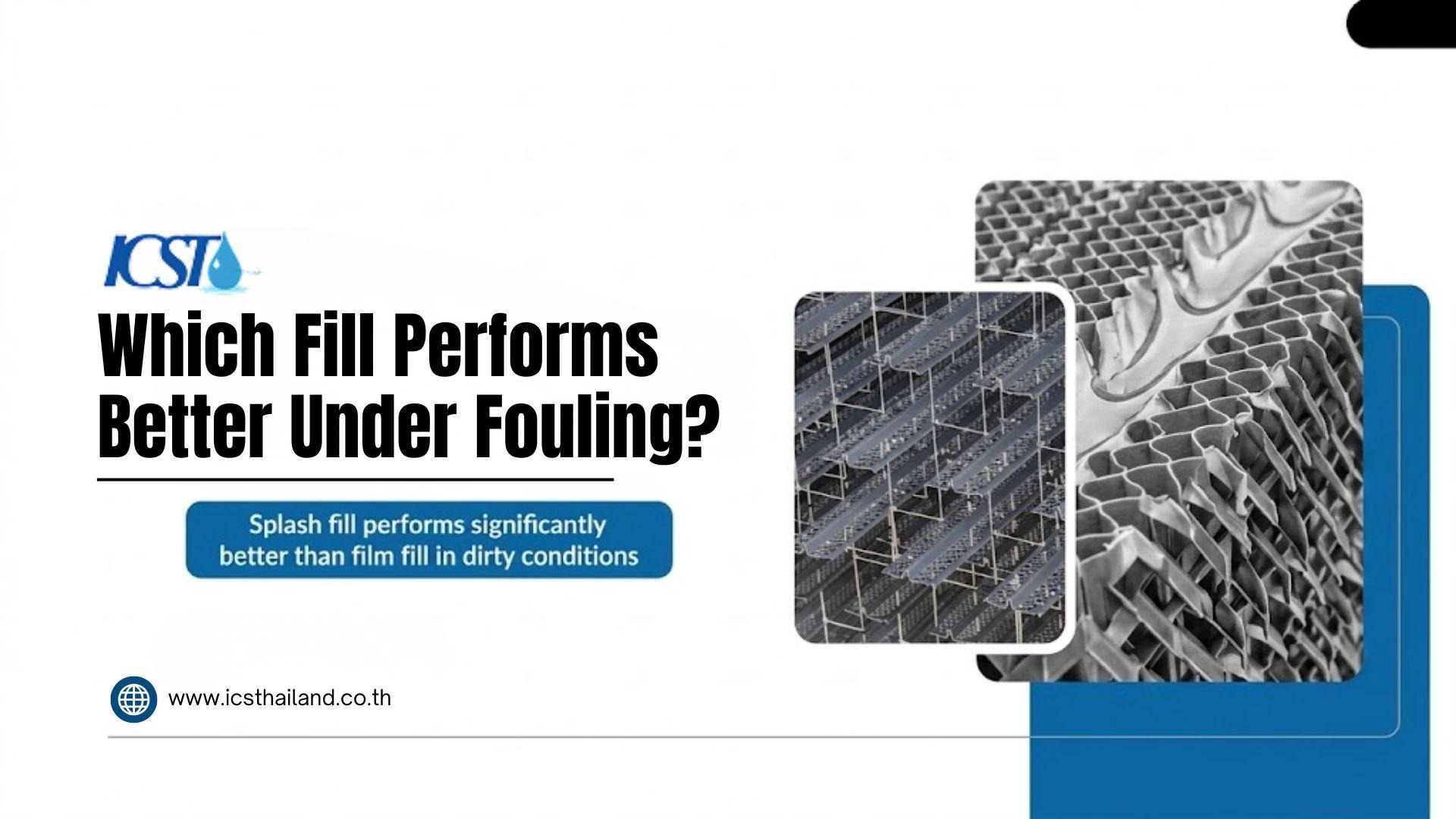
Different cooling tower fill media types react uniquely to heavy contamination. One design clearly outperforms the other in harsh conditions. Which option survives dirty water?
Splash fill performs significantly better than film fill in dirty conditions.
Fouling is the primary reason film fill systems fail prematurely.
Real-World Applications Where Each Fill Type Performs Best
Film Fill Applications
Clean environments perfectly match the tight tolerances of this efficient media. These sectors prioritize compact footprints and energy savings. Where do you typically find this material?
- Commercial HVAC systems for large buildings.
- Modern power plants with strict water treatment.
- High-density data centers requiring massive cooling capacity.
- Pharmaceutical and electronics manufacturing facilities.
- Food and beverage processing plants with clean water sources.
Splash Fill Applications
Heavy industry requires cooling solutions that ignore debris and poor water chemistry. These sectors value uptime above all other metrics. Which industries rely on this durable design?
- Large-scale chemical processing plants.
- Heavy manufacturing and steel industries.
- Municipal and industrial wastewater facilities.
- Pulp and paper mills.
- Mining operations.
Key Takeaways
Selecting the correct cooling tower fill media types ensures your tower operates reliably for decades. Understanding these core principles guides you toward the most profitable engineering decision.
- Film fill remains the undisputed efficiency leader.
- Splash fill stands out as the ultimate durability leader.
- Your specific water quality determines the absolute best choice.
- Fouling represents the biggest risk factor to your system.
- Correct selection dramatically improves both lifespan and performance.
Final Thoughts on Cooling Tower Fill Media Types
Choosing the correct cooling tower fill media types dictates the success of your thermal management strategy. By carefully evaluating film fill efficiency against the rugged nature of splash fill, you protect your capital investment.
Always monitor your system for fill fouling to maintain a clean heat transfer surface. Whether you select high-performance PVC fill or a durable splash alternative, aligning the media with your exact water quality guarantees optimal long-term operation.
Ready to optimize your cooling tower’s performance? Explore our industry-leading solutions and expert guidance at ICST to find the perfect fill media for your needs.
Frequently Asked Questions
What are the main types of cooling tower fill media?
Film fill and splash fill are the two primary types. Film fill spreads water into thin layers for maximum heat transfer, while splash fill breaks water into droplets for better fouling resistance and durability in industrial environments.
Which is more efficient, film fill or splash fill?
Film fill is more efficient because it creates a larger heat transfer surface area. However, its performance drops quickly in dirty water conditions, where splash fill becomes more reliable despite lower efficiency.
What is fill fouling in cooling towers?
Fill fouling refers to the buildup of scale, dirt, or biological growth on the fill media. It reduces airflow and heat transfer efficiency, leading to higher energy consumption and system performance issues.
When should you use splash fill instead of film fill?
Splash fill should be used when water quality is poor, contains solids, or has a high risk of fouling. It is ideal for industrial applications where durability and low maintenance are more important than maximum efficiency.
What material is commonly used in cooling tower fill?
Most film fill is made from PVC fill, which offers high efficiency and corrosion resistance. Splash fill can be made from PVC, polypropylene, or wood, depending on the application and environmental conditions.