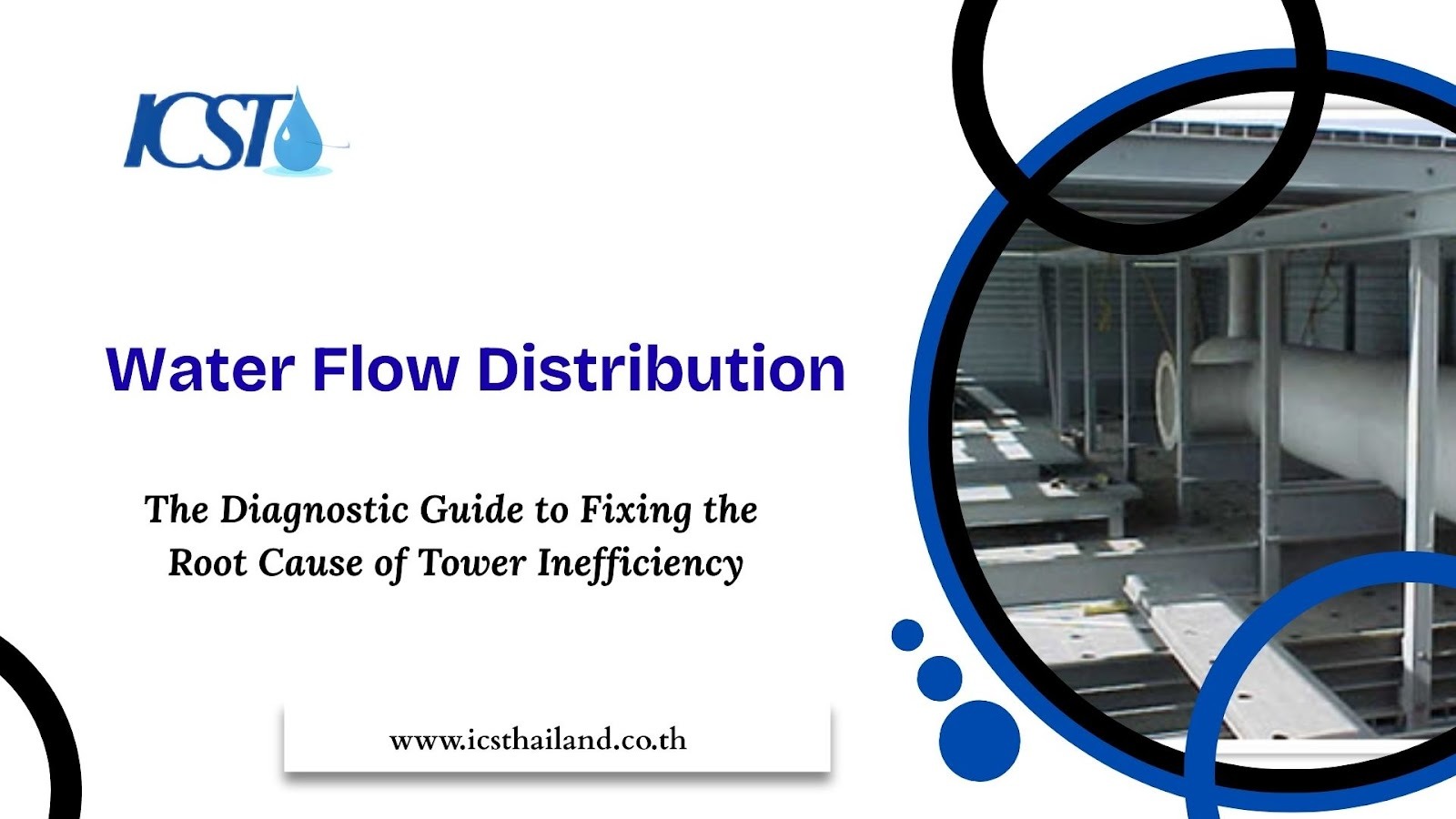
An industrial cooling tower is a finely tuned system where every component must work in harmony to achieve maximum thermal efficiency. However, one issue stands out as the single fastest way to lose thermal capacity: uneven Water Flow Distribution. When water does not spread uniformly over the fill media, it forces the chiller to work harder, consuming excess energy and driving up operational costs.
Fixing distribution problems is not just a maintenance task; it is a direct investment in your facility’s financial health. Proper water flow yields immediate and measurable energy savings. It also significantly reduces long-term maintenance costs by preventing issues like concentrated scale buildup and biological growth in overly saturated areas.
In this blog post, we will explore how addressing the core problem of poor water flow can extend the life of your equipment and improve overall plant reliability. We will also guide you through high-performance replacement cooling tower parts and components.
Diagnosis: Identifying Poor Water Flow Distribution (Actionable Steps)
Spotting poor water flow early can prevent catastrophic failure and costly downtime. You do not need complex tools to start your diagnosis; a trained eye and attention to performance data are your most powerful initial assets. This section provides actionable steps to identify distribution issues before they escalate.
The Visual Inspection:
A visual check during operation is the quickest way to spot trouble. Look for signs like unusual vibrations, uneven wear, or abnormal noises, which could indicate an imbalanced system. Regular monitoring of cooling tower components can help identify these issues early and prevent further damage.
- Dry Spots or Channelling: Look for areas on the fill media that are visibly dry or have water running down in concentrated streams rather than a uniform sheet. These “channels” indicate that large sections of the fill are not participating in the cooling process.
- Incomplete Spray Pattern: Observe the spray nozzles. Are they producing a full, uniform cone or square of water? Gaps, streams, or sputtering indicate blockages or wear that disrupt the initial spread of water.
- Uneven Airflow: Check for areas where air movement feels weaker or stronger. Variations in airflow can indicate blockages, fan issues, or improper alignment, reducing the cooling tower’s efficiency.
The Performance Audit:
Your cooling tower’s performance data tells a clear story, but understanding the right metrics is key. By focusing on specific indicators, you can connect the numbers to physical signs of water flow distribution issues you’ve noticed. Here are a few metrics to watch:
- High Approach Temperature: A high approach temperature, which is the difference between the leaving cold water temperature and the ambient wet-bulb temperature, is a classic sign of inefficiency. When water bypasses the fill, it cannot cool effectively, leading to a smaller temperature drop.
- High Motor Amperage: If the chiller’s compressor is drawing more power than usual to meet the cooling demand, it is often compensating for the tower’s poor performance. Inefficient cooling forces the entire system to work harder.
The Root Symptoms:
The physical condition of your tower’s internals provides clear signs of potential issues. Common symptoms of water distribution failure include uneven water flow, mineral buildup, or corrosion within the system.
Regular cooling tower maintenance are essential to prevent these issues from escalating and ensure optimal performance of your water distribution system.
- Localised Scale Buildup: Dry or low-flow areas experience rapid water evaporation, leaving behind concentrated mineral deposits. If you see heavy scaling in some sections and not others, poor distribution is the likely cause.
- Heavy Biological Growth: Conversely, areas with excessive water flow can become breeding grounds for algae and biofilm, which thrive in constantly wet, low-air-velocity environments.
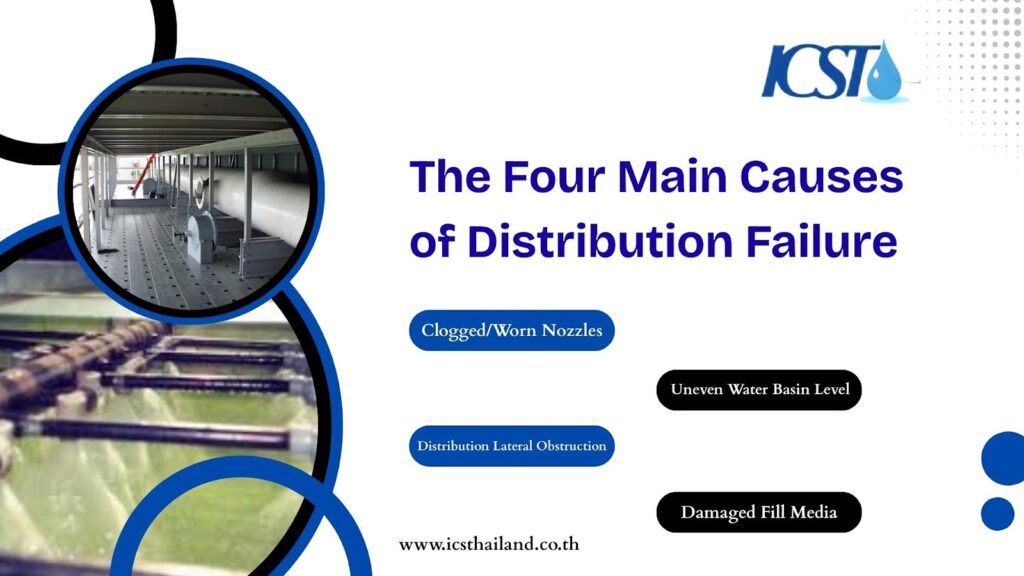
The Four Main Causes of Distribution Failure
Once you’ve identified an issue with water flow distribution, the next step is to determine which specific component has failed. Typically, four main culprits disrupt uniform water flow. Knowing how to inspect and fix each one is essential for restoring proper water flow distribution and ensuring your cooling tower operates efficiently.
Clogged/Worn Nozzles:
Over time, spray nozzles can become clogged with sediment, scale, or debris drawn into the system. This blockage restricts water flow and deforms the intended spray pattern, creating dry spots on the fill media below. Physical wear can also degrade the nozzle’s orifice, leading to an inconsistent and ineffective spray.
Improvement Strategy:
- Replace any outdated or damaged nozzles with modern, high-efficiency, non-clogging designs.
- Newer nozzles ensure a consistent spray pattern, even when flow rates vary.
- Look for designs with larger orifices and anti-fouling materials to reduce the risk of future blockages.
- This is a low-maintenance, high-impact upgrade.
Uneven Water Basin Level:
In cross-flow cooling towers, the hot water distribution basin is designed to overflow a series of weirs, creating a uniform curtain of water. If the basin is not perfectly level, water will overflow unevenly, starving some areas of the fill while overloading others. This issue is often caused by structural settling or malfunctioning float valves.
Improvement Strategy:
- Restoring a level basin is typically a simple mechanical adjustment.
- Use a spirit level to check the basin’s alignment.
- Make necessary adjustments to the basin supports.
- Inspect the float valve or makeup water system for proper functioning.
- Ensure the system maintains a consistent water level to prevent overflows and low-water conditions that can disrupt distribution.
Distribution Lateral Obstruction:
The internal piping of your distribution system, including headers and lateral pipes, is susceptible to buildup. Biofilm, mud, sludge, and scale can accumulate inside, obstructing flow and preventing water from reaching all nozzles. In severe cases, this can completely block off entire sections of the distribution system.
Improvement Strategy:
- Remove blockages: Begin with a thorough chemical cleaning or high-pressure jetting to clear existing obstructions from the internal piping.
- Prevent future buildup: Install a side-stream filtration system. This technology continuously filters a portion of the basin water, removing suspended solids and debris before they can settle and cause new blockages.
Damaged Fill Media:
The fill media is the heart of your cooling tower, but it can be damaged by age, improper maintenance, or excessive water weight from poor distribution. When fill packs collapse, warp, or become brittle, they can no longer support a uniform flow of water. This creates large channels where water and air cannot mix effectively.
Improvement Strategy:
- Inspect the fill media for signs of sagging, cracking, or collapse.
- Assess the extent of the damage to determine if a partial or full replacement is needed.
- Replacing damaged fill helps restore the structural foundation necessary for uniform water flow.
- This is one of the most effective ways to regain lost thermal performance.
Component-Specific Improvement Strategies (Retrofit Focus)
Investing in modern components can deliver a significant return through improved efficiency and reduced maintenance. Retrofitting key parts of your distribution system is a proactive strategy to lock in long-term performance gains.

Upgrading to High-Efficiency Nozzles:
Modern nozzle designs are engineered for maximum coverage and reliability. Upgrading can address common issues like uneven water distribution and frequent clogging, which directly impact your cooling tower’s thermal efficiency.
- Wide, Uniform Spray: They are designed to produce a consistent spray pattern across a wider range of operating pressures, ensuring no dry spots.
- Clog-Resistant: Features like larger orifices and smooth internal surfaces prevent debris from accumulating.
- Easy Maintenance: Many new nozzles are designed for tool-free installation and removal, making cleaning and replacement simple and fast.
Optimising Flow to Reduce Drift:
A uniform spray pattern does more than just improve cooling. It plays a crucial role in water conservation by minimising drift, the small droplets of water that escape the tower with the exhaust air. But how exactly does an even spray help reduce this water loss?
- Lower Droplet Velocity: When water is distributed evenly, it flows over the fill as a thin film rather than as high-velocity droplets.
- Improved Drift Eliminator Performance: This gentle flow means the drift eliminators can more effectively capture entrained water droplets, significantly cutting down on water loss and chemical consumption.
Structural Hardware for Distribution Systems:
Corrosion-resistant hardware ensures durability and reduces maintenance costs for your distribution system. It prevents system failures, ensures optimal performance, and extends the lifespan of critical components, saving time and money in the long run.
- Maintains Alignment: Corrosion-resistant materials like stainless steel or fibreglass-reinforced plastic (FRP) prevent sagging and misalignment over time.
- Ensures Longevity: This hardware ensures the entire distribution system remains level and stable, preserving the integrity of your water flow pattern for years to come.
Long-Term Payback and Next Steps
Proper water flow distribution is the foundation of a high-performing and cost-effective cooling tower. By diagnosing and addressing inefficiencies, you unlock direct energy savings by reducing the load on your chiller.
The indirect savings are just as significant, including lower water makeup costs due to reduced drift and decreased chemical usage from preventing scale and biofilm hot spots. These combined benefits deliver a rapid and compelling return on investment.
If you suspect that poor flow is impacting your operations, do not wait for a critical failure. Taking proactive steps today protects your assets and boosts your bottom line.
Our team of experts can help you identify hidden inefficiencies and develop a strategy to restore your system to peak performance. If you suspect poor flow is impacting your operations, contact our thermal audit team for a professional distribution system inspection. Visit the ICST website to learn more and get started today!
Frequently Asked Questions
What causes uneven water flow in a cooling tower?
Uneven water flow is usually caused by clogged or worn nozzles, an unlevel hot water basin, obstructed distribution pans or laterals, or damaged fill media. These issues disrupt uniform coverage, leading to dry spots, scale buildup, and a drop in thermal performance.
What is the quickest way to diagnose water flow problems?
A real-time visual inspection is the quickest method. Check for dry fill areas, uneven basin overflow, blockages in nozzles, and abnormal spray patterns. Combine this with performance data like approach temperature for an accurate diagnosis.
How often should nozzles be inspected or replaced?
Nozzles should be inspected every 3–6 months and replaced if they show signs of clogging, wear, or spray pattern deformation. Modern high-efficiency nozzles offer longer life and better coverage.