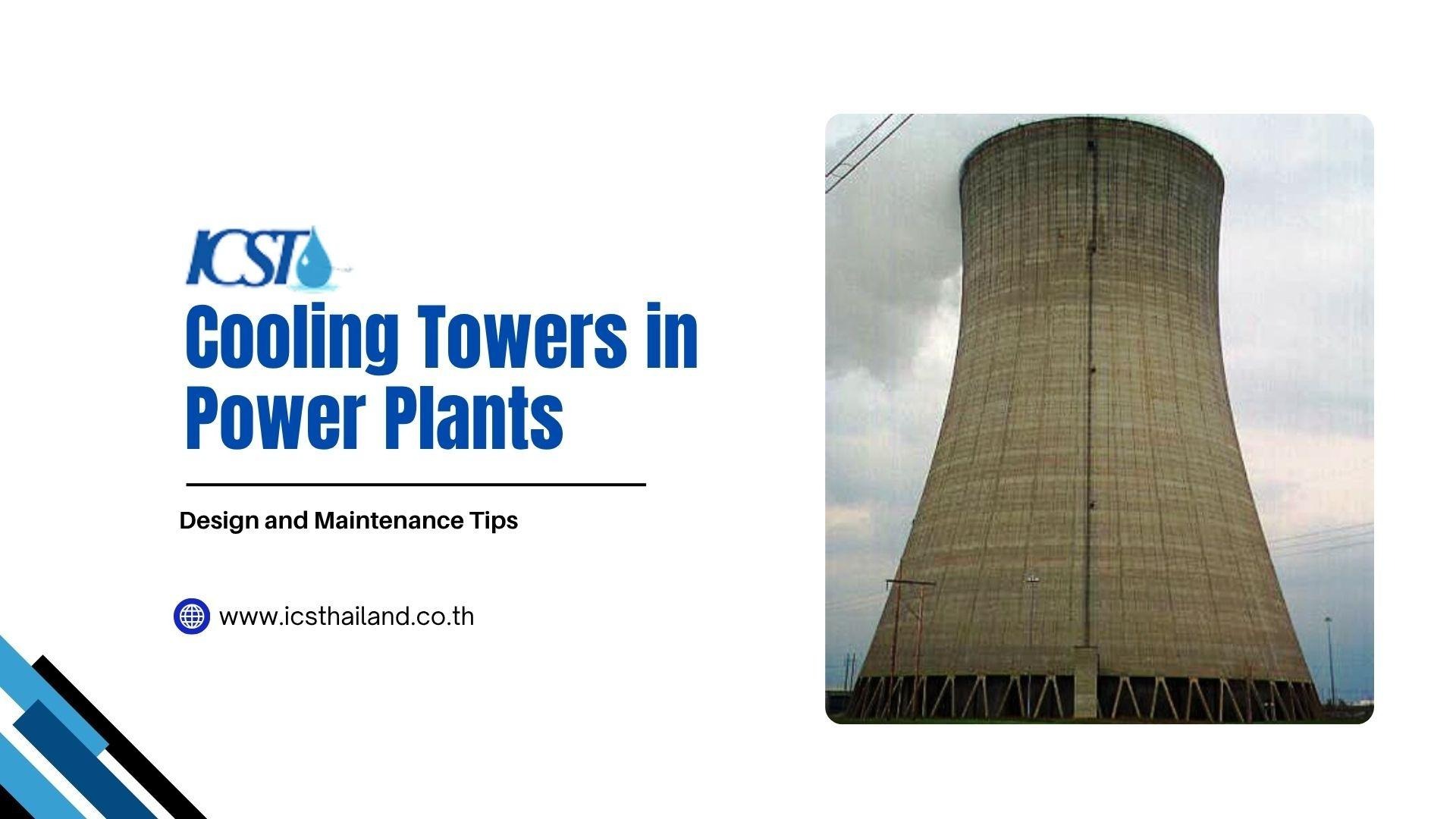
Cooling towers in power plants reject the massive waste heat generated during electricity production, keeping steam condensers under vacuum so turbines run at rated efficiency.
Two primary designs dominate this application: natural draft cooling towers, which rely on natural convection and moist air buoyancy to move air without fans, and mechanical draft cooling towers, which use large fans to force air and water flow through the fill.
A single tower failure can force an entire generating unit offline, so design precision and rigorous maintenance directly protect both plant output and revenue.
Table of Contents
- The Indispensable Role of Cooling Towers in Power Generation
- Why Cooling Towers Are Crucial for Power Plants
- Preventing Thermal Pollution
- Improving Water Conservation
- How Evaporative Cooling Works in a Power Plant Cooling Tower
- Step 1: Hot Water Enters the Cooling Tower
- Step 2: Evaporation Removes Heat
- Step 3: Cooled Water Returns to the Condenser
- Step 4: Warm Air Carries Heat Away
- Step 5: Wet Bulb Temperature Limits Cooling Performance
- Types of Cooling Towers Used in Power Plants
- Mechanical Draft Cooling Towers
- Natural Draft Cooling Towers (Hyperboloid Design)
- Key Components and Power Plant Specific Design Considerations
- Fill Media Selection
- Drift Eliminators
- Water Distribution Systems
- Basin Design and Construction
- Essential Maintenance Practices for Industrial Cooling Towers
- Predictive Maintenance Technologies
- Cold-Weather Operation and Freeze Protection
- Specialized Inspections and Monitoring
- Advanced Water Chemistry Management
- Challenges in Power Plant Cooling Tower Management and Their Solutions
- High Heat Rejection Demands
- Water Stress Challenges
- Aging Cooling Tower Infrastructure
- Innovative Technologies Improving Cooling Tower Performance
- Conclusion
- Frequently Asked Questions
The Indispensable Role of Cooling Towers in Power Generation
Power plant cooling towers serve a mission-critical function that directly impacts both operational efficiency and environmental compliance. These systems reject waste heat from steam condensers, maintaining the vacuum conditions necessary for optimal turbine performance across thermal power stations of every fuel type.
The scale of operation sets power plant cooling towers apart from their commercial counterparts. A standard 500-megawatt coal power plant produces about 1,000 megawatts of excess heat that needs to be consistently dissipated. This enormous thermal load requires recirculating cooling water systems capable of moving tens of thousands of gallons per minute while maintaining precise temperature differentials.
Why Cooling Towers are Crucial
The relationship between cooling tower performance and overall plant efficiency is direct and measurable. Every degree of improvement in heat transfer efficiency translates to enhanced condenser vacuum, improved turbine efficiency, and increased power output, which is exactly why maintaining operational efficiency stays a constant priority for plant engineers.
Cooling towers serve two critical environmental functions:
- Prevention of Thermal Pollution: Cooling towers help protect natural water bodies by rejecting waste heat into the atmosphere instead of discharging it directly into rivers or lakes. This reduces the risk of thermal shock to aquatic ecosystems, a growing concern as environmental regulations become stricter and public awareness of ecological impacts increases.
- Water Conservation: With rising water scarcity, modern cooling tower operations focus on improving efficiency while reducing water consumption. Advanced designs and maintenance practices can lower makeup water requirements by 20-30% compared to older systems, supporting sustainable operations.
How Evaporative Cooling Works in a Power Plant Cooling Tower

Every power plant cooling tower operates using the same principle: evaporative cooling. This natural heat transfer process keeps power plants running efficiently by lowering the temperature of water before it returns to the condenser.
Step 1: Hot Water Enters the Cooling Tower
The cooling cycle begins when hot water leaves the steam condenser and enters the cooling tower. The water flows over specially designed cooling tower fill, which increases the surface area and allows maximum contact between water and air.
As the water moves downward through the fill, ambient air enters through the air inlet openings at the bottom of the tower and travels upward.
Step 2: Evaporation Removes Heat
When warm water comes into contact with the incoming air, a small amount of water evaporates. This evaporation process requires latent heat, which is taken directly from the remaining water.
As a result:
- Water temperature drops naturally.
- Heat transfers from the water to the air.
- The remaining water becomes cool enough to be reused.
This process is the foundation of every evaporative cooling tower, regardless of its size or application. Whether it is a wet cooling tower or a hybrid design, the same heat transfer principle applies.
Step 3: Cooled Water Returns to the Condenser
After passing through the cooling tower, the cool water is collected in the basin and pumped back to the condenser.
There, the cooled water:
- Absorbs heat from the exhaust steam.
- Condenses the steam back into water.
- Restarts the power generation cycle.
This continuous circulation helps maintain efficient plant operation.
Step 4: Warm Air Carries Heat Away
Unlike a mechanical heat exchanger, a cooling tower removes heat through convective heat transfer and evaporation.
As the surrounding air absorbs heat and moisture:
- The air becomes warmer and lighter.
- Moist air buoyancy causes the warm, moisture-rich air to rise.
- Fresh ambient air is naturally pulled into the tower to replace it.
This continuous airflow is known as the natural draft effect, allowing the cooling process to continue without interruption.
Step 5: Wet Bulb Temperature Limits Cooling
The performance of a wet cooling tower depends heavily on the local wet bulb temperature. Since evaporative cooling cannot reduce water below this temperature, it serves as the practical cooling limit.
A properly designed cooling tower aims to:
- Cool circulating water as close as possible to the wet-bulb temperature.
- Maximize heat rejection efficiency.
- Minimize energy losses during operation.
As the heated, moisture-filled air exits the top of the tower, it forms the familiar cooling tower plume, carrying the rejected heat safely into the atmosphere.
Types of Cooling Towers in Power Plants
Selecting the appropriate cooling tower type for power generation facilities requires careful analysis of site conditions, operational requirements, and economic factors. What are the key considerations that drive these critical design decisions?
Mechanical Draft Towers
Mechanical draft designs use fans to actively move air through the fill rather than relying on buoyancy alone.
- Induced draft cooling tower: Designs dominate power plant applications due to superior performance characteristics, reduced recirculation potential, and better protection of mechanical components from corrosive environments.
- Multi-cell design: Large power plants typically employ 6 to 12 cooling cells per unit to provide operational flexibility, maintenance access, and redundancy during peak demand periods.
- Fan and drive systems: Heavy-duty fans ranging from 24 to 40 feet in diameter move massive air volumes, requiring robust gearboxes rated for continuous operation and variable frequency drives for energy optimization.
These large cooling tower systems trade higher energy consumption for tighter control over airflow, which matters most at sites with limited natural wind exposure or unusually high heat loads.
Natural Draft Towers (Hyperboloid)
Natural draft towers represent the pinnacle of large-scale cooling technology for base-load power generation, and they remain the most recognizable structures associated with nuclear power plants and large coal stations alike. These concrete giants, often exceeding 400 feet in height, achieve natural draft cooling without mechanical fans, relying entirely on buoyancy-driven airflow.
As of the most recent industry record, the world’s tallest cooling tower stands at roughly 228 meters, built at the Jinshan Second Thermal Power Branch in Hohhot, Inner Mongolia, China, in 2023, surpassing earlier record holders in India and Germany.
Key Components & Their Power Plant-Specific Design
The demanding environment of power plant cooling towers requires component selection and design that goes beyond standard industrial practices. How do engineers ensure reliable performance under these extreme conditions?
Fill Media Selection
- Film Fill Systems: High-efficiency film fill provides maximum heat transfer surface area per unit volume but requires excellent water quality and regular maintenance to prevent fouling and scaling
- Splash Fill Applications: More forgiving of poor water quality and biological growth, splash fill systems offer reliable performance with reduced maintenance requirements at the cost of lower thermal efficiency
- Hybrid Configurations: Some installations combine film fill in upper sections with splash fill below to optimize both efficiency and maintainability
Drift Eliminators
Drift elimination takes on critical importance in power plant applications due to the massive air and water volumes involved. Even small drift rates can result in significant water losses and potential environmental compliance issues. Modern drift eliminators achieve removal efficiencies exceeding 99.95% while maintaining low pressure drop across the air path.
Water Distribution Systems
Power plant cooling towers require distribution systems capable of handling flow rates exceeding 100,000 gallons per minute while maintaining uniform coverage across expansive fill areas. Gravity-fed distribution basins with precisely engineered orifices provide reliable, low-maintenance operation compared to pressure spray systems.
Basin design must accommodate massive water volumes while providing adequate pump suction conditions. Reinforced concrete construction with chemical-resistant coatings withstands the aggressive environment created by treated cooling water and continuous thermal cycling.
Essential Maintenance for Industrial Cooling Towers
The Imperative of Continuous Uptime
Cooling towers in power plants support generation assets valued at hundreds of millions of dollars. A single cooling tower failure during peak summer demand can force unit derating or shutdown, resulting in lost revenue exceeding $100,000 per day. This economic reality drives maintenance philosophies that emphasize prevention over reaction.
Predictive maintenance technologies are transforming cooling tower care in power generation, helping teams identify and address potential issues before they affect performance.
- Vibration monitoring systems: Continuously track the condition of fans and gearboxes to detect early signs of wear or failure.
- Thermal imaging: Pinpoints fill fouling and distribution problems, enabling proactive maintenance to maintain optimal performance.
- Water quality monitoring: Provides real-time feedback on the effectiveness of water treatment programs, ensuring efficient operation.
Cold-Weather Operation and Freeze Protection
Facilities operating in cold climates face a distinct set of risks that summer-focused maintenance plans often overlook. During very cold weather, exposed water surfaces and fill media can ice over quickly if airflow is not properly managed, which restricts airflow further and stresses structural components.
Operators in these regions typically reduce fan speed, partially bypass cold cells, or adjust water distribution during freeze warnings to prevent ice buildup on the fill and drift eliminators, protecting both performance and structural integrity through the coldest months of the year.
Specialized Inspections and Monitoring
- Thermal performance testing: Comprehensive testing protocols measure approach temperature, cooling range, and heat rejection capacity under varying load conditions to verify design performance and identify degradation trends.
- Vibration analysis: Advanced monitoring systems track fan assembly condition using accelerometers and displacement sensors, enabling predictive maintenance scheduling before catastrophic failures occur.
- Structural integrity checks: Detailed inspections of concrete shells, FRP components, and timber structures identify stress cracking, corrosion, and deterioration that could lead to structural failure.
- Water flow and distribution audits: Flow measurement and visual inspection verify uniform water distribution across all fill sections, identifying clogged nozzles or damaged distribution components.
Advanced Water Chemistry Management
Water treatment for power plant cooling systems requires sophisticated chemical programs tailored to high-volume, continuous operation. The chemistry challenges extend beyond typical scale and corrosion control to include biological growth prevention and environmental compliance.
Water analysis protocols monitor multiple parameters, including pH, conductivity, hardness, alkalinity, chlorides, sulfates, and microbial content, using automated sampling systems for continuous data collection that enables real-time treatment adjustments and trend analysis.
Chemical treatment programs rely on corrosion inhibitors to protect materials like carbon steel and copper alloys from degradation, alongside biocides that control microbial populations capable of hindering heat transfer and causing microbiologically influenced corrosion.
Challenges and Solutions Power Plant Cooling Tower Management
Unique Operational Challenges
Power plant cooling towers face operational challenges that test the limits of both equipment and maintenance practices. What makes these systems particularly demanding compared to other industrial cooling applications?
High Heat Rejection Demands
Power generation facilities must maintain rated capacity regardless of ambient conditions, creating extreme stress on cooling systems during peak summer temperatures.
- Modern power plants face challenges with load-following operations, requiring cooling systems to adapt quickly to fluctuating thermal loads.
- Cycling between minimum load and full capacity increases stress on mechanical components.
- Advanced control systems are necessary to maintain optimal performance under changing conditions.
Water Stress Challenges
Growing water scarcity concerns increasingly impact power plant cooling operations. Regulatory pressure to reduce water consumption drives the adoption of dry cooling, hybrid wet-dry systems, and advanced water treatment technologies.
Zero liquid discharge requirements eliminate cooling tower blowdown, concentrating dissolved solids and increasing scaling potential.
Infrastructure Aging
Many power plant cooling towers were designed and built decades ago when water was abundant and environmental regulations were less stringent. Retrofitting these systems for modern performance and compliance standards requires creative engineering solutions and substantial capital investment.
Innovative Solutions for Industrial Cooling Towers
Modern technology offers unprecedented opportunities to improve cooling tower performance and reliability. Which emerging solutions show the greatest promise for power generation applications?
Advanced Water Treatment Technologies
- Side-Stream Filtration: High-rate multimedia filters remove suspended solids and reduce fouling potential while operating on a continuous basis without interrupting cooling water flow
- Membrane Technologies: Reverse osmosis and ultrafiltration systems concentrate cooling water beyond traditional limits while producing high-quality water for makeup applications
- Zero Liquid Discharge Systems: Crystallization and evaporation technologies eliminate cooling tower blowdown, recovering all process water while producing solid waste streams for disposal
Predictive Maintenance & IoT
IoT technology revolutionizes cooling tower monitoring by shifting from occasional inspections to ongoing condition tracking. Wireless sensor networks monitor vibration, temperature, flow, and chemical parameters in real-time, feeding data to artificial intelligence systems that predict maintenance requirements.
- Digital twin technology develops virtual replicas of cooling tower systems.
- Enables performance optimization and predictive maintenance scheduling.
- Combines real-time sensor data with thermodynamic calculations.
- Identifies opportunities to improve efficiency.
- Predicts component failure modes for proactive maintenance.
Conclusion
So, what’s the big takeaway from all this? The reliable operation of cooling towers in power plants depends on a crucial blend of smart design and careful upkeep. Effective Heat Management ensures these giants are engineered to handle immense heat loads, keeping your facility running efficiently.
From advanced water chemistry to smart monitoring and energy upgrades, staying proactive addresses unique challenges like water stress and aging infrastructure. Investing in these vital systems isn’t just about preventing downtime; it’s about securing long-term efficiency, sustainability, and profitability.
Ready to optimize your cooling tower operations? Partner with ICST for expert design, maintenance, and upgrade solutions tailored to your power plant’s needs.
Frequently Asked Question
What do cooling towers do in power plants?
Cooling towers reject waste heat from steam condensers into the atmosphere. This maintains optimal vacuum for turbines, directly boosting the plant’s efficiency and power output.
How is cooling tower efficiency maintained in power plants?
Efficiency is maintained through robust design, rigorous proactive maintenance, and continuous performance monitoring. This includes specialized inspections, advanced water treatment, and timely component upgrades.
What is the difference between natural draft and mechanical draft cooling towers?
Natural draft towers rely on buoyancy from the temperature difference between warm exhaust air and cooler ambient air, requiring no fans. Mechanical draft towers use large fans to force air through the fill, offering more precise control at the cost of higher energy use.
What new technology improves power plant cooling towers?
Modern solutions include advanced water treatment such as zero liquid discharge, predictive maintenance with IoT and AI, and energy-efficient upgrades like variable frequency drives and optimized fill media. These enhance reliability and reduce environmental impact.
What types of cooling towers are used in power generation?
The main types are mechanical draft towers, which are fan-driven and often built in multi-cell configurations, and natural draft towers, which are large hyperboloid structures relying on convection rather than mechanical airflow.