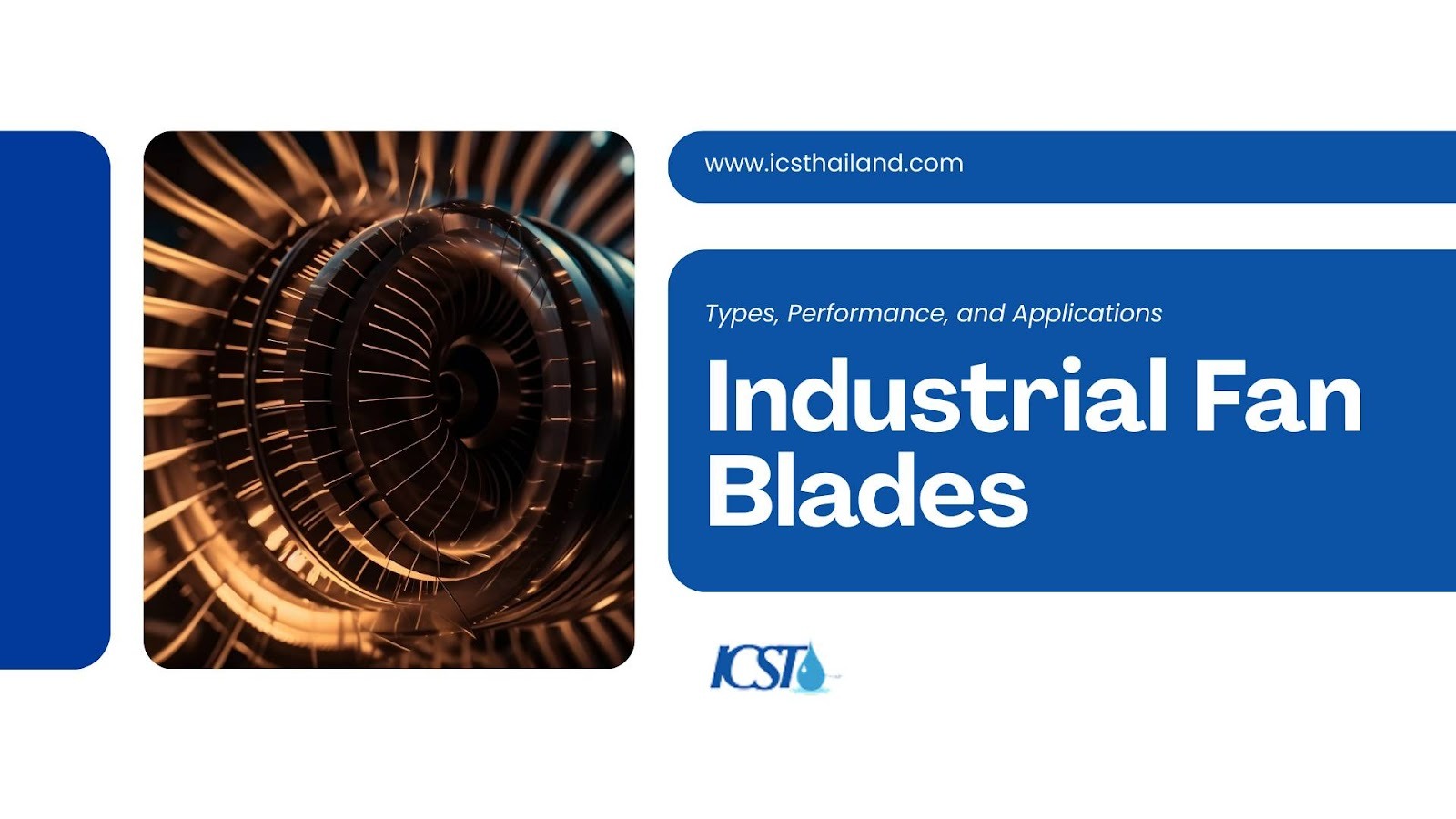
The “one-size-fits-all” approach to selecting industrial fan blades is obsolete. Modern industrial blades function as precision-engineered airfoils designed to minimize static pressure drop while maximizing volumetric flow.
As we approach 2026, new compliance standards require industrial fans to maintain peak efficiency even at variable speeds. This shift forces facility managers to rethink their cooling strategies. The stakes are high. Inefficient systems waste power and money.
Regional factors also play a massive role. For instance, International Cooling Solutions (Thailand) specializes in custom-engineered blades for the high-humidity and corrosive environments common in Asia and the Middle East. Industrial fan blade replacement is no longer a simple swap; it is an upgrade to your entire system.
Core Categories of Industrial Fan Blades
Understanding the two main categories of fans ensures you select the right components for your needs.
Axial Fan Blades (Volume-Driven)
Axial fan blades are designed for applications where air moves parallel to the fan shaft. These are the workhorses of general ventilation. They excel in industrial applications requiring high volume at low pressure.
- Propeller Blades: These suit low-resistance environments like warehouses or simple exhaust setups. They move massive amounts of air efficiently.
- Vane Axial & Tube Axial: These models feature blades positioned inside a cylindrical casing. Stationary guide vanes straighten the airflow. This increases pressure and efficiency for ducted systems.
- Application: Use these for high-volume cooling in data centers, HVAC systems, and large-scale industrial workspaces.
Centrifugal Fan Blades (Pressure-Driven)
Centrifugal fan blades move air perpendicular to the intake. This creates the high pressure needed to overcome filters, dampers, or long ducting.
- Backward Curved/Inclined: This is the gold standard for clean air efficiency. These blades are non-overloading and highly energy efficient.
- Forward Curved: Also known as “multi-vane” blowers or blower wheels. They move high volumes at low speeds. They are ideal for quiet operations like residential furnaces.
- Radial Blades: These straight, heavy-duty blades handle air with dust, debris, or abrasive particulates.
- Application: These are critical for dust collection, flue gas extraction, and pneumatic conveying.
Material Science Comparison: FRP vs. Metal
In 2026, the industry has shifted toward Fiber-Reinforced Polymer (FRP) for cooling towers and chemical processes. This material offers superior lifecycle ROI compared to traditional steel or aluminum.
| Feature | FRP (Composite) | Extruded Aluminum | Stainless Steel |
| Corrosion Resistance | Superior (Acid/Salt/Geothermal) | Moderate (Prone to pitting) | High (Excellent for heat) |
| Weight | Ultra-light (Low start-up torque) | Lightweight | Heavy (High motor stress) |
| Design Flexibility | Unlimited (Complex airfoils) | Limited (Constant profiles) | Limited |
| Fatigue Life | High (Infinite design limit) | Limited (Cyclic failure) | Moderate |
| 2026 Application | Cooling Towers / Seawater | General HVAC / Office | High-Temp / Food Grade |
Choosing the right material is critical. Stainless steel blades resist heat but add weight. FRP resists corrosion and reduces wear on the motor.
Key Design Factors Impacting Performance
The shape of the blade determines how much energy the fan consumes. Advanced designs create massive savings in the long run.
Airfoil vs. Symmetrical
Non-symmetrical airfoils mimic aircraft wings. They provide 60–70% static efficiency. Simple flat blades rarely exceed 30%. Replacing flat blades with airfoils immediately boosts optimal performance.
Variable Chord and Twist
Effective blades are wider and more tilted near the hub. This design compensates for the difference in speed at the tip. It ensures the blade pulls air evenly across its diameter.
Blade Pitch Angle
The blade pitch angle is a critical setting. Increasing the pitch angle increases airflow volume but also raises power consumption. 2026 standards prioritize variable pitch designs. These systems adapt to real-time cooling loads, ensuring energy efficiency without manual adjustment.
Maintenance and Predictive Monitoring
Even the best fan blade requires maintenance. Ignoring this leads to cracks, imbalance, and failure.

- ISO 14694 G2.5 Standards: All industrial blades must be dynamically balanced. This prevents bearing wear and structural resonance.
- The “Weight Gain” Warning: In cooling towers, mineral scale buildup on blades causes catastrophic imbalance. This can lead to tower collapse.
- Leading Edge Protection: Sites in sandy environments need specialized coatings. These protect the blade from erosion and maintain aerodynamic shape.
Regular inspections help you avoid costly downtime. Look for chemical resistance issues or signs of fatigue.
Conclusion: Designing for Hydraulic Certainty
In the 2026 industrial landscape, industrial fan blades are a strategic asset. You must match the blade material and aerodynamic profile to your specific environmental constraints.
International Cooling Solutions (Thailand) ensures your facility remains technically feasible and environmentally sustainable. Do not settle for generic replacements. Choose custom solutions that fit your precise specifications.
Are you ready for the 2026 Ecodesign shift? Contact ICST’s Bangkok engineering team today for a Fan Performance Audit and ensure your facility meets the new global efficiency mandates.
Frequently Asked Questions (FAQs)
When should I schedule an industrial fan blades replacement?
You should schedule a replacement if you notice increased noise levels, excessive vibration, or visible cracks on the blades. Additionally, if your energy consumption has spiked, upgrading to modern airfoil designs can restore optimal performance and reduce operating costs.
What is the difference between axial fan blades and centrifugal fan blades?
Axial fan blades move air parallel to the shaft and are best for high-volume, low-pressure cooling in HVAC systems. Centrifugal fan blades (or blower wheels) push air perpendicular to the intake, creating the high pressure needed for ducted systems and dust collection.
Why are FRP blades better than stainless steel blades for cooling towers?
FRP (Fiber-Reinforced Polymer) blades offer superior corrosion resistance against acids and salts compared to stainless steel blades. They are also ultra-lightweight, which reduces stress on the motor and components, ensuring a longer lifecycle in harsh industrial applications.
How does the blade pitch angle affect fan performance?
The blade pitch angle determines how much air the fan moves. Increasing the pitch boosts airflow volume but requires more power. Modern industrial fans often use variable pitch designs to automatically adjust the angle, maintaining energy efficiency as cooling loads change.
Can I replace just the fan blades, or do I need a whole new system?
In most cases, you can perform a fan blade replacement without replacing the entire system. Swapping out old, flat blades for precision-engineered new blades is a cost-effective way to improve efficiency and extend the life of your existing industrial fan unit.