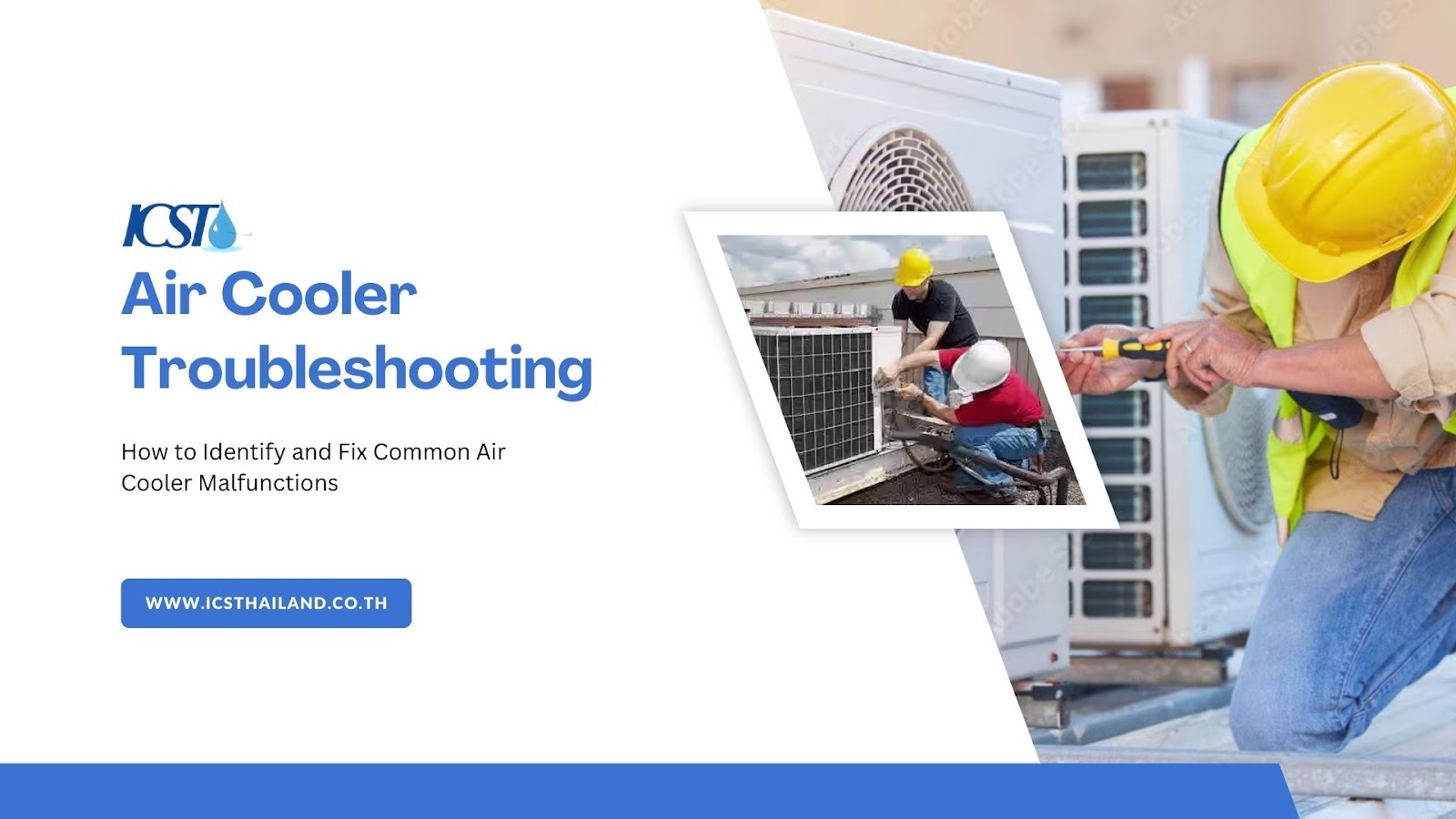
Air coolers are a cornerstone of industrial and commercial cooling infrastructure. They are energy-efficient, mechanically straightforward, and cost-effective to operate at scale. Facilities across manufacturing, food processing, warehousing, and data management depend on them to regulate temperature and protect both equipment and personnel.
Yet even the most reliable systems develop faults. A drop in output, a rattling motor, or unexpected water pooling are not just inconveniences—they are early signals of deeper cooling issues that, left unaddressed, can escalate into full system failure. Effective air cooler troubleshooting means identifying early warning signs and fixing them before they escalate.
This guide provides a complete framework for air cooler troubleshooting. It covers how these systems work, how to recognize malfunction symptoms, how to diagnose faults systematically, and how to apply targeted repair techniques that restore performance.
How Air Coolers Work
Understanding the mechanics behind air coolers is the first step toward effective malfunction diagnosis. Air coolers operate on the principle of evaporative cooling—a natural process that removes heat through water evaporation.
Here is how the process works:
- Warm ambient air is drawn into the unit through air inlets.
- That air passes through water-saturated cooling pads, where evaporation absorbs heat from the airflow.
- A fan or blower then distributes the now-cooled air into the target space.
A water pump continuously recirculates water from a reservoir to the cooling pads to keep them saturated. The efficiency of the entire system depends on the integrity of these components working in coordination.
When any one element fails, such as the pump, the pads, the fan, or the water distribution lines, cooling performance troubleshooting becomes necessary.
Signs Your Air Cooler Is Malfunctioning
Air coolers rarely fail without warning. The system typically signals distress well before a complete breakdown occurs. Recognizing those signals early is what separates reactive repairs from proactive maintenance.
Watch for the following symptoms:
- Weak or warm airflow: The output feels diminished or lacks a cooling effect despite the unit running.
- Unusual noise: Grinding, rattling, or squealing from the fan or pump indicates mechanical wear.
- Water leakage: Pooling water around the unit points to a cracked reservoir, overflow, or blocked drainage.
- Foul odors: Musty or stale smells from the cooler often indicate microbial growth on neglected cooling pads.
- Reduced cooling efficiency: The unit runs but fails to reach or maintain target temperatures.
Early malfunction diagnosis matters for one simple reason: a minor fault caught at the symptom stage costs far less to resolve than a component that has failed entirely. Routine observation is not just good practice—it is a cost-control measure.
Common Air Cooler Troubleshooting Symptoms and Quick Fixes
| Symptom | Possible Cause | Recommended Fix |
| Weak airflow | Clogged pads or fan issue | Clean pads or inspect fan |
| Warm air | Pump malfunction | Inspect water pump |
| Water leakage | Faulty float valve | Replace valve |
| Unusual noise | Worn bearings | Replace bearings |
Step-by-Step Air Cooler Troubleshooting Guide
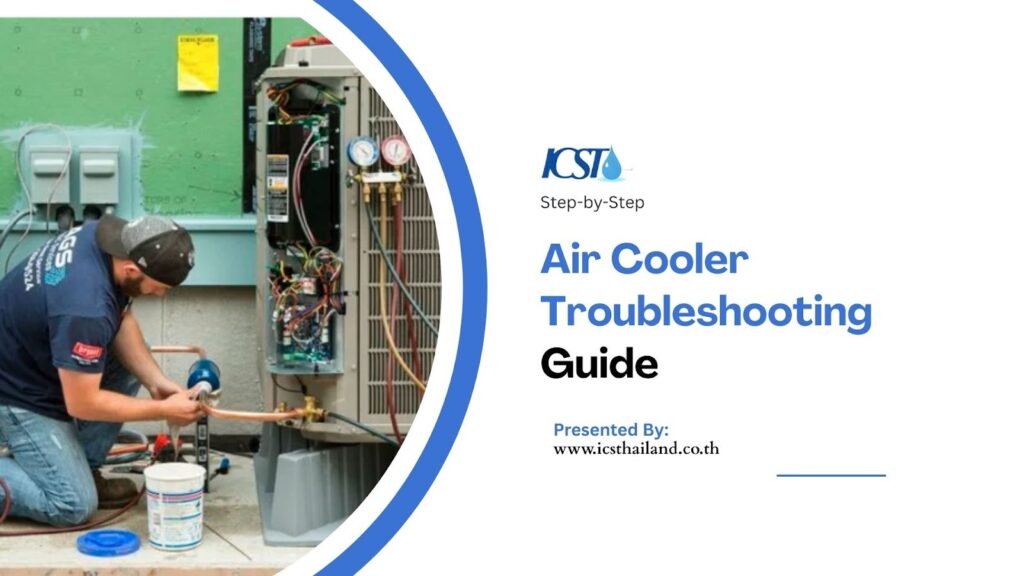
A systematic approach to air cooler troubleshooting prevents misdiagnosis and unnecessary part replacement. Work through each step in sequence before concluding.
Step 1: Check Power Supply
Electrical issues often mimic the symptoms of mechanical failures, leading to misdiagnosis. Before you begin dismantling components or assuming the worst, a thorough power check is the essential first step. It’s a simple but critical part of the process that can save significant time and resources.
Confirm the following before inspecting any internal parts:
- Check circuit breakers and reset any tripped switches.
- Inspect electrical connections for corrosion, loose terminals, or visible damage.
- Verify that the control panel is receiving stable voltage within the manufacturer’s specified range.
Step 2: Inspect Airflow and Ventilation
An HVAC unit’s cooling output depends on proper airflow. If ventilation is poor, the system won’t cool effectively, no matter how well its internal components are working.
- Examine air inlets for blockages such as dust buildup, debris, or obstructions.
- Confirm that the installation space provides adequate clearance for airflow on all intake and exhaust sides.
- Restricted ventilation forces the unit to work harder and reduces cooling efficiency significantly.
Step 3: Examine Cooling Pads
Cooling pads are crucial for the evaporative process to work effectively. Over time, they can become clogged with mineral deposits or dirt, which hinders airflow and reduces the cooler’s efficiency.
- Look for clogging caused by mineral deposits, dust, or algae growth.
- Check whether the pads are uniformly wet during operation. Dry sections indicate uneven water distribution.
- Inspect for physical damage such as tears, compression, or hardening that reduces airflow through the media.
Step 4: Check the Water Pump and Distribution System
The water pump sustains the entire evaporative cycle. A malfunctioning pump is one of the most common sources of air cooler problems.
- Listen for the pump during operation. Silence when it should be running indicates pump failure.
- Inspect water distribution lines and spray nozzles for clogs caused by mineral scale or debris.
- Confirm that the float valve is functioning correctly to maintain proper reservoir water levels.
Step 5: Inspect Fan Motor and Blower
The fan is what pushes cool air into your space. If the fan motor or blower isn’t working properly, the cooler’s performance will suffer significantly. A faulty fan can lead to weak airflow or no airflow at all.
- Listen for bearing noise, which presents as a persistent grinding or humming under load.
- Inspect fan blades for damage, debris buildup, or imbalance that causes vibration.
- Check that the blower housing is clear and that no physical obstructions restrict blade rotation.
Most Common Air Cooler Problems and Their Causes
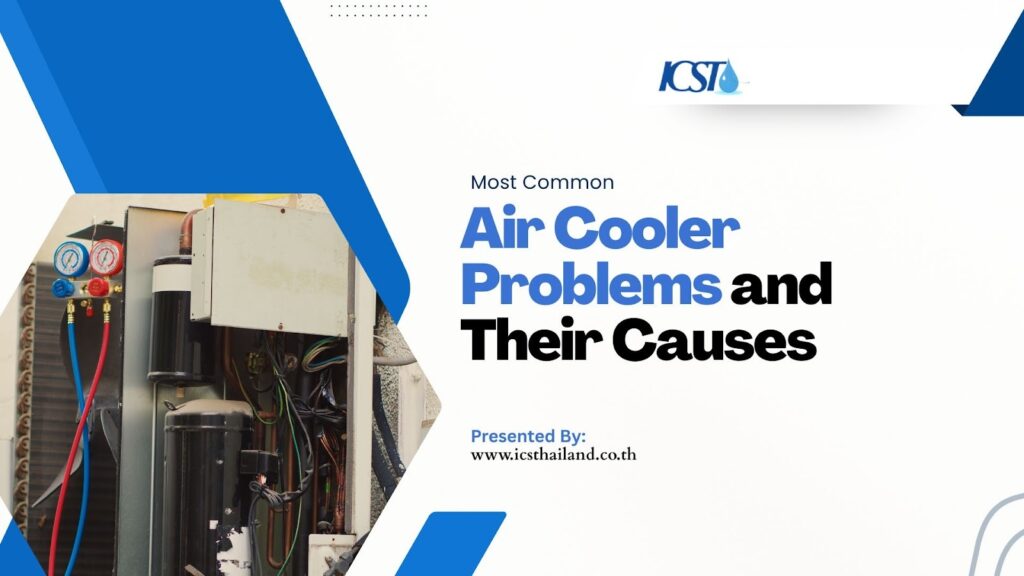
Isolating specific air cooler problems requires matching observed symptoms with likely causes. The following breakdowns cover the most frequently encountered issues in industrial and commercial settings.
Poor Cooling Performance
Reduced output is the most reported complaint in performance troubleshooting scenarios. What causes the temperature to stay high despite the system running?
- Dry cooling pads: Insufficient water saturation means less evaporation and less heat transfer.
- Insufficient water flow: A failing pump or clogged distribution lines reduce pad saturation.
- High ambient humidity: Evaporative systems lose efficiency as relative humidity rises because the air already holds significant moisture, reducing evaporation rates.
Weak Airflow
Weak airflow can significantly diminish the cooler’s performance, making it difficult to maintain a comfortable temperature. This issue occurs when the volume of air moving through the system is too low, which in turn reduces the reach and effectiveness of the cooled air.
Common culprits often involve blockages or mechanical failures within the unit.
- Clogged filters or pads: Accumulated particulate matter restricts the passage of air through the media.
- Damaged fan blades: Chipped, bent, or unbalanced blades reduce the volume of air the fan can move.
- Airflow obstructions: Objects placed near intakes or inside the unit housing block the air passage.
Water Leakage or Overflow
Finding water pooled around your air cooler is a clear sign of a problem, posing both a safety hazard and an indication of operational failure. These leakage points lead to several potential malfunctions within the unit’s water management system.
- Cracked reservoir: Physical damage to the water tank allows leakage at rest or under pressure.
- Blocked drain line: An obstructed drain causes the reservoir to overflow during normal operation.
- Faulty float valve: A float valve that does not shut off correctly leads to continuous water input and eventual overflow.
Unusual Noise from the Cooler
Unusual noises often signal mechanical issues within the air cooler. Understanding the source of these sounds is key to diagnosing the problem. Different components can produce distinct noises, indicating specific types of wear or damage.
- Fan imbalance: Blade damage or debris accumulation creates vibration that the housing amplifies.
- Loose mechanical components: Fasteners, panels, or motor mounts that have loosened over time rattle under operational vibration.
- Worn bearings: Bearings in the fan motor that have degraded produce grinding or squealing sounds that worsen under load.
Effective Repair Techniques for Air Cooler Malfunctions
Identifying the fault is only half the work. Applying the correct repair techniques restores function and prevents repeat failures. These methods address cooling issues at the component level.
Cleaning and Replacing Cooling Pads
Remove cooling pads from the housing and inspect them closely. Use a low-pressure water rinse to clear loose debris. For pads with mineral scale buildup, soak them in a diluted descaling solution, then rinse thoroughly before reinstallation.
Replace pads that are structurally degraded, such as those that are compressed, torn, or hardened. Attempting to rehabilitate severely damaged pads reduces performance and shortens the life of surrounding components.
Repairing or Replacing Water Pumps
A faulty water pump can disrupt the entire cooling system. Regular inspection and timely repair or replacement are crucial for maintaining optimal performance. Follow these steps to diagnose and address pump issues effectively.
- Disconnect Power: Always start by disconnecting the power to the unit.
- Remove and Inspect: Take the pump out of its reservoir and clear any visible debris from the inlet screen.
- Test the Pump: Test the pump’s function independently in a controlled setting. If it doesn’t run at all after verifying the electrical connection, it needs to be replaced.
- Check for Wear: If the pump runs but has insufficient flow, the internal impeller may be worn.
- Replace if Necessary: When replacing the pump, ensure the new unit’s specifications match the original’s flow rate and voltage requirements.
Fixing Electrical Connections
Shut off all power before accessing electrical components. Inspect terminal blocks, wire connectors, and control board connections for corrosion, discoloration, or physical damage.
Replace connectors that show signs of heat damage or arcing. Secure all connections firmly before restoring power.
Clearing Mineral Deposits and Scale
Over time, hard water deposits can build up in your air cooler, affecting its performance. Regularly clearing these mineral deposits and scale from the reservoir, distribution lines, and pad frames is essential for efficient operation.
- Drain and Scrub: Completely drain the reservoir and scrub all surfaces with a descaling agent suitable for the cooler’s materials.
- Flush Lines: Flush the distribution lines with clean water to remove any dislodged deposits.
- Consider a Water Softener: If your facility has a consistently hard water supply, install a water softener upstream. This will reduce scale accumulation and extend the life of your components.
How Preventive Maintenance Improves Air Cooler Performance
Reactive repairs are necessary, but preventive maintenance is what keeps systems running at peak efficiency. What does a structured maintenance program actually include?
Regular maintenance tasks should cover the following:
- Cleaning cooling pads: Remove pads at scheduled intervals, inspect for wear, and clean or replace as needed.
- Inspecting water pumps: Verify pump output and inspect inlet screens for debris accumulation.
- Checking electrical components: Examine wiring, terminals, and control systems for early signs of wear or corrosion.
- Removing dust and debris: Clear air inlets, fan housings, and external surfaces to maintain unrestricted airflow.
Facilities that follow structured maintenance schedules consistently report fewer emergency shutdowns by reducing the frequency of failure events.
When to Call a Professional Technician
There are limits to what in-house teams should attempt. Some faults carry safety risks or require specialized diagnostic tools that are not practical for general facility staff to deploy.
Escalate to a qualified technician when you encounter:
- Electrical failures: Any fault that involves the motor control board, wiring harness, or main power supply requires licensed electrical expertise.
- Motor damage: A burned-out or seized fan motor is not a field repair. Replacement requires proper sizing and alignment.
- Major airflow issues: Structural damage to the blower housing or duct connections that affect system configuration requires professional assessment.
- Recurring cooling problems: If the same fault reappears repeatedly after repair, an underlying systemic issue is likely present that requires comprehensive diagnostic work.
Attempting to resolve complex faults without the appropriate expertise risks personal injury, further component damage, and potential voiding of equipment warranties.
Proactive Maintenance: Your Guide to a Problem-Free Air Cooler
Prevention is more efficient than repair. Implementing the following practices reduces the incidence of air cooler problems and extends the operational life of the system.
What habits protect an air cooler from avoidable failures?
- Maintain proper ventilation: Ensure installation clearances meet manufacturer specifications and are not compromised by storage or structural changes in the facility.
- Use clean water: Supply the cooler with water that meets quality guidelines. Hard or contaminated water accelerates scale buildup and component wear.
- Schedule seasonal inspections: Inspect the full system before peak cooling demand periods. Identifying weak components before high-load operation prevents in-season failures.
- Clean the cooler before peak seasons: Remove stored dust and debris, replace aging pads, and verify pump and electrical function before the system faces sustained operational demand.
Consistency in these practices reduces emergency repair costs and supports uninterrupted facility operations through the highest-demand periods of the year.
Conclusion
Effective air cooler troubleshooting is built on three foundations: understanding how the system works, recognizing early signs of trouble, and applying targeted solutions with technical precision. Systems that receive structured care and timely intervention deliver consistent performance across their full operational lifespan.
The cooling issues covered in this guide—from pad degradation to pump failure—are all manageable when addressed early. Routine inspections, combined with disciplined repair techniques, reduce downtime and protect the investment your facility has made in its cooling infrastructure.
Use the troubleshooting framework in this guide to document your findings and create a maintenance schedule based on seasonal needs and equipment age.
If your facility is experiencing persistent cooling issues, a professional diagnosis may be required. The ICST technical team specializes in industrial air cooler troubleshooting, maintenance, and repair for commercial and large-scale systems.
Frequently Asked Questions
What are the most common air cooler problems?
The most frequently reported issues include poor cooling output, weak airflow, water leakage, unusual mechanical noise, and foul odors from the unit. Most of these problems trace back to neglected cooling pads, pump malfunctions, or mineral scale buildup in the water distribution system.
Why is my air cooler blowing warm air?
Warm air output typically indicates one of three root causes: the cooling pads are dry or damaged, the water pump is not circulating water effectively, or ambient humidity is high enough to reduce evaporative efficiency. Work through the air cooler troubleshooting steps outlined above to identify which factor applies to your system.
How often should cooling pads be replaced?
Inspect your cooling pads each season and replace them if they’re damaged or have heavy mineral buildup. High-use facilities may need to replace them annually as part of their standard maintenance.
Can poor airflow affect air cooler performance?
Yes, poor airflow significantly reduces cooling efficiency. The evaporative process relies on a steady flow of warm air over saturated pads to work properly.
What causes foul odors in an air cooler?
Foul odors usually occur when cooling pads remain dirty or wet for long periods, allowing mold, bacteria, or algae to grow. Stagnant water in the reservoir can also cause unpleasant smells. Cleaning the cooling pads, draining old water, and sanitizing the reservoir typically resolves the issue