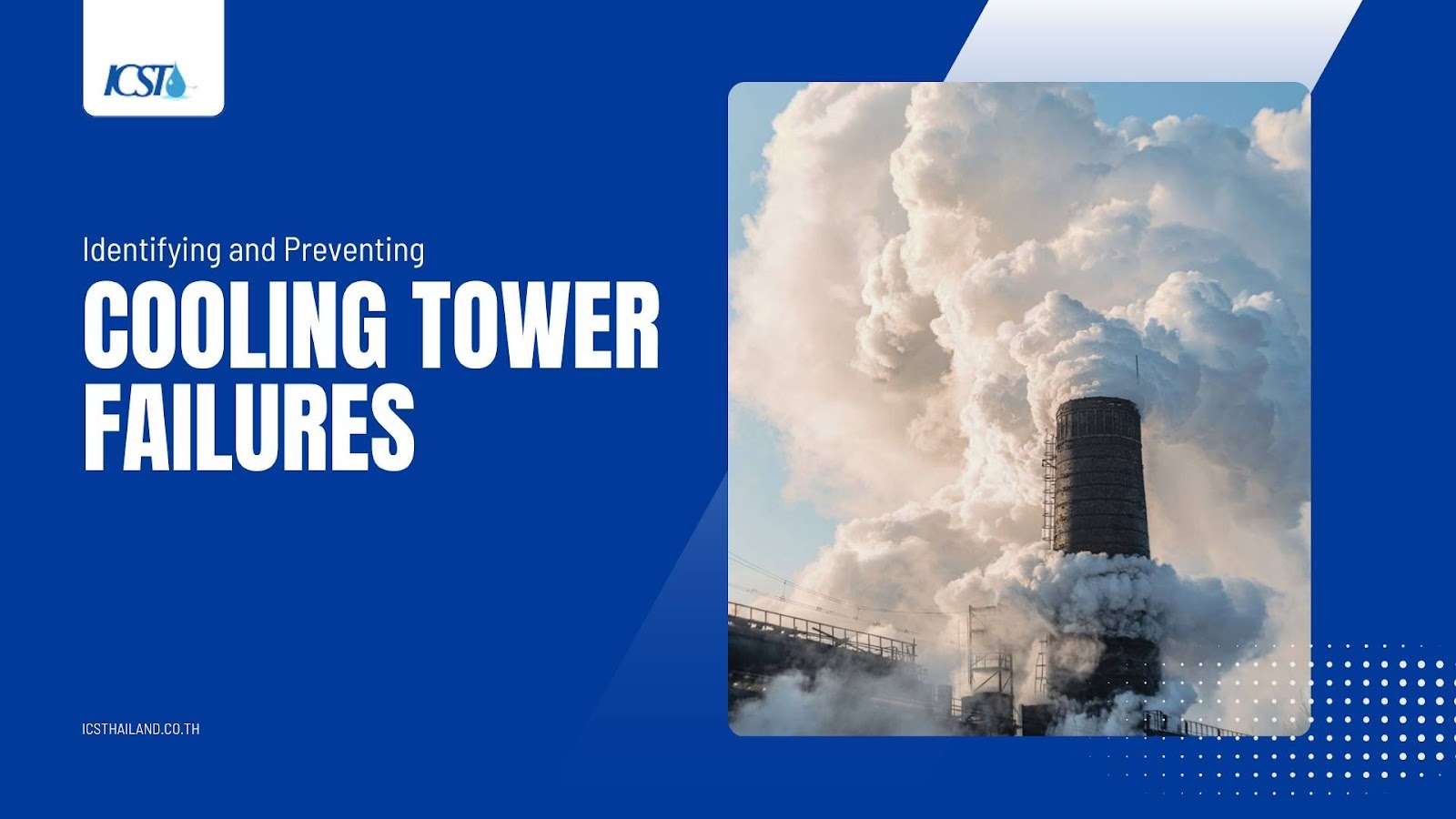
A cooling tower failure is a severe financial risk for industrial hubs across Asia and the Middle East. Moving beyond simple repair to focus on continuous process uptime is essential for the entire operation. When a system goes offline, facilities face costly breakdowns, production halts, and significant revenue loss.
The International Cooling Solutions (Thailand) or ICST methodology bridges the gap between equipment malfunction and technically sound engineering solutions. By understanding the root causes of failure, facility managers can implement preventive maintenance strategies that keep critical components running at peak performance.
This guide provides actionable insights to help you diagnose early warning signs, protect structural integrity, and ensure optimal temperatures across your entire facility.
Failure Modes: Categorizing the Three Pillars of Degradation
Cooling tower failures generally fall into three distinct categories. Understanding these pillars helps maintenance teams target their inspections effectively.
- Mechanical Failure Modes: This involves stress on mechanical components like cooling tower fans, gearboxes, and shafts. Constant exposure to the elements accelerates wear and tear on these moving parts.
- Thermal Failure Modes: This occurs when systems experience a loss of heat transfer efficiency, even if the mechanical operation appears normal. Reduced efficiency often results from poor water chemistry or uneven water distribution.
- Structural Failure Modes: This refers to structural damage and integrity loss caused by environmental factors or chemical aggression. Structural deterioration threatens the entire system.
Mechanical Malfunction: Fans, Drives, and Gearboxes
Mechanical failures are among the most common causes of unplanned downtime. Tower fans, fan motors, and drives require regular maintenance to operate efficiently.
Vibration Spectrum Analysis
Excessive vibration is a primary indicator of mechanical issues. Using vibration analysis allows technicians to distinguish between fan imbalance and drive-shaft misalignment. Fan imbalance often occurs when water ingress affects hollow fan blades. Addressing unusual vibration early prevents catastrophic damage to metal components.
Motor Insulation Breakdown
High humidity and coastal salinity severely impact the lifespan of IP55 and IP56 motors. Insulation breakdown leads to motor failure, reducing cooling capacity. Regular inspections must monitor electrical connections and protect motors from constant moisture exposure.
The Silent Gearbox Failure
A failing gear reducer often goes unnoticed until it seizes completely. Routine oil analysis and temperature monitoring prevent these costly repairs. Technicians must look for oil leaks, listen for grinding sounds, and check for worn-out bearings to catch problems early.
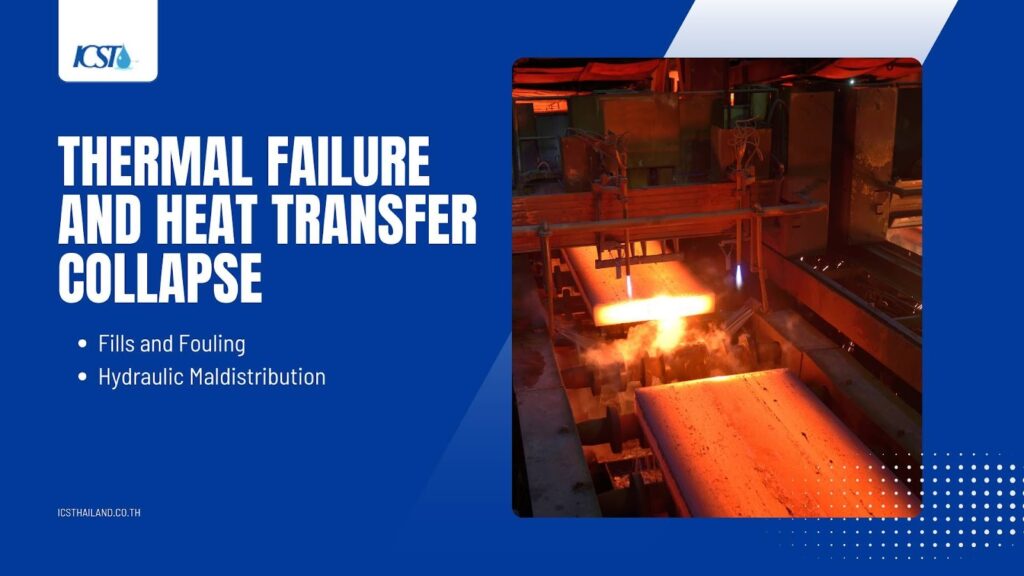
Thermal Failure and Heat Transfer Collapse
When the system loses cooling efficiency, the entire facility suffers. High approach temperatures indicate a widening gap between the cold water output and the wet-bulb temperature.
Fills and Fouling
Fill media plays a key role in cooling tower efficiency by maximizing the contact area between air and circulating water. This interaction allows heat to transfer effectively and supports proper cooling performance. Over time, debris, mineral deposits, and contaminants can accumulate on the fill surface and reduce its effectiveness. Regular inspection and cleaning are necessary to maintain proper airflow and water distribution. Maintenance teams should also check filtration systems to prevent blockages that could restrict flow and significantly reduce cooling efficiency.
- Mineral Scaling: Hard water and high-TDS water in regions like the Gulf cause severe scale buildup.
- Biological Biofilm: Biological growth acts as an insulator. It restricts heat transfer and facilitates microbiologically influenced corrosion. Improper water treatment accelerates this problem.
Hydraulic Maldistribution
Hydraulic maldistribution occurs when water is not evenly distributed across the cooling tower fill. The most common cause is clogged or partially blocked spray nozzles, which disrupt normal water flow. When distribution becomes uneven, dry zones develop on the fill surface while other areas receive excess water. These dry spots allow air to bypass the cooling process, reducing heat rejection efficiency. Regular inspection of spray systems, proper filtration, and routine nozzle cleaning help maintain balanced water distribution and consistent cooling performance.
Structural Integrity and Specialized Failures
Structural components demand rigorous audits, especially in harsh industrial environments. Constant exposure leads to structural damage if facility managers ignore the early warning signs.
Seawater and Coastal Failures
Galvanized steel components often fail in coastal areas. Seawater-resistant fiberglass reinforced plastic (FRP) provides superior reliability and prevents corrosion. Upgrading structural components prevents premature failure.
Acid-Resistant System Audits
Cooling systems in chemical processing plants hide structural deterioration well. Diagnostic procedures must identify hidden chemical attacks to prevent the sudden collapse of the cooling tower.
Geothermal Load Failures
Geothermal towers face unique expansion and contraction stresses. Mineral leaching, or delignification, damages the wood structure. Proper material selection is necessary to withstand these extreme operational problems.
Diagnostic Procedures: From Visual to Predictive
Early detection relies on advanced diagnostic tools. Implementing a predictive maintenance schedule prevents minor issues from escalating into major tower failures.
The Big Three Diagnostic Tools
- Vibration Monitoring: Triaxial sensors provide continuous health scoring. They identify vibration issues, worn bearings, and belt wear before mechanical failures occur.
- Thermal Imaging: Infrared cameras identify electrical hotspots, friction-related heat signatures, and failing fan motors.
- Acoustic Testing: Ultrasonic sensors detect bearing wear, unusual noises, and pump suction cavitation before they become audible to the human ear.
The Hybrid Approach
Combining online IoT sensors with expert field support provides rapid root cause analysis. This approach guarantees that technicians address the correct operational problems immediately.
Comparative Analysis of Industrial Failures
| Failure Sign / Problem | Diagnostic Method | Root Cause | Prevention Strategy |
|---|---|---|---|
| Excessive Vibration | Vibration spectrum analysis | Fan imbalance, shaft misalignment, worn bearings | Precision balancing, alignment correction, predictive vibration monitoring |
| Motor Overheating / Failure | Thermal imaging and electrical inspection | Motor insulation breakdown due to humidity and salinity | Use sealed motors, protect from moisture, regular insulation testing |
| Gearbox Failure | Oil analysis and temperature monitoring | Lubrication failure, worn gears, oil leaks | Routine oil checks, proper lubrication schedule |
| High Approach Temperature | Thermal performance testing | Fouled fill media, poor heat transfer | Clean or replace fill media, improve water treatment |
| Reduced Cooling Efficiency | Visual inspection and thermal measurement | Scale buildup or biological fouling | Chemical water treatment, periodic cleaning |
| Uneven Water Distribution | Flow inspection and nozzle check | Clogged nozzles, hydraulic maldistribution | Clean or replace nozzles, maintain proper water filtration |
| Structural Sagging | Structural inspection and stability audit | UV degradation, corrosion, chemical attack | Use UV-stabilized FRP materials, regular structural audits |
| Pump Cavitation | Acoustic testing and suction pressure measurement | Low pump head resistance, air vortex formation | Hydraulic redesign, install anti-vortex plates |
| Corrosion in Coastal Areas | Material inspection | Seawater exposure damaging galvanized steel | Upgrade to corrosion-resistant FRP structures |
| Wood Structural Damage | Material inspection | Mineral leaching or delignification in geothermal systems | Use suitable materials designed for geothermal loads |
Understanding common signs of failure streamlines the diagnostic process.
- Excessive Vibration: Diagnostic procedures utilize vibration spectrum analysis. The root cause is typically fan imbalance or worn bearings. The prevention strategy includes precision balancing and variable frequency drive integration.
- High Approach Temperature: Technicians conduct a thermal performance test. Fouled fill media or nozzle blockage is usually the root cause. Upgrading to splash-fill and low-clog nozzles restores performance.
- Structural Sagging: A visual stability audit reveals UV delamination or chemical attack. Utilizing multi-layer UV-stabilized FRP offers a permanent solution.
- Pump Cavitation: Technicians measure suction pressure and sound. Low pump head resistance is the root cause. Hydraulic redesign and anti-vortex plates eliminate the issue.
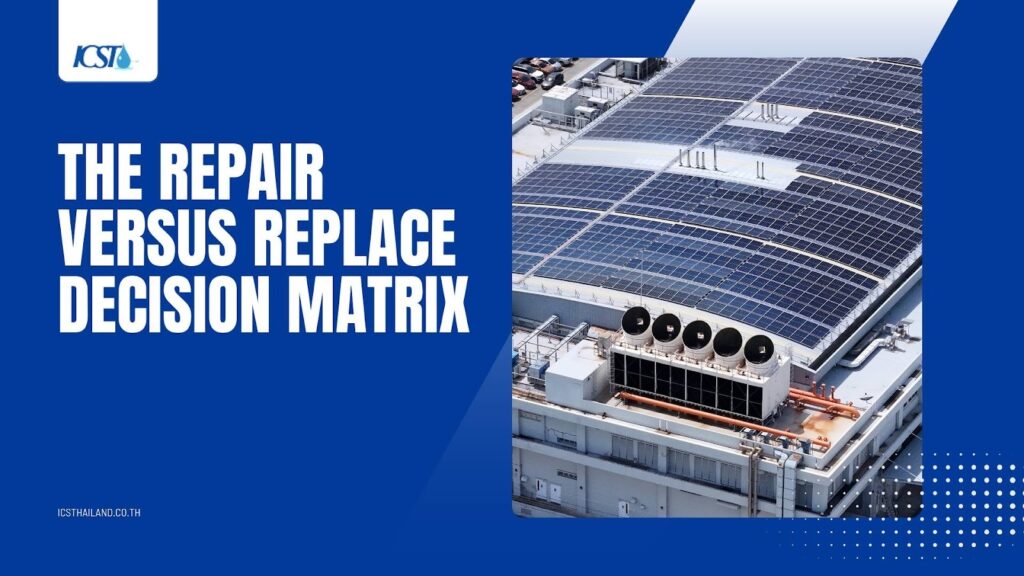
The Repair versus Replace Decision Matrix
Facility managers must calculate the remaining useful life of a system after a failure occurs. Sometimes, minor issues require a simple patch. However, recurring failures indicate a flawed design.
When you decide to repair, engineer out the failure. Upgrade to low-drift components that minimize water carryover and water loss. Install low-noise and low-power parts to improve overall operational costs. Address emergency repairs immediately, but plan for long-term reliability upgrades.
Conclusion: Transforming Failure into Reliability
A failure is an opportunity to fix the design, not just replace the broken part. Addressing root causes like improper water treatment, scale buildup, and mechanical stress ensures your cooling systems operate efficiently and helps prevent future cooling tower failures. Reliability in Asia and the Middle East requires localized engineering expertise and a commitment to proactive maintenance.
Has your system reached a critical failure point? Do not just replace the parts; fix the underlying problem. Contact International Cooling Solutions (Thailand) for a comprehensive technical audit.
Our Bangkok-based engineers specialize in providing technically and financially feasible solutions for the most demanding environments. Book a diagnostic consultation today to secure your operational uptime.
Frequently Asked Questions
What causes cooling tower failures?
Cooling tower failures often result from mechanical issues, thermal inefficiencies, or structural damage. Common causes include excessive vibration, scale buildup, biological growth, and improper water treatment.
How can I improve cooling tower efficiency?
Regular maintenance, vibration analysis, and proper water chemistry management can enhance cooling efficiency. Upgrading fill media and addressing uneven water distribution are also effective strategies.
What are the signs of mechanical failure in cooling towers?
Signs include unusual vibration, grinding sounds, worn bearings, and reduced fan motor performance. Early detection through vibration monitoring and regular inspections is crucial.
How do I prevent structural damage in cooling towers?
Use corrosion-resistant materials like FRP, conduct stability audits, and address environmental factors like coastal salinity. Preventive maintenance ensures long-term structural integrity.
Why is heat transfer efficiency important in cooling towers?
Heat transfer efficiency ensures optimal temperatures for the entire system. Poor efficiency leads to higher operational costs, reduced cooling capacity, and unplanned downtime.