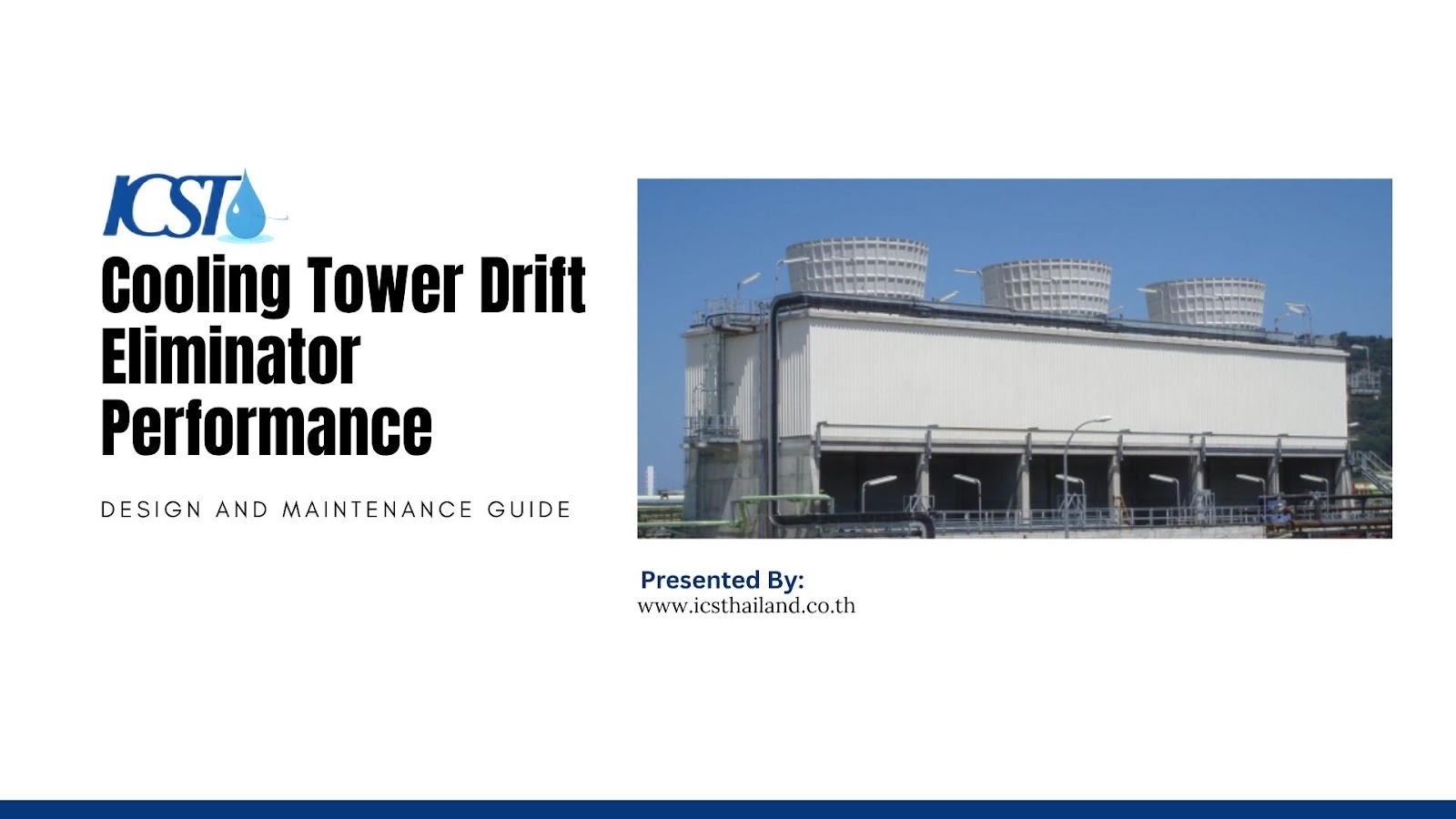
High cooling tower drift eliminator performance is crucial for operational efficiency and environmental compliance. By enhancing droplet separation. from exhaust air, these systems significantly lower the drift rate. This directly supports water loss prevention, cutting makeup water and chemical treatment costs.
More importantly, effective drift elimination is a primary method for Legionella control, as it prevents contaminated aerosols from escaping the tower. This ensures the protection of public health, compliance with regulations, and the longevity of adjacent equipment by minimizing corrosive moisture exposure.
What Is a Cooling Tower Drift Eliminator?
A drift eliminator forces exhaust air to change direction, causing heavy water droplets to impact the walls and drain back into the cooling tower.
Why It Matters in Industrial Systems
In industrial systems, uncontrolled water droplet escape from cooling towers can lead to significant operational inefficiencies and safety hazards. Effective drift elimination is not just about compliance; it’s about optimizing resource use and protecting valuable assets. Here’s why it’s so important:
- Increased Operational Costs: Escaping mist wastes both water and the chemicals used to treat it, driving up expenses.
- Equipment Damage: The fine mist can accelerate corrosion and leave damaging mineral scale on nearby machinery.
- Regulatory Compliance: Strict environmental rules require effective drift control to safeguard air quality and public health.
How Drift Eliminator Performance Is Measured
Evaluating cooling tower drift eliminator performance requires precise measurement of specific operational metrics. These key performance indicators determine the efficiency and safety of the entire cooling system.
Drift Rate (Most Important KPI)
The primary metric for evaluating a drift eliminator’s effectiveness is its drift rate. This KPI is crucial because it directly quantifies water loss and environmental impact, making it the most significant measure of performance.
- The drift rate measures the percentage of circulating water that escapes as mist, with industry standards typically requiring a rate between 0.001% and 0.02%.
- A lower drift rate signifies better water conservation and superior environmental protection.
Droplet Separation Efficiency
A drift eliminator’s design is fundamental to its ability to capture water droplets. The efficiency of this process hinges on forcing the air to change direction, which separates the heavier water droplets from the lighter air.
- Droplet separation efficiency describes how well the eliminator removes moisture from the airstream.
- This is achieved through a multi-pass airflow design where inertia forces water droplets out of the air as it changes direction, returning them to the basin.
Airflow Resistance & Pressure Drop
While capturing droplets is key, it’s also important to consider the energy cost. An effective drift eliminator must be efficient without significantly obstructing airflow, which would force the system’s fans to work harder and consume more power.
- Every drift eliminator creates airflow resistance, which leads to a pressure drop that the cooling tower fans must compensate for.
- Engineers aim to balance high droplet capture efficiency with minimizing the pressure drop to reduce the energy consumption of the fan motors.
Drift Eliminator Design Types
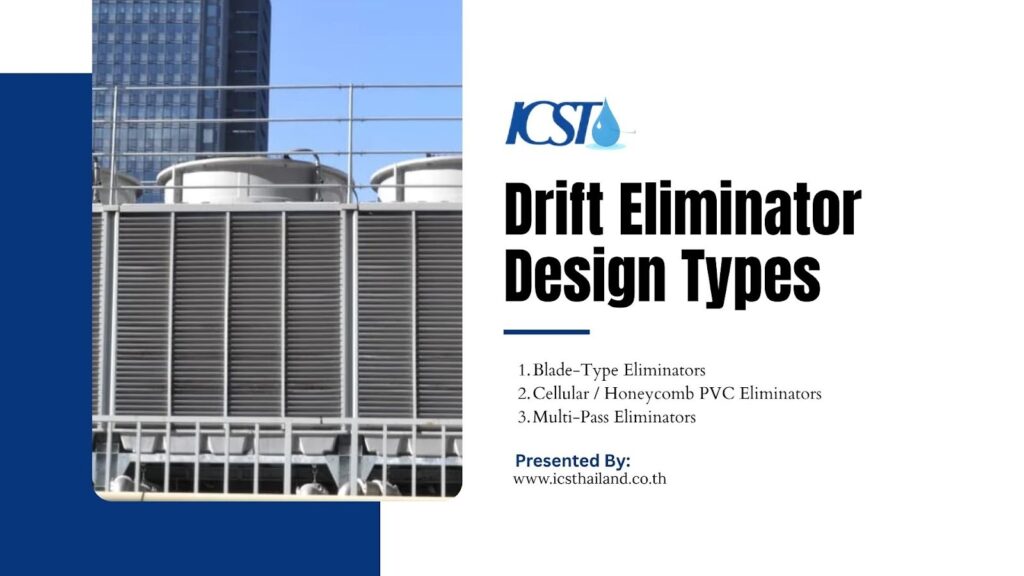
Choosing the correct design dictates the long-term success of your cooling infrastructure. Different materials and shapes offer varying levels of efficiency and maintenance requirements.
Blade-Type Eliminators
Blade-type designs feature simple, single-pass profiles. They provide minimal airflow resistance but offer lower overall capture efficiency. Facilities generally use these in older or smaller cooling towers where strict drift limits do not apply.
Cellular / Honeycomb PVC Eliminators
Cellular PVC eliminators use a complex honeycomb structure to force multiple directional changes. This design provides high capture efficiency while maintaining a manageable pressure drop. They serve as the standard choice for most modern industrial applications.
Multi-Pass Eliminators
Multi-pass eliminators represent the highest tier of drift control technology. They force the air through three or more sharp turns, ensuring maximum droplet removal. Facilities operating under the strictest environmental regulations utilize these systems to achieve near-zero drift.
| Feature | Blade Type | Cellular PVC | Multi-Pass Design |
| Drift Efficiency | Low | High | Very High |
| Drift Rate | ~0.02% | ~0.005% | ~0.001% |
| Airflow Resistance | Low | Medium | High |
| Maintenance | Easy | Moderate | Moderate |
| Cost | Low | Medium | High |
| Best Use Case | Small towers | Standard industrial | High-performance systems |
| Lifespan | Medium | High | High |
| Water Savings | Low | High | Maximum |
Performance Standards and Compliance Requirements
Meeting industry standards ensures your cooling tower operates safely and legally. Regulatory bodies establish strict guidelines to protect public health and the environment.
ASHRAE Guidelines for Drift Control
The American Society of Heating, Refrigerating, and Air-Conditioning Engineers (ASHRAE) provides comprehensive guidelines for drift control.
Their standards focus heavily on preventing the spread of harmful bacteria. Proper drift elimination serves as a primary defense against airborne pathogens.
CTI Standards (Cooling Technology Institute)
The Cooling Technology Institute (CTI) establishes rigorous performance testing benchmarks. CTI certification guarantees that a drift eliminator meets its advertised capture metrics. Facilities should always specify CTI-certified components for new installations and retrofits.
Acceptable Drift Rate Levels
Understanding the specific drift rate limits for your cooling tower is essential for compliance and public safety. These limits are not one-size-fits-all and are influenced by several environmental and regulatory factors. Key considerations include:
- Application and Location: Limits vary significantly depending on whether the cooling tower serves a commercial building in a dense urban area or a remote industrial facility.
- Regulatory Oversight: Commercial towers in cities often face stricter regulations to protect a larger population.
- Local Health Mandates: Regional health departments typically set the maximum permissible mist discharge, tailoring rules to local conditions.
Why Drift Eliminators Are Critical for Legionella Control
The link between cooling towers and respiratory illness is well documented. Effective drift elimination represents the most mechanical barrier against these outbreaks.
How Drift Spreads Contaminated Water
Cooling tower water provides an ideal breeding ground for bacteria if not treated properly. When this water escapes as drift, it carries these pathogens into the surrounding air. Wind currents can transport airborne contaminated droplets over large distances, endangering nearby populations.
Role in Health & Safety Compliance
Maintaining proper drift control is a non-negotiable aspect of health compliance. Industrial regulations hold facility owners legally responsible for preventing disease outbreaks. Proper chemical treatment must work in tandem with high-efficiency drift eliminators to ensure total safety.
Common Drift Eliminator Problems That Reduce Performance
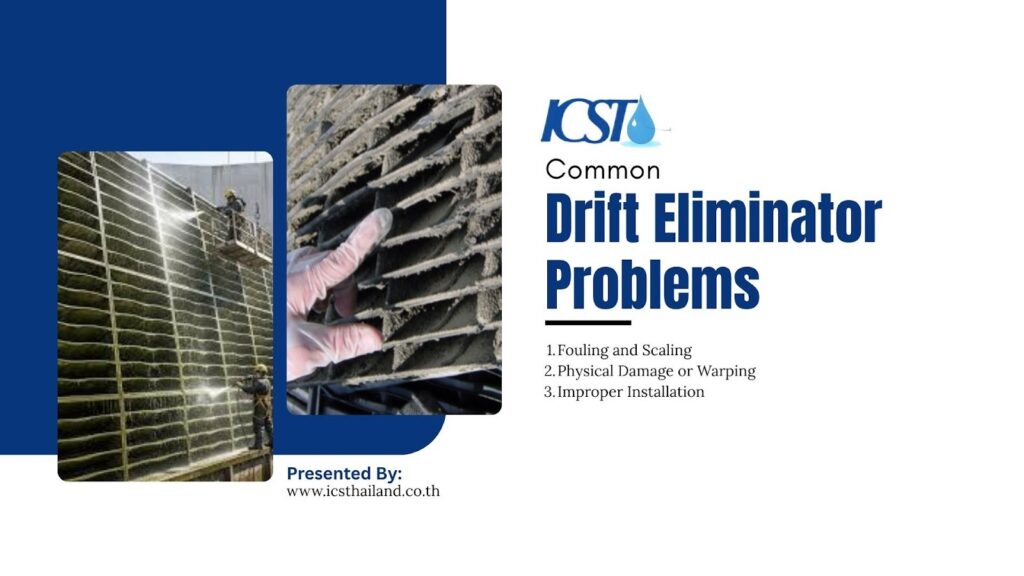
Even the best-designed systems degrade over time. Identifying common issues early prevents catastrophic failures and maintains cooling tower drift eliminator performance.
Fouling and Scaling
Mineral deposits from hard water build up on the eliminator surfaces over time. This scaling blocks the airflow path and increases the pressure drop. Severe fouling completely negates the droplet capture capabilities of the system.
Physical Damage or Warping
Exposure to extreme temperatures and UV radiation causes plastic components to become brittle. Warped or broken panels create gaps where air bypasses the eliminator entirely. This physical damage leads to an immediate spike in water loss.
Improper Installation
Drift eliminators must fit tightly against the cooling tower casing. Poor installation leaves gaps around the edges of the media blocks. High-velocity air will always take the path of least resistance, carrying heavy moisture through these unsealed gaps.
Drift Eliminator Maintenance Checklist (Actionable SOP)
Routine maintenance prevents unexpected failures and extends the life of your equipment. Implementing a strict standard operating procedure is essential for facility management. Regular inspections reveal minor issues before they become major expenses. You must monitor these systems closely to guarantee safety.
- Check for cracks and deformation
- Inspect airflow blockage
- Clean biofilm buildup
- Measure drift rate changes
Monthly Inspection
Perform a visual inspection of the eliminator surface every month. Look for obvious signs of debris accumulation or biological growth. Ensure all panels remain securely in place and properly aligned.
Quarterly Cleaning
Schedule a thorough cleaning of the media every three months. Use low-pressure water to remove scale buildup and wash away loose debris. Do not use high-pressure washers, as they will easily destroy fragile PVC structures.
Annual Replacement Evaluation
Conduct a comprehensive efficiency test once a year. Evaluate the physical integrity of the plastic and check for signs of advanced brittleness. Plan for full media replacement if the system no longer meets its original performance specifications.
How to Improve Cooling Tower Drift Eliminator Performance
Maximizing your system requires proactive upgrades and consistent attention to detail. Small adjustments often yield significant improvements in overall water retention.
Upgrade to High-Efficiency Designs
Replacing outdated blade-type models with modern cellular designs instantly improves capture rates. This single upgrade often pays for itself through immediate water and chemical savings.
Optimize Airflow Path
Ensure that the fan speed and air distribution match the design specifications of the drift eliminator. Uneven airflow causes localized high-velocity zones that pull water droplets through the media.
Regular Cleaning & Inspection
Consistent cleaning prevents the accumulation of scale and biological matter. A clean eliminator maintains its designed pressure drop and ensures optimal fan performance.
Use Quality PVC Materials
Always source replacement parts made from UV-resistant, high-quality PVC. Superior materials resist warping and chemical degradation much better than cheaper alternatives.
Key Takeaways
- Drift eliminators reduce water loss by forcing exhaust air to change direction and drop heavy moisture.
- Performance measured by drift rate determines the environmental safety and efficiency of the cooling tower.
- Cellular designs offer the best efficiency for modern commercial and standard industrial applications.
- Maintenance is critical for compliance with local health regulations and equipment longevity.
Final Thoughts
Securing optimal cooling tower drift eliminator performance remains a fundamental requirement for modern facility management. When operators prioritize efficient droplet separation and actively monitor their drift rate, they safeguard their equipment and their community.
Utilizing advanced materials like cellular PVC ensures long-term durability and consistent water savings. Ultimately, rigorous maintenance of these systems guarantees robust Legionella control and total health compliance for years to come.
To ensure your cooling towers meet the highest standards, visit ICST today for expert solutions and service.
Frequently Asked Questions
What is the ideal drift rate for a cooling tower?
The ideal drift rate for a modern cooling tower falls between 0.001% and 0.005% of the total circulating water flow. High-performance industrial systems often target the 0.001% benchmark to maximize water conservation. Older systems may operate closer to 0.02%, but they require upgrades to meet current environmental standards.
How do drift eliminators reduce water loss?
They reduce water loss by creating a tortuous path for the exiting exhaust air. As the air rapidly changes direction, the heavier water droplets cannot make the turn due to inertia. The droplets strike the eliminator walls and safely drain back into the cooling tower basin.
How often should drift eliminators be cleaned?
Facility operators should inspect drift eliminators monthly and clean them quarterly. Systems operating in environments with high dust or poor water quality may require more frequent cleaning. Regular maintenance prevents scale buildup and maintains the required airflow dynamics.
What happens if drift eliminators fail?
When these systems fail, the cooling tower ejects massive amounts of water into the surrounding area. This causes rapid equipment corrosion, structural damage to nearby buildings, and severe environmental contamination. It also drastically increases utility costs due to constant water and chemical replenishment.
Are drift eliminators required for compliance?
Yes, they are strictly required for compliance with environmental and health regulations. Local authorities mandate their use to prevent the spread of airborne diseases and to conserve municipal water supplies. Operating a cooling tower without functioning drift control violates most industrial safety codes.