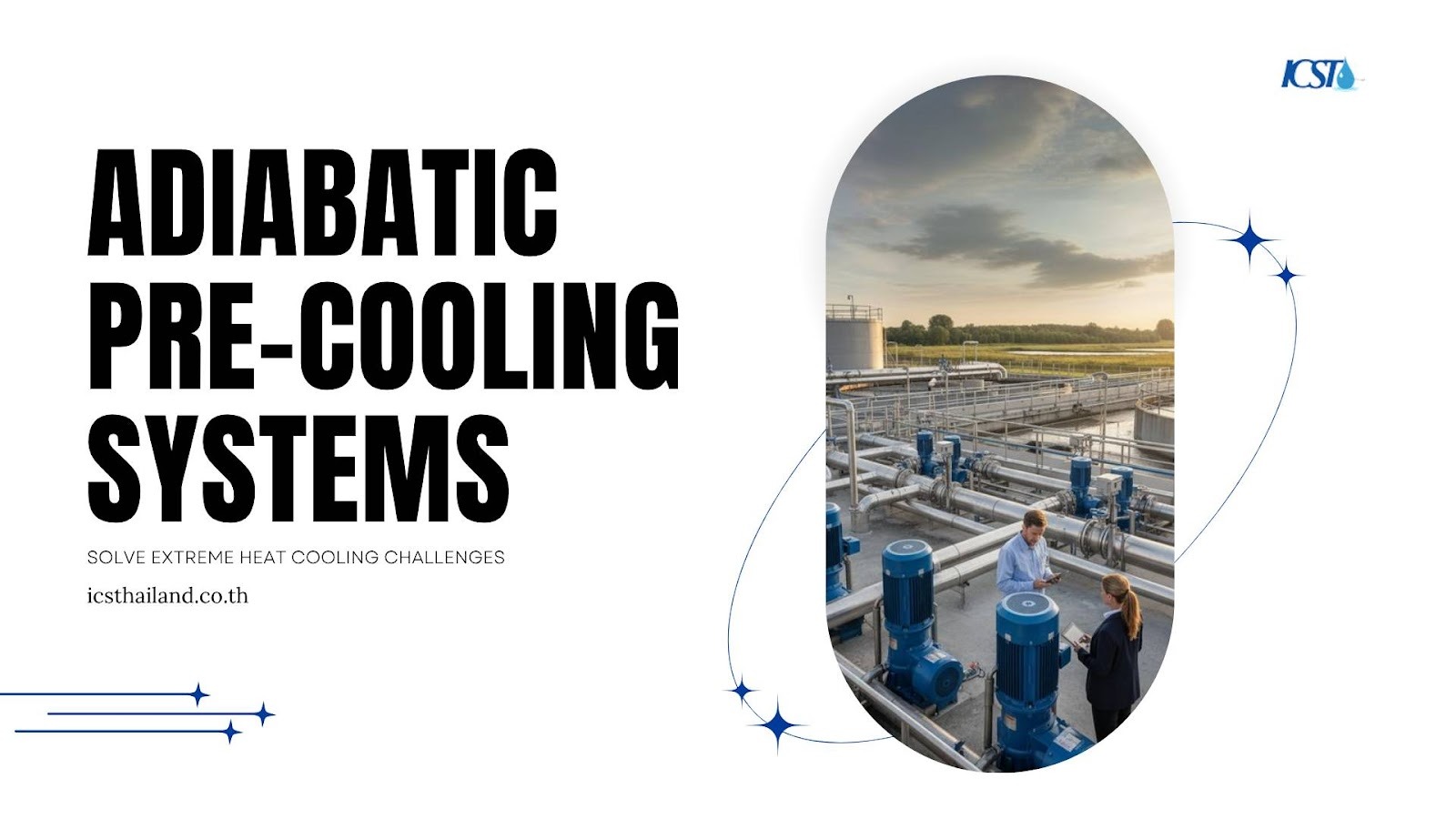
Adiabatic pre-cooling systems enhance cooling efficiency by lowering air temperature through evaporation before it reaches the heat exchanger coils. This process uses evaporative media or mist systems to cool air to near wet-bulb temperature, significantly improving system performance in hot climates.
These systems are ideal for industrial sites facing extreme heat, as they reduce energy consumption, minimize operational disruptions, and require minimal water usage compared to traditional cooling towers. By integrating adiabatic pre-cooling systems, facilities can achieve sustainable cooling solutions that align with energy efficiency and carbon footprint reduction goals, ensuring reliable performance even during peak summer conditions.
This guide explains how ICST implements adiabatic pre-cooling systems. We provide solutions that are financially feasible, technically robust, and environmentally sustainable.
The Thermal Ceiling of Modern Industry
Standard cooling systems struggle when extreme heat strikes. As temperatures rise, the air cannot carry away enough heat. This forces your chiller or refrigeration unit to work harder. The result is a sharp increase in energy use and a drop in overall performance.
Industrial operations cannot afford unexpected system failures. Plant managers need a strategy to stabilize temperatures. Adiabatic cooling offers a proven method to counter these extreme conditions.
Engineering Fundamentals: What is Adiabatic Pre-Cooling?
To understand how this technology works, you must look at the underlying principle. The adiabatic process lowers air temperature through evaporation without changing the total internal energy of the system.
Inlet Air Cooling
Adiabatic pre-cooling systems place a “wetted border” before the heat exchanger coils. This border usually consists of evaporative media or misting nozzles. As hot, dry air passes through this moisture, the water evaporates. This evaporation absorbs heat, dropping the air temperature before it reaches the dry cooler.
The Importance of Wet-Bulb Temperature
Engineers focus on the wet bulb temperature when designing cooling systems. This metric represents the lowest temperature attainable through evaporative cooling. Reaching a temperature close to the wet-bulb limit is the ultimate goal for summer efficiency. It allows your equipment to operate as if it were a much cooler day.
Systems and Mechanics: Direct vs. Indirect Pre-Cooling
Facilities have two primary ways to apply moisture to the incoming air. Each method offers distinct benefits depending on the site requirements.
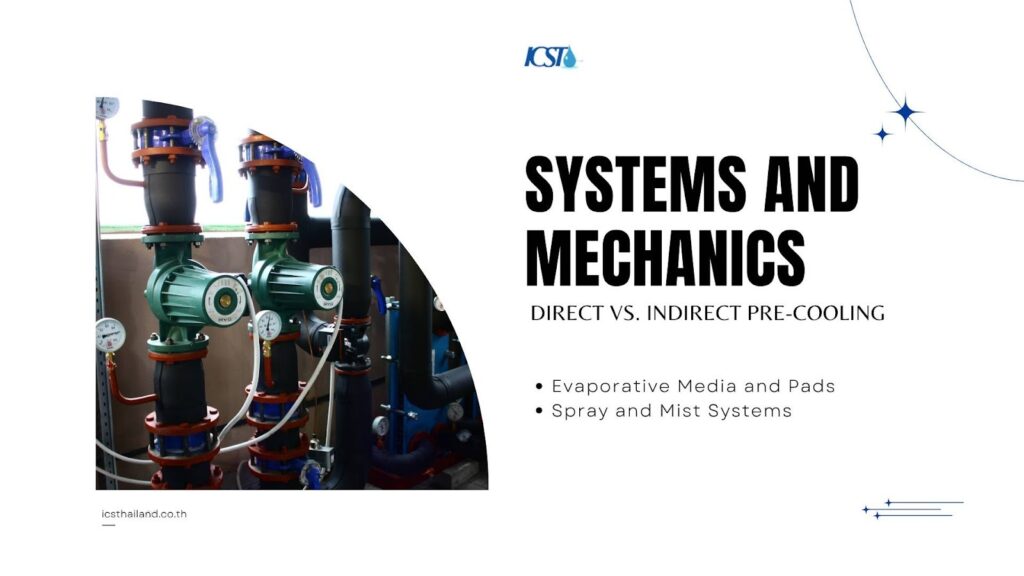
Evaporative Media and Pads
Adiabatic pads provide consistent performance and require very little maintenance. The system trickles water over the pads, and the incoming air cools as it passes through the wet media. This strategy is essential for areas that need a steady, reliable drop in temperature.
Spray and Mist Systems
Spray systems offer a rapid response to sudden heat spikes. They create a fine mist that cools the air instantly. This method creates minimal pressure drop across the coils.
ICST specializes in low-pumphead water distribution. This engineering ensures that the water circulation process does not create a secondary energy drain. The goal is to maximize the coefficient of performance (COP) across the entire system.
The AI and Energy Connection: Market Drivers
The demand for efficient cooling extends beyond traditional manufacturing. Modern data centers process massive amounts of information. The heat loads generated by advanced GPU clusters have surpassed what basic air-cooling can handle.
Power Shaving and Grid Stability
Adiabatic pre-cooling helps facilities reduce peak power demand by up to 30 percent. This reduction eases the strain on local electrical grids during peak summer months.
Meeting Sustainability Targets
Governments are enforcing strict environmental, social, and governance (ESG) mandates. Initiatives like Saudi Vision 2030 demand efficient resource usage. By minimizing energy and water use, adiabatic technology helps plants reduce their overall carbon footprint.
Strategic Advantages for Harsh Environments
Extreme climates demand specialized equipment. Standard units fail quickly in coastal or heavy industrial zones. ICST provides an edge by engineering systems built for survival.
Seawater and Acid Resistance
Corrosion destroys cooling fins and frames rapidly. ICST applies advanced coatings and uses durable materials to protect your investment from salt and industrial acids.
Dirty Water Engineering
Many arid sites lack access to pure, clean water. We design systems that can utilize lower-quality water for pre-cooling. Our engineering prevents instant scaling and biofouling, keeping your equipment running smoothly.
Optimized Footprint
Space is often limited at industrial sites. Adiabatic kits allow a smaller dry cooler to perform the work of a much larger unit. This compact footprint saves valuable real estate.
Implementation: Retrofitting vs. New Builds
You do not need to replace your entire infrastructure to benefit from this technology. Retrofitting offers a highly practical solution.
The Retrofit Opportunity
Adding adiabatic modules to an existing dry cooler or refrigeration unit is a smart financial decision. It future-proofs your site against rising summer temperatures. The installation process is straightforward and minimizes operational downtime.
Smart Control Logic
Water conservation remains a critical priority. Modern systems employ smart control logic. They activate the “wet mode” only when the ambient air exceeds a specific threshold, such as 28°C. This intelligent control preserves water for the majority of the year.
Adiabatic Pre-Cooling vs. Conventional Alternatives
Understanding the differences between cooling methods helps you make an informed decision. The table below outlines key performance metrics.
| Performance Metric | Standard Dry Cooler | Adiabatic Pre-Cooling | Conventional Wet Tower |
| Water Consumption | Zero | Minimal (Peak Hours Only) | Constant and High |
| Energy Efficiency | Low in Summer Peaks | High (Cuts Peak by ~30%) | Very High |
| Maintenance Need | Very Low | Moderate (Pad Cleaning) | High (Water Treatment) |
| Legionella Risk | None | Negligible (No Standing Water) | High (Requires Biocides) |
| Installation Space | Large | Optimized and Compact | Requires Large Basin |
| Best For | Temperate Climates | Arid and High-Heat Sites | Water-Abundant Areas |
Conclusion: Reliability Delivered Quickly
Implementing a sustainable cooling strategy with adiabatic pre-cooling systems protects more than just the environment. It safeguards your plant’s operational license. If your facility operates in a water-scarce region, adiabatic pre-cooling systems offer the perfect balance of performance and resource conservation.
Having a regional partner is critical for ongoing success. The ICST regional office in Bangkok provides rapid field support and technical assistance across Asia and the Middle East. When emergencies happen, our teams respond quickly to resolve issues. (Read more about our rapid response times in our guide to Cooling System Emergency Repair. Furthermore, if you want to explore systems that use absolutely zero water, you can review our insights on Dry Cooling Towers for Water Scarce Sites.
Do not let extreme heat compromise your operations. Contact ICST Thailand today to schedule a site-specific “wet-to-adiabatic” feasibility study.
Frequently Asked Questions
What is adiabatic pre-cooling, and how does it work?
Adiabatic pre-cooling is a cooling method that lowers air temperature through evaporation before it reaches heat exchanger coils. By using evaporative media or mist systems, it cools the air to near wet-bulb temperature, enhancing the efficiency of cooling systems. This process is energy-efficient and ideal for hot climates, reducing energy consumption and improving system performance.
How does adiabatic cooling benefit industrial sites in hot climates?
Adiabatic cooling systems help maintain cooling capacity during extreme heat by pre-cooling air before it enters the system. This reduces the “hot climate penalty,” lowers energy consumption, and minimizes operational disruptions. It is particularly effective in arid regions, offering a sustainable alternative to traditional cooling towers with minimal water usage.
What are the advantages of retrofitting existing cooling systems with adiabatic modules?
Retrofitting allows facilities to upgrade their existing dry coolers or chillers with adiabatic modules. This improves efficiency, reduces peak energy demand, and future-proofs systems against rising temperatures. Retrofitting is cost-effective, requires minimal downtime, and enhances the overall performance of cooling systems without the need for complete replacements.
Why is wet-bulb temperature important in adiabatic cooling?
Wet-bulb temperature represents the lowest achievable air temperature through evaporation. Adiabatic cooling systems aim to cool air close to this limit, maximizing efficiency during summer peaks. Understanding wet-bulb temperature helps engineers design systems that optimize cooling performance while conserving energy and water.
How does adiabatic cooling align with sustainability goals?
Adiabatic cooling systems reduce energy consumption and water usage, supporting sustainability initiatives like ESG mandates and carbon footprint reduction. By improving efficiency and minimizing resource waste, these systems align with global goals such as Saudi Vision 2030, making them an environmentally responsible choice for industrial cooling.