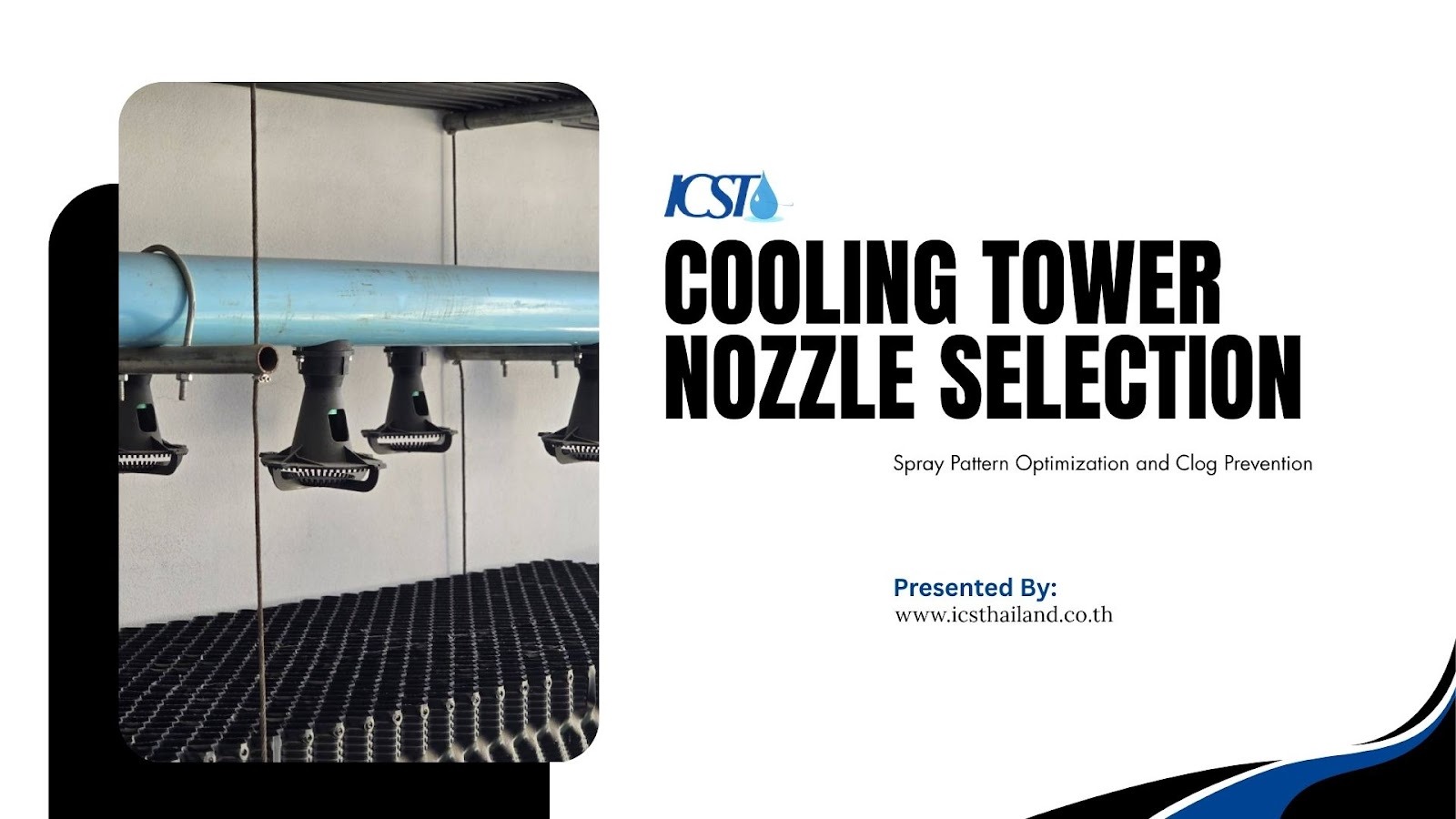
Proper cooling tower nozzle selection determines how effectively water spreads across the heat exchange media. The right spray pattern ensures maximum thermal contact between air and water. Engineers must size the nozzle orifice correctly to balance droplet generation with required flow rates.
Optimal water distribution prevents dry spots and maximizes evaporation efficiency. Furthermore, prioritizing clogging resistance keeps maintenance costs low and prevents unexpected system downtime. A well-chosen nozzle directly enhances overall cooling tower performance and extends equipment lifespan.
What Is Cooling Tower Nozzle Selection?
Role of Nozzles in Water Distribution
Nozzles serve as the delivery mechanism for water entering the cooling tower. They disperse water evenly over the fill media to maximize the exposed surface area. This dispersion enables efficient evaporation and rapid heat transfer.
Why Nozzle Selection Directly Impacts Performance
Choosing the wrong nozzle can cause serious issues in a cooling tower, leading to inefficiency and wasted energy. A poor spray pattern can create dry spots on the fill media, which allows hot air to bypass the water and prevents proper cooling.
Key problems caused by mismatched nozzles include:
- Uneven Water Distribution: Leads to immediate loss of efficiency.
- Wasted Energy: The system works harder for less cooling effect.
- Dry Spots: Results in hot air bypass, undermining the heat transfer process.
Key Factors in Cooling Tower Nozzle Selection
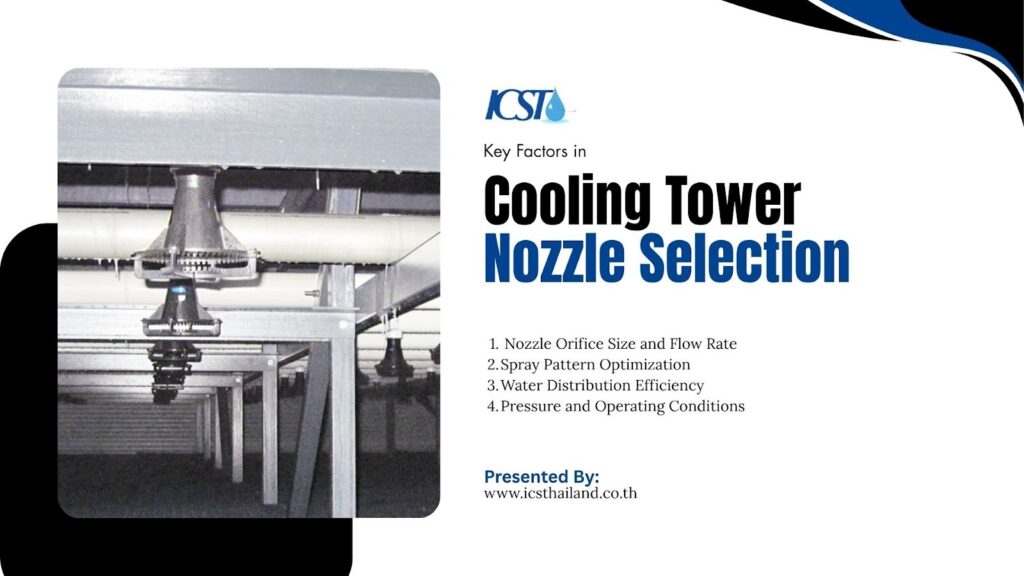
Nozzle Orifice Size and Flow Rate
The size of the opening dictates the volume of water passing through the system. You must balance two competing factors when determining this dimension.
Careful calibration of the nozzle orifice prevents system failure. Consider these essential trade-offs before making a final decision.
- A large orifice minimizes the risk of blockage and reduces maintenance frequency.
- A small orifice produces finer droplets, which significantly improves atomization and cooling efficiency.
Spray Pattern Optimization
Engineers must align the water dispersion shape with the specific internal geometry of the tower. You can choose between full cone, hollow cone, and umbrella configurations.
You must match this pattern precisely with the fill type and overall tower design to achieve optimal results. Optimizing the spray pattern requires a careful balance. Examine these critical factors to maximize your system output.
- Full cone patterns offer dense coverage for deep fill applications.
- Hollow cone patterns provide wide dispersion with lower pressure requirements.
- Operators must balance complete surface coverage against the ideal droplet size for maximum evaporation.
Water Distribution Efficiency
Uniform coverage stands as the primary goal of any cooling tower system. Consistent dispersion improves heat transfer rates across the entire fill area. Proper water distribution also prevents dry zones that degrade cooling capacity and cause scaling.
Pressure and Operating Conditions
Cooling tower nozzles typically operate between 1 and 10 PSI effectively. The system pressure directly affects spray formation and droplet velocity. You must maintain consistent pressure to ensure the nozzles perform according to their design specifications.
Types of Cooling Tower Nozzles and Their Applications
Different cooling tower architectures require specific nozzle designs to function properly. Crossflow towers rely on target nozzles that utilize gravity to distribute water. Counterflow towers utilize pressure spray nozzles to push water upward against the air stream.
Proper cooling tower nozzle selection prevents costly operational failures. Review these specific use cases to guide your decision-making process.
- Target nozzles are ideal for crossflow towers, as they disperse water by splashing it against a target plate.
- Pressure spray nozzles are best suited for counterflow designs, where they ensure uniform coverage by spraying water upward.
- Spiral and anti-clog nozzles are perfect for environments with high levels of particulates.
Spray Pattern Optimization Strategies
To truly optimize your cooling tower’s performance, it’s not enough to just select the right type of nozzle. You need to fine-tune the spray pattern to ensure maximum thermal efficiency. Here are key strategies engineers use to achieve this:
- Align Spray with Fill Geometry: Match the nozzle’s spray characteristics (e.g., cone angle, spray diameter) to the specific geometry of the tower’s fill media for optimal water distribution.
- Ensure Overlap Coverage: Strategically position adjacent nozzles to create a slight overlap in their spray patterns. This prevents “dry spots” on the fill media, which can significantly reduce cooling capacity.
- Optimize Droplet Size: Aim for a droplet diameter between 2 and 5 mm. This range offers the ideal balance between sufficient surface area for heat exchange and enough mass to prevent being carried away by airflow (drift).
Clog Prevention in Cooling Tower Nozzles
Causes of Nozzle Clogging
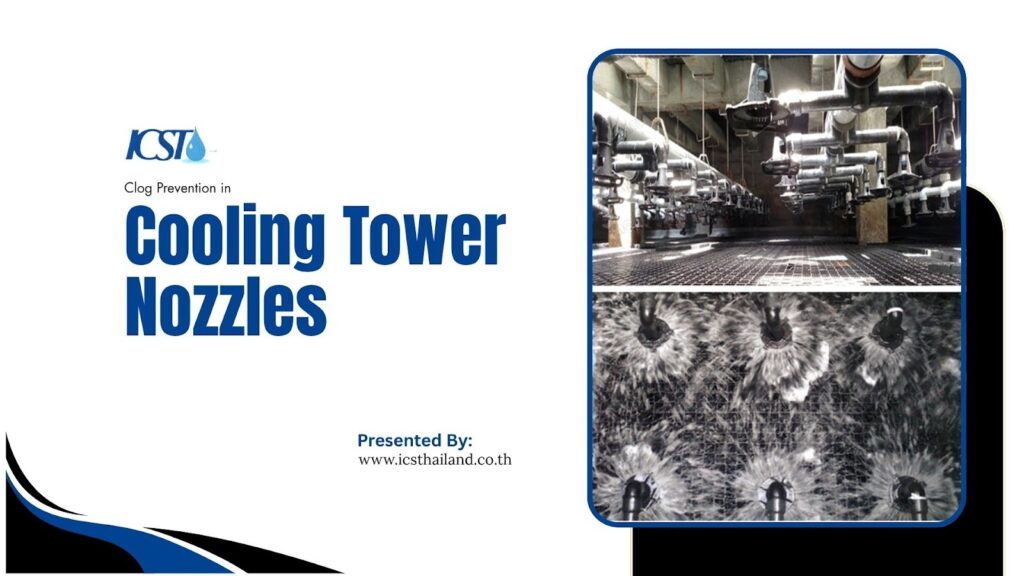
Cooling towers act as massive air scrubbers, pulling in contaminants from the surrounding environment. Airborne debris quickly accumulates within the water basin and piping. System operators also face severe scaling from hard water and biofouling from algae growth.
Design Features for Clogging Resistance
Modern engineering provides mechanical solutions to combat debris accumulation. High-quality nozzles incorporate specific physical traits to maintain clear pathways.
Upgrading your hardware improves inherent clogging resistance. Look for these specific design features when purchasing new components.
- A large orifice allows small solids to pass through without causing a blockage.
- Designs without internal bottlenecks prevent particles from getting trapped inside the nozzle body.
- A one-piece construction eliminates joints where scale and biological matter typically build up.
- Self-cleaning mechanisms use water pressure to automatically clear minor obstructions.
- Smooth internal surfaces minimize friction and prevent sediment from settling.
Maintenance and Filtration Strategies
Even the best clog-resistant nozzles require proactive maintenance to function correctly. By implementing a multi-faceted maintenance strategy, facility managers can ensure their cooling tower systems operate at peak efficiency and avoid costly downtime.
Key strategies include:
- Comprehensive chemical water treatment to prevent scale and biological growth.
- Robust filtration systems to capture physical debris before it reaches the distribution deck.
- Routine visual inspections to identify and clear partial blockages immediately.
Material Selection for Cooling Tower Nozzles
Polypropylene Nozzle Advantages
Plastics are the go-to material for modern cooling tower components, with polypropylene being a top choice for nozzles. When it comes to cooling tower nozzle selection, high-quality polypropylene is ideal due to its unique combination of chemical resistance, heat tolerance, and physical strength.
Key advantages include:
- Exceptional Chemical Resistance: Polypropylene stands up to the harsh chemicals used in water treatment, preventing corrosion and extending nozzle life.
- High-Temperature Tolerance: It maintains its structural integrity even at elevated temperatures, ensuring consistent performance.
- Outstanding Physical Durability: This material is tough and resilient, resisting wear and tear from constant water flow and physical debris.
Other Materials Comparison
Manufacturers produce nozzles in several different materials to suit various industrial environments. You must evaluate the specific chemical and thermal properties of your water supply.
Choosing the wrong material leads to rapid component degradation. Consider these alternative materials based on your operational environment.
- ABS plastic provides excellent impact resistance for standard HVAC applications.
- PVC offers a cost-effective solution for systems with lower temperature requirements.
- Stainless steel delivers maximum durability for extreme industrial environments and highly corrosive water.
Step-by-Step Nozzle Selection Framework
Systematic evaluation ensures you select the perfect component for your facility. Follow this structured approach to eliminate guesswork and guarantee optimal performance.
Following a formal process for selecting your cooling tower nozzle prevents costly design errors. Follow these exact steps to choose the perfect nozzle for your system.
- Identify your cooling tower type: Is it a crossflow or counterflow system? This fundamental distinction dictates the required spray pattern and nozzle orientation.
- Determine the required flow rate: Calculate the necessary flow rate in gallons per minute (GPM) based on your system’s specific thermal load and design specifications.
- Choose the optimal spray pattern: Select a pattern (e.g., square, circular, wide-angle) that ensures uniform water distribution across your installed fill media, maximizing thermal transfer efficiency.
- Select the correct orifice size: Choose an orifice diameter that achieves the desired droplet size for atomization while providing the target flow rate without excessive pressure drop.
- Evaluate clogging risk: Analyze your local water quality report for suspended solids and mineral content to determine the potential for nozzle clogging and select a design with appropriate resistance.
- Select the best material: Choose a material (e.g., PVC, Polypropylene, Stainless Steel) that can withstand your system’s specific chemical treatments, operating temperatures, and environmental conditions.
Conclusion
Proper cooling tower nozzle selection remains a critical responsibility for any facility engineer. By correctly sizing the nozzle orifice and carefully managing the spray pattern, you guarantee maximum thermal efficiency.
Using a durable polypropylene nozzle enhances longevity, while prioritizing water distribution and resistance to clogging keeps operating costs low. Implement these strategies to secure reliable, long-term performance from your cooling infrastructure.
For high-quality, premium spray nozzles, trust the cooling tower experts at ICST. Contact us today to find the perfect solution for your system.
Frequently Asked Questions
What is cooling tower nozzle selection?
Cooling tower nozzle selection involves choosing the exact water distribution component that matches a cooling tower’s flow rate, pressure, and fill geometry. This choice dictates the overall thermal efficiency of the system.
How does spray pattern affect cooling tower performance?
The spray pattern dictates how evenly water covers the heat exchange media. Uniform coverage maximizes evaporation and prevents inefficient dry spots within the tower.
What causes nozzle clogging in cooling towers?
Debris, mineral scaling, and biological fouling typically cause blockages. Suspended solids in the water supply accumulate at the nozzle opening, restricting flow.
Which material is best for cooling tower nozzles?
A polypropylene nozzle serves as the best general choice due to its chemical resistance and durability. However, stainless steel is required for extreme temperature or highly corrosive environments.
How do I optimize water distribution in a cooling tower?
You optimize distribution by selecting the correct nozzle orifice, ensuring proper operating pressure, and matching the spray pattern to the fill geometry. Regular maintenance prevents clogs that disrupt this distribution.