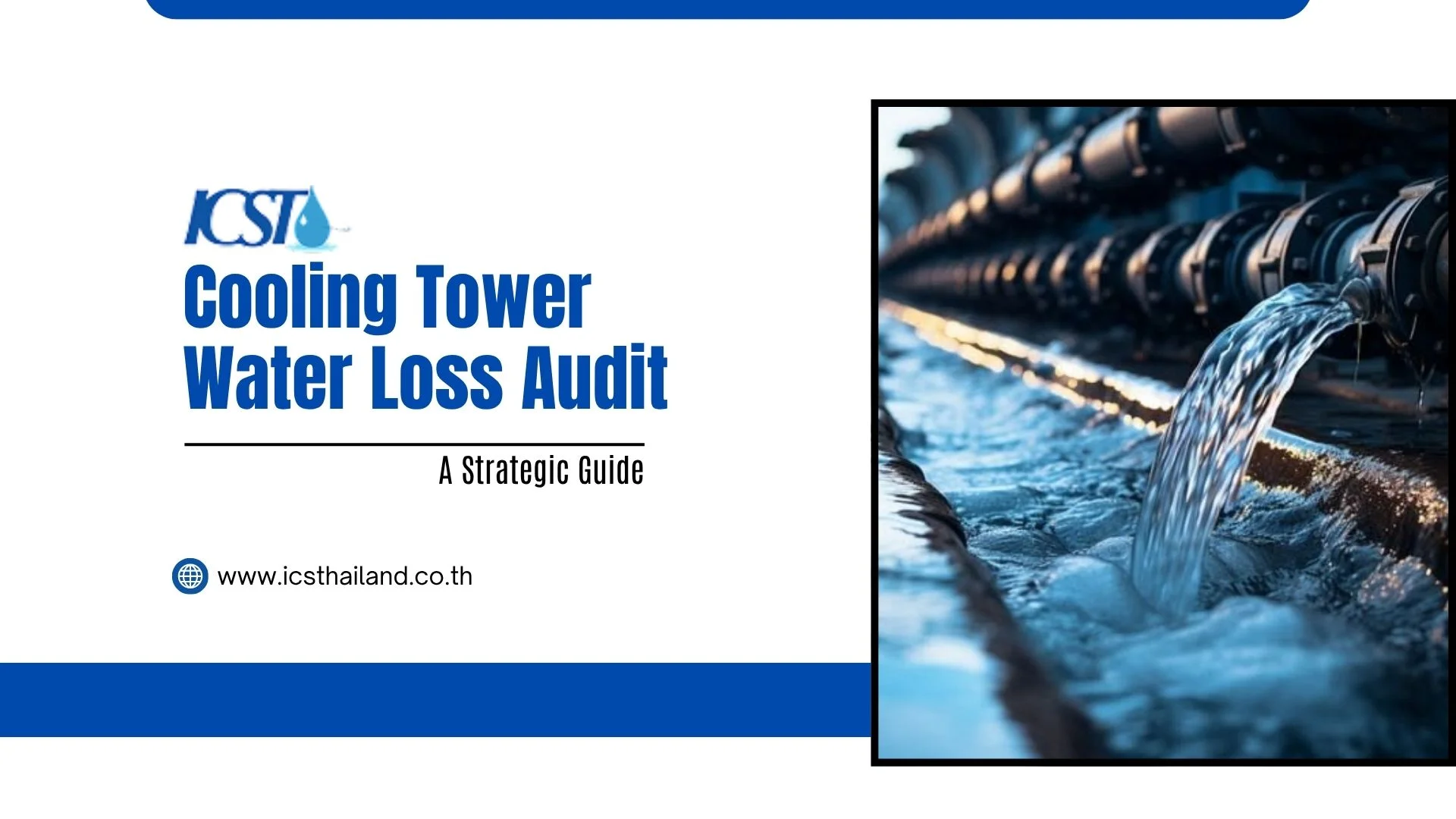
A cooling tower water loss audit is a systematic process that measures where water leaves a cooling tower system, then targets the waste for correction. The audit tracks evaporative cooling, tower blowdown, drift, and leaks using the water balance equation and cycles of concentration (CoC).
Facilities that run a proper audit often cut tower water consumption significantly, lower energy consumption, and reduce their sewer bill in the same project.
Why a Cooling Tower Water Loss Audit Matters
Facilities waste thousands of gallons daily through systems nobody is watching closely. A structured audit turns that guesswork into a measurable target.
Water ranks as the second-highest operating cost after electricity in most ystems and industrial plants. Without a dedicated audit, this expense stays invisible until the utility bill arrives. Once you quantify it, you have a clear number to improve against.
Reducing water intensity also supports environmental compliance and sustainability goals. An efficient cooling tower system lowers your facility’s footprint while cutting operating expenses at the same time.
A sudden jump in water loss often signals a mechanical problem before it becomes an emergency. Catching a stuck float valve or a cracked basin early through routine monitoring prevents an expensive unplanned shutdown.
Cooling Tower Water Loss Diagnostic Table
Use this table to benchmark your system against high-efficiency standards and spot red flags before they turn into major losses.
| Loss Category | Source of Loss | High-Efficiency Benchmark | Audit Red Flags |
| Evaporation | Thermal Heat Rejection | ~1% per 5.5°C (10°F) range | Unusually high for the current plant load |
| Blowdown | Conductivity Control | Cycles of Concentration (CoC) > 5.0 | Conductivity setpoint too low (excessive bleed) |
| Drift | Fan Exhaust Plume | < 0.001% of circulating flow | Visible mist around the tower stack |
| Overflow | Float Valve Failure | 0% (Zero Overflow) | Water exiting the overflow pipe during fan operation |
| System Leaks | Basin Leak Detection | 0% (Mechanical Integrity) | Significant drop in basin level during pump-off |
The Financial and Operational Case for a Water Audit
Facilities waste thousands of gallons of water daily through unmonitored systems. You must track where every drop goes.
The Invisible Expense
Water frequently ranks as the second-highest operating cost after electricity. A dedicated audit helps you identify the total water loss. It transforms an unknown expense into a clear target for improvement.
Sustainability and ESG Compliance
Reducing water intensity helps industrial facilities meet strict environmental regulations. Conserving water supports global sustainability goals. An eco-friendly system reduces your environmental footprint while cutting costs.
Predictive Maintenance
A sudden increase in tower water loss often points to mechanical failures. Identifying a water loss trend early uncovers stuck valves or cracked basins. You can fix these issues before they cause an expensive emergency shutdown.
The Auditor’s Framework: The Water Balance Equation
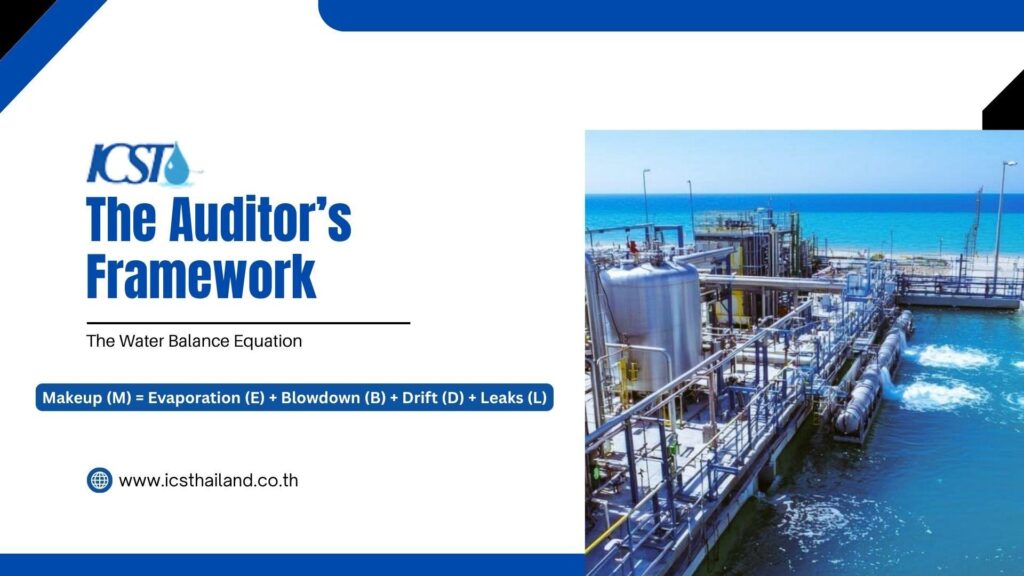
Every audit starts from one equation that accounts for all water entering and leaving the system:
Makeup (M) = Evaporation (E) + Blowdown (B) + Drift (D) + Leaks (L)
Understanding each term correctly is the difference between a useful audit and a guess. The sections below break down what each component actually represents on your tower operation.
- Makeup water meter: Fresh make up water enters the system here, so meter accuracy at this point is non-negotiable for the whole audit.
- Evaporation loss: This is the necessary loss that allows the tower to dissipate heat through the evaporative cooling process, cooling the circulating water before it returns to service.
- Blowdown: Intentional discharge of tower water that bleeds off dissolved solids and prevents scale from forming on system components.
- Drift and leaks: Water droplets carried out by the fan exhaust, plus losses from structural damage — the true waste zone you want to eliminate.
Step-by-Step Methodology for a Water Balance Audit
A structured approach ensures accurate data collection. Follow these steps to determine your exact water flow rate and system performance.
Step 1: Meter Verification and Baseline Logging
First, confirm your makeup meter accuracy. Ensure the meter is calibrated properly. It must accurately measure both low-flow nighttime periods and high-flow peak production times.
Implement a 7-day logging routine. Record meter readings at the exact same time daily. This practice accounts for different production cycles and ambient humidity shifts.
Step 2: Calculating Cycles of Concentration (CoC)
Cycles of concentration act as your primary efficiency metric. This ratio compares the dissolved solids in the recirculating water to the fresh makeup water.
CoC = Conductivity of Tower Water / Conductivity of Makeup Water
Optimization remains the goal here. Raising your CoC from 3.0 to 6.0 can reduce blowdown water by 50%. This simple adjustment creates massive water savings and lowers your chemical usage.
Step 3: Component Analysis
Calculate your theoretical evaporation based on the current heat load. Compare this estimate to your actual metered makeup water.
Next, conduct a blowdown audit. Check the conductivity setpoint against your water treatment provider’s recommendations. You must ensure the system operates efficiently without over-bleeding cooling water.
Step 4: Forensic Leak Detection
Perform a static basin test to find hidden leaks. Mark the water line carefully. Shut down the pumps for four hours. Check the water level to identify cracks or seam failures.
Inspect the system for silent blowdown. Check the blowdown valve for weeping when the system commands it to stay closed. Even a tiny leak wastes a massive volume over time.
How Ambient Conditions and Dry Bulb Temperature Affect Water Loss
An audit that ignores weather data will misread perfectly normal seasonal swings as system failures. Ambient conditions change how much water a tower needs to evaporate to hit its target temperature.
- Ambient air and humidity: Drier ambient air pulls more moisture into the air stream, increasing evaporation even when the heat load stays constant.
- Dry bulb temperature: A higher dry bulb temperature raises the theoretical evaporation rate, so compare your readings against the season, not just last month.
- Tower fill condition: Dirty or damaged tower fill reduces contact between water and air, forcing the system to run longer to dissipate heat.
Audit reports that account for weather data catch true mechanical losses instead of flagging normal climate-driven variation as a red flag.
Strategies to Eliminate Excessive Losses
Once you identify the sources of water lost, you must implement permanent fixes.
Upgrade Drift Eliminators
Aging cellular drift eliminators allow mist and water droplets to escape. Replace them with high-efficiency X-path designs. This ensures the water remains contained within the tower.
Automated Conductivity Control
Stop using manual bleed-off methods. Install a PLC-controlled valve. This automated solution only opens the blowdown valve when mineral thresholds reach the set limit. It prevents scaling while maximizing water conservation.
VFD Integration
Install variable frequency drives on your cooling tower pumps and fans. Modulate the fan speed to reduce unnecessary evaporation during cooler nighttime hours. This saves both water and energy.
Float Valve Maintenance
Stuck float valves cause massive water loss through overflow. Transition to mechanical-pilot or electronic level controllers. These modern devices eliminate stuck valve risks.
2026 Innovation: Sub-Metering and Digital Dashboards
Technology offers new ways to maintain system efficiency and track data.
Sub-Metering for Utility Credits
Many local municipalities charge sewer fees based on incoming water consumption. Metering your blowdown allows you to prove how much water actually entered the drain. You can often deduct evaporated volume from your sewage bill.
IoT Monitoring
Implement real-time sensor networks. These digital dashboards send instant alerts to your maintenance team. You will know the exact moment a float valve fails or a basin leak begins.
Best Practices for Managing Water Loss
These practices come directly from how experienced audit teams structure an ongoing water conservation program, not a one-time inspection.
- Re-run the audit seasonally: Ambient air and dry bulb temperature shift year-round, so a single audit will not stay accurate.
- Keep flow meters calibrated: Schedule annual calibration checks on both makeup and blowdown flow meters.
- Document every fix: Track which corrections reduced tower water consumption, so you can prioritize similar fixes at other sites.
- Involve your water treatment vendor early: Share audit data so setpoints reflect real system performance, not assumptions.
Common Mistakes That Undermine a Water Audit
Avoiding these errors keeps your audit results accurate and your corrective actions effective.
- Skipping meter calibration: An uncalibrated makeup meter makes every downstream calculation wrong from the start.
- Ignoring weather data: Treating seasonal evaporation changes as leaks wastes time chasing problems that do not exist.
- Manual blowdown control: Relying on staff to bleed the system manually leads to inconsistent CoC and wasted water.
- Overlooking unauthorized draw-off: Unmetered water use anywhere in the loop will throw off your entire mass balance.
Conclusion
A cooling tower water loss audit turns an invisible utility expense into a measurable, fixable target. By tracking evaporation, cooling tower blowdown, drift, and leaks through the water balance equation, facility teams can cut tower water consumption, protect water quality, and extend equipment life.
Pairing the audit with automated conductivity control, calibrated flow meters, and a responsive water treatment vendor keeps those savings in place year after year, not just for one budget cycle.
Book a professional cooling tower water loss audit today and optimize your cooling plant for maximum efficiency.
Frequently Asked Questions (FAQs)
What is a cooling tower water loss audit?
A cooling tower water loss audit identifies and quantifies water losses using mass balance equations, meter verification, and cycles of concentration analysis. It pinpoints inefficiencies across evaporation, blowdown, drift, and leaks. The process reduces water consumption, prevents scaling, and supports sustainability goals while lowering operating costs.
How does cooling tower efficiency impact water conservation?
Cooling tower efficiency directly affects how much water a system wastes. Efficient towers minimize evaporation loss, drift, and blowdown while maintaining optimal cycles of concentration. Upgrading drift eliminators, automating conductivity control, and maintaining float valves significantly reduce water waste and lower utility bills.
Why is CoC optimization important for tower blowdown?
Cycles of concentration measure how efficiently a tower uses water before tower blowdown removes it. Raising CoC from 3.0 to 6.0 can cut blowdown water by roughly 50%, reducing both water use and treatment chemical costs while improving overall system efficiency.
What are the most common causes of water loss?
Water loss in cooling towers typically comes from evaporation, blowdown, drift, and leaks. Stuck float valves, low conductivity setpoints, and aging drift eliminators make these losses worse. Regular audits and proper management catch these issues before they become expensive.
How does ambient air affect a water loss audit?
Ambient air and dry bulb temperature change how much evaporation a tower needs to reject the same heat load. Auditors who ignore weather data risk misreading normal seasonal variation as a mechanical fault, which leads to chasing problems that do not actually exist.
How can IoT monitoring improve cooling tower water management?
IoT monitoring provides real-time data on make up water, drift loss, and blowdown flow. Sensors and digital dashboards alert teams instantly to basin leaks or valve failures, enabling proactive fixes instead of waiting for the next scheduled inspection.