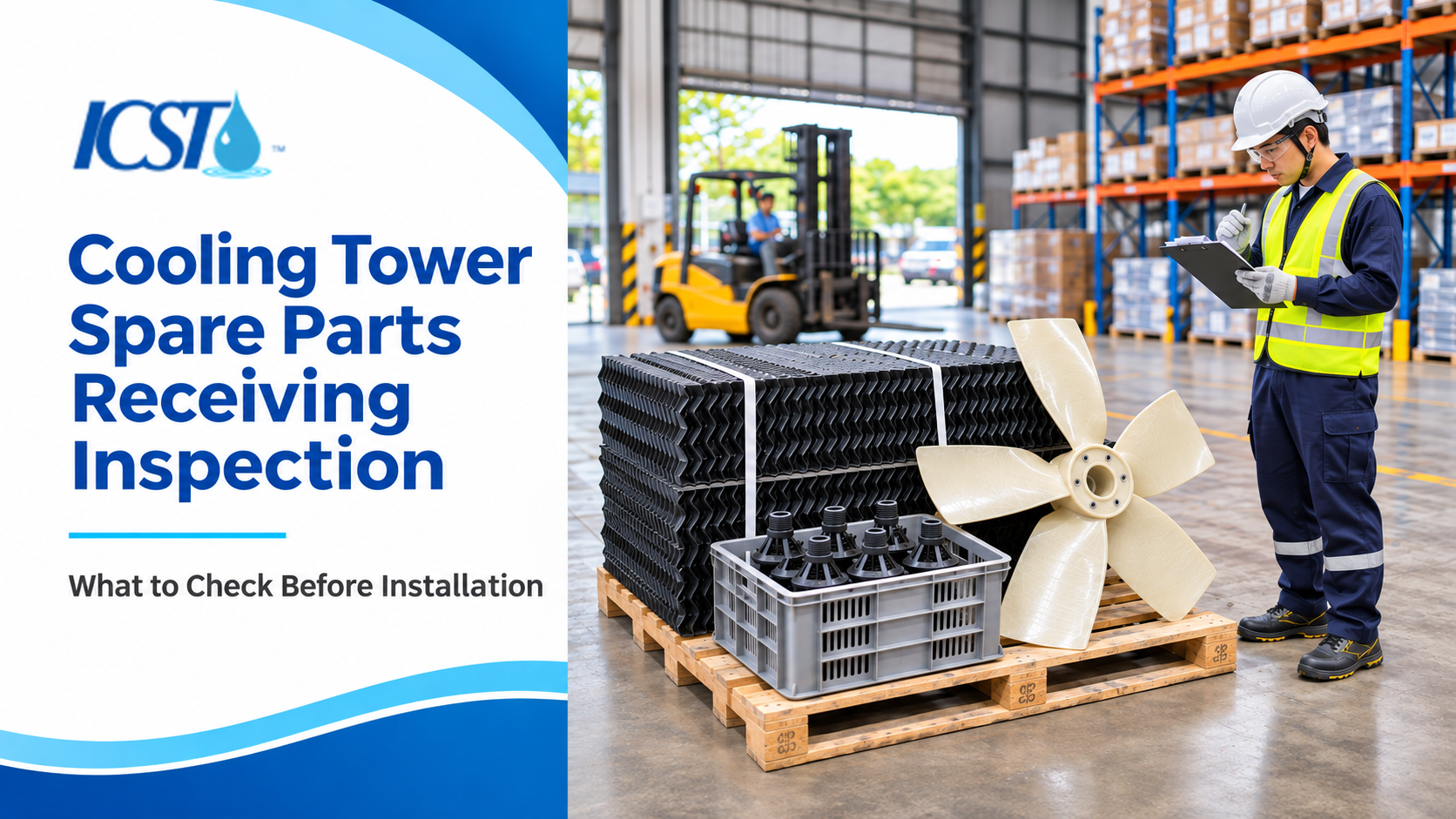
A cooling tower spare parts receiving inspection is a documented check of a delivery before anyone signs off on it or sends the parts to installation. Match the parts to the purchase order and packing list, photograph the packaging and identifiers, inspect each part, and record every problem before release.
This guide is for maintenance, engineering, and procurement teams, and for facility managers who sign off deliveries. It covers only the delivery stage, before routine cooling tower maintenance. For buying, see our cooling tower parts RFQ checklist. For stock planning, see our cooling tower spare parts inventory guide.
Why a Purchase Order Match Is Not Enough

A purchase order shows what you ordered, not what arrived. A part can carry the right number and still arrive damaged, short or substituted. A receiving inspection checks for visible defects, compares each part with the order specifications, and records the findings for quality assurance and traceability.
A wrong or damaged part found late can mean costly downtime, a delayed restart, or even equipment failure if it goes into service unchecked. A badly fitting part can also hurt cooling performance and raise maintenance costs.
What Manufacturers Say About Receiving
The SPX Marley Aquatower manual tells the receiver to inspect the entire shipment for damage and to check the motor nameplate against the power supply. BAC’s Series 1500 rigging instructions say to inspect on arrival, before signing the bill of lading. Both cover specific towers and give no universal reporting deadline, so use them as examples and follow your supplier’s and carrier’s terms.
Step 1: Match the Delivery to Your Documents

Start with paperwork before you open anything.
What to Match
- Part number: exactly as written on the order.
- Description and model: type, size and material.
- Quantity: count the items, not just the boxes.
- Tower or cell reference: the unit the part is meant for.
- Supporting documents: manuals, installation instructions, and Material Test Reports or Certificates of Conformance where the order requires them.
If You Find a Substitution
Record it and put the item on hold. If documents are unclear, or a specification does not meet the order, quarantine the part and ask engineering to decide in writing. Never assume parts from different brands are interchangeable.
Step 2: Check Packaging and Visible Condition
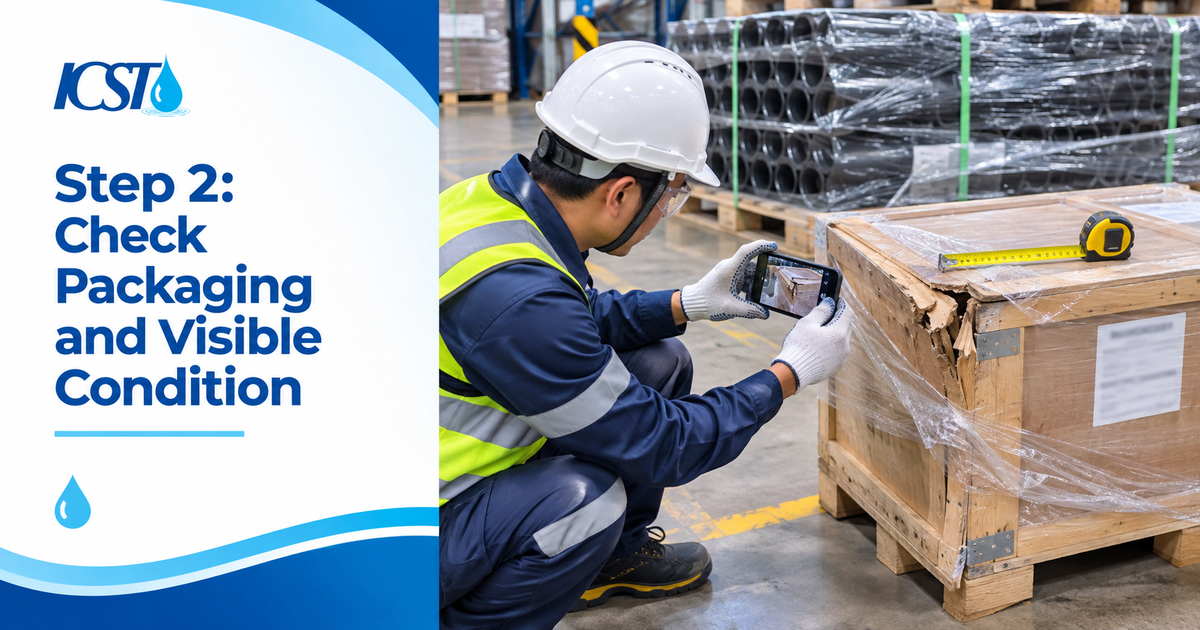
Document the condition before you unpack further.
What to Look For
- Outer packaging: crushing, tears, open seals, or water marks that suggest water leaks in transit.
- Shipping damage: dents, impact marks and moisture exposure on the parts themselves.
- Labels and markings: readable, and matching the packing list.
- Transport evidence: damaged pallets or crates, and any items listed but missing.
Photos to Take
- A wide shot of the delivery with the packing list beside it
- Close-ups of labels, part numbers and damage, with a scale reference
- The date and time on each photo
Good packaging protects parts from contamination and environmental damage, so damaged packaging is a warning sign. Where your carrier terms allow, note visible damage on the delivery document before you sign.
Step 3: Inspect Each Component Type
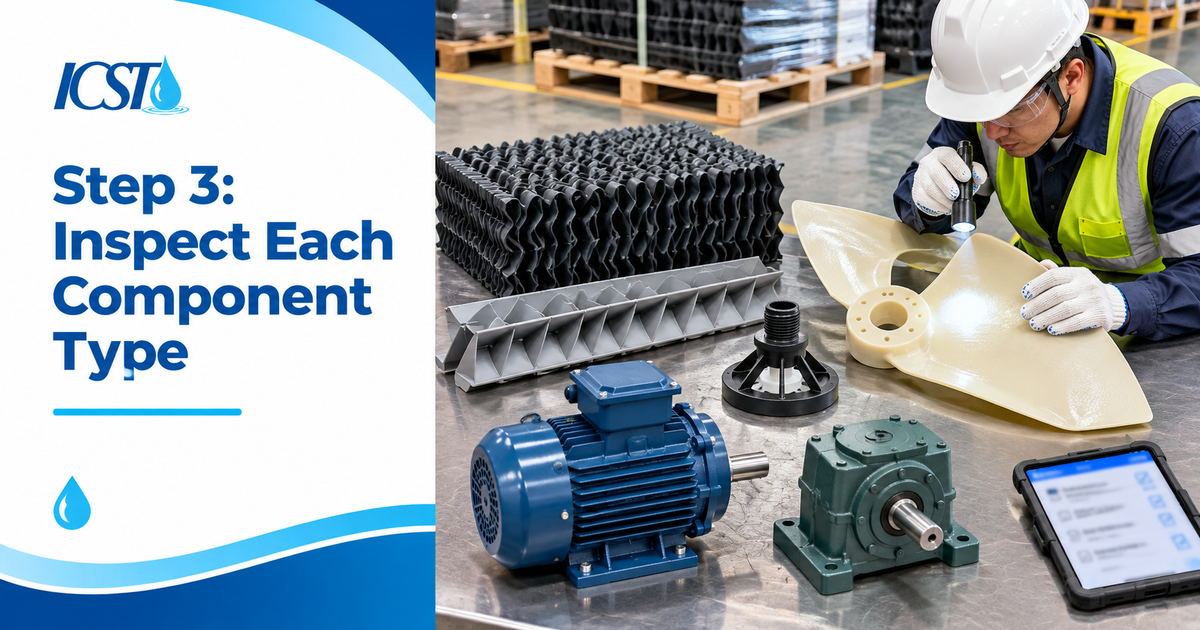
Compare each part with the approved drawing and supplier documents. A competent person should do this cooling tower inspection of incoming mechanical components and check each part against the operating conditions listed on the drawing.
Fill Media and Drift Eliminators
What to Check
- Identity: module or pack matches the drawing.
- Condition: no crushed, torn or warped sheets or blades.
- Supports: spacers and support pieces are present.
Fill media provides the heat transfer surfaces and the surface area for heat exchange, so damaged sheets can reduce thermal performance and cooling capacity. Drift eliminators capture water droplets, so check blade condition. See our fill media range for reference.
Spray Nozzles and Water Distribution Parts
What to Check
- Connection and identification: match the drawing.
- Condition: no cracks, chips or blocked orifices.
- Count: quantity per cell matches the order.
- Float valve and strainers: each float valve and strainer is present and undamaged.
Your nozzles feed the water distribution system. Check each one for blockages, so the distribution system can spread water evenly. A wrong orifice size can change water flow, and debris can lead to clogged spray nozzles after installation.
Fan Blade, Fan Shaft and Drive Components
What to Check
- Fan blade set: correct number, markings, any pitch angle marks, and no visible cracks or erosion.
- Fan shaft and couplings: no visible bends or impact marks.
- Gear drive and drive shafts: no visible oil leaks or cracks, and shafts turn smoothly by hand where the manufacturer allows.
- Rubber components: no dry rot, cracking or other deterioration.
- Belt drive systems: sheaves and belts match the order and show no cracks or wear.
Browse our fans for the part types involved. Blade tip clearance is set during installation, so it does not belong in the receiving check.
Casing Panels, Basin Parts and Structural Components
What to Check
- Identity: panels, fan deck sections and structural components match the drawing.
- Condition: no visible cracks, warping, chipped edges or damaged protective coating.
- Basin parts: if the delivery includes cold water basin components, check for cracks and corrosion.
- Timber parts: no moisture damage or wood rot.
Cracked or warped panels can weaken structural integrity. See our FRP members for typical casing panels.
Motors
Check the nameplate against your power supply and the order, including voltage, phase and frequency. Look for shipping damage on the casing and terminal box. See our motors page for options. A caliper reading alone does not prove a part fits, so use the drawing and let a qualified person confirm.
Step 4: Record and Segregate Discrepancies
What to Record
- Observation: what you actually saw.
- Reference: the drawing, order line or packing list item.
- Photo: file name and date.
- Owner: who will resolve it.
- Decision: pending technical review.
Illustrative Discrepancy Label (Example Only)
- Item: Spray nozzle, order line 3 (example)
- Observation: 6 received, 8 on the packing list (example)
- Photo: nozzle-count-01 (example)
- Owner: Stores supervisor (example)
- Status: HOLD, pending review (example)
Tag the item HOLD and store it away from accepted stock. Do not release it for installation until the discrepancy is closed.
Step 5: Accept, Release and Hand Off
Close the inspection with a written decision: accepted, accepted with notes, on hold, or rejected under supplier terms. Acceptance at the loading bay is not commissioning or performance certification. It only confirms what arrived.
Hand Off to Storage or Installation
If parts will wait, follow the manufacturer’s preservation plan. Then pass the record to your cooling tower maintenance team, so it becomes part of your preventive maintenance history.
Short-Term Storage and Regular Inspections
Many facilities keep spare parts for months before installation. Storage conditions must prevent deterioration of sensitive components, and guidance is manufacturer-specific. SPX’s guidance for knockdown towers stored beyond three weeks, for example, includes these points:
- Fill: keep it out of heat and direct sun, and store it indoors beyond three weeks.
- Motors and gear drives: store them indoors and turn the shaft monthly. For motors, this keeps the bearings lubricated.
- Fan and motor shafts: turn them by hand during idle periods, and check the fan shaft bearings for smooth rotation.
- Casing panels: keep them off the ground and out of direct sun.
Schedule regular inspections of stored parts, and add them to your routine maintenance plan, next to your tower maintenance checklist.
Where Receiving Inspection Fits in Tower Maintenance
A receiving check is one link in tower maintenance. It does not replace routine inspections or regular maintenance. It makes sure good parts enter that cycle.
Receiving Checks and In-Service Checks
- Receiving inspection: parts on delivery, before installation.
- Routine inspections: tower inspections while the tower runs, on a schedule set by your site and the OEM.
- Annual shutdown: a detailed mechanical review, covered in our cooling tower annual shutdown guide.
- Repairs: a delivery for cooling tower repair gets the same receiving checks. See our cooling system emergency repair guide for tower repair planning.
Planned maintenance and preventive maintenance help catch small issues before they grow into a catastrophic failure. They work best when the right replacement parts go in.
Problems This Guide Does Not Cover
Some problems appear only once the tower runs, so they belong to in-service checks:
- Scale buildup and biological growth: these relate to water treatment and water quality. See our cooling tower water treatment guide, and keep a water management plan.
- Fouled fill and clogged nozzles: fouled fill affects thermal efficiency, and clogged nozzles develop in service.
- Vibration analysis and motor alignment: these belong to commissioning and routine maintenance.
- Gearbox oil level: checked in service. Our gearbox selection guide covers gearbox failure risks.
- Confined space entry: needs its own permit and a qualified team.
No receiving check can promise to extend equipment life, because tower life and equipment lifespan depend on how the tower is run and maintained.
Cooling Tower Spare Parts Receiving Checklist
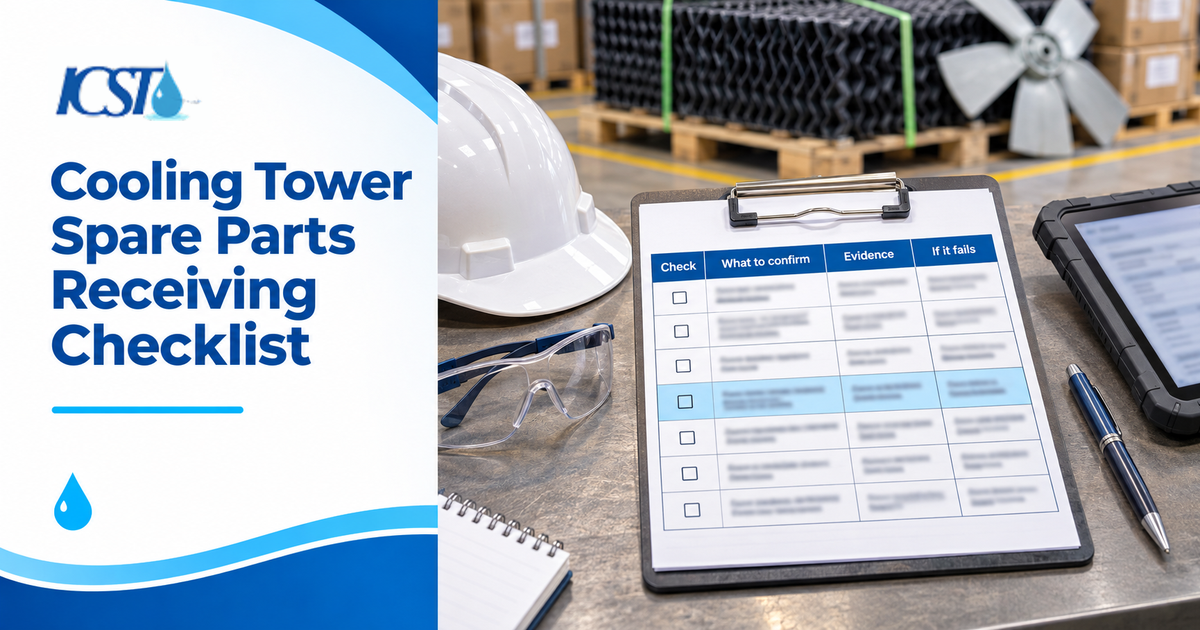
Copy this table into your receiving record. It works alongside your usual cooling tower inspection checklist, but it covers incoming parts only.
| Check | What to confirm | Evidence | If it fails |
| Documents | Order, packing list and drawing agree | Copies filed | Query with procurement |
| Identity | Part number, model and cell reference match | Label photo | Hold and ask engineering |
| Quantity | Count matches the packing list | Count sheet | Record the shortage |
| Packaging | No crushing, water marks or open seals | Dated photos | Note on delivery document |
| Condition | No cracks, bends or crushed sections | Close-up photos | Hold for review |
| Motor nameplate | Voltage, phase and frequency match supply | Nameplate photo | Hold, do not connect |
| Release | Written disposition signed | Signed record | Do not install |
Final Thoughts
A good receiving inspection is short, dated and honest. Proper maintenance starts at the loading bay. Match documents, photograph first, inspect each part, and release only with a written decision. That protects your installation team, your shutdown schedule and the wider cooling system, and it helps prevent costly downtime and avoid costly repairs. The same routine suits other cooling equipment deliveries. If a failure occurs soon after installation, your record shows what was checked at delivery.
For more practical guides, visit the ICS Thailand blog. Two good next reads are the cooling tower gearbox selection guide and the cooling maintenance schedule template. To discuss replacement parts, see our parts range or contact ICS Thailand.
Frequently Asked Questions
What is a cooling tower spare parts receiving inspection?
It is a documented check of delivered parts against the order, packing list and drawings, done before the parts are accepted or installed.
Can I accept a part with a small discrepancy?
Only after a responsible person records the issue and approves it in writing. Keep the item on hold until then.
Is a receiving inspection the same as a routine tower inspection?
No. Receiving checks cover incoming parts before installation. Routine inspections cover the tower in service, on a schedule set by your site and the OEM.