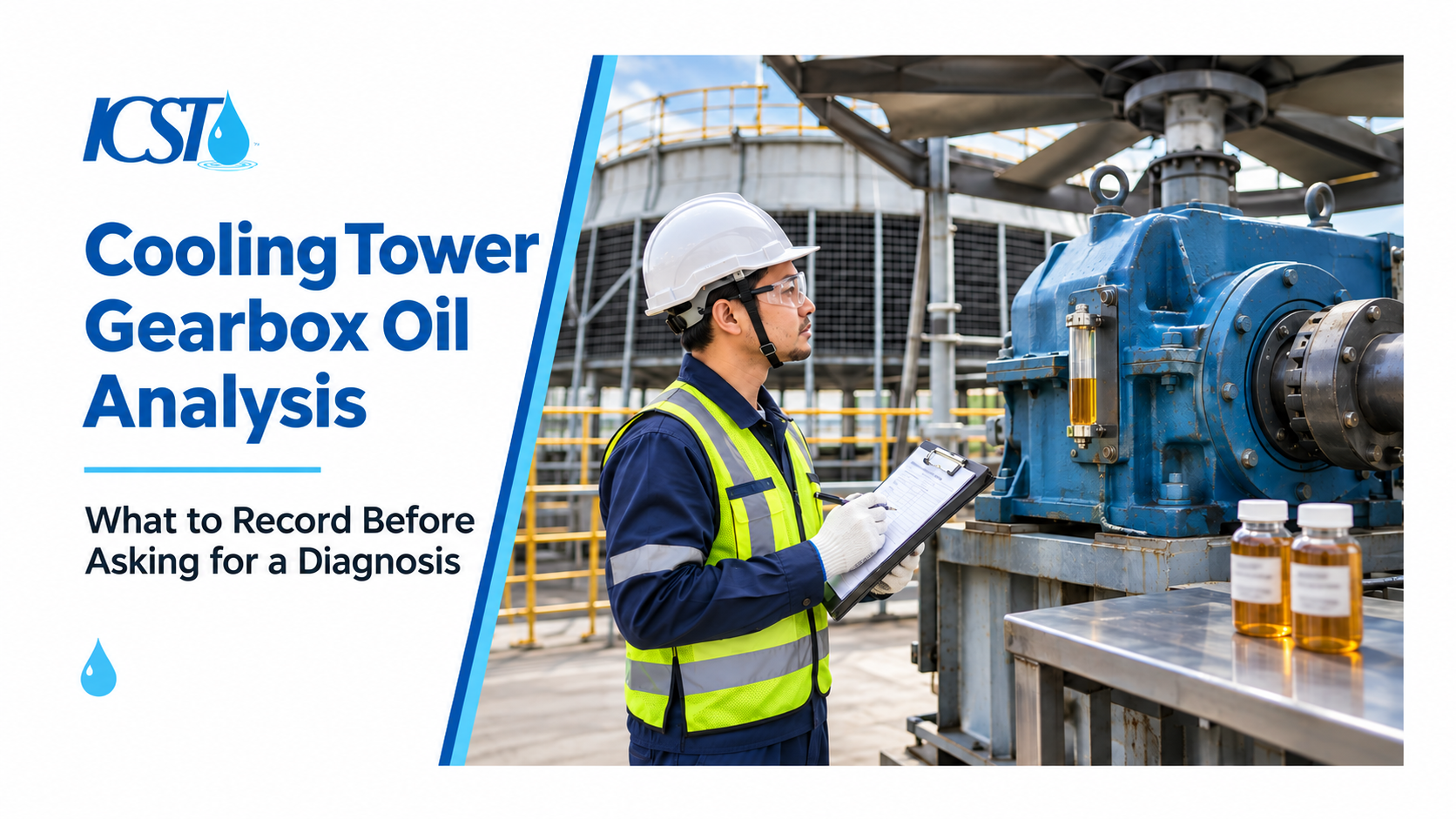
Cooling tower gearbox oil analysis is a lab check of a gearbox oil sample that helps a qualified person judge oil condition, oil contamination, and wear debris. It does not name a failure on its own. The records you send with the sample decide how useful the result will be.
This guide is for maintenance, engineering, and procurement teams who send cooling tower gearbox samples to an OEM or lab. It covers what to record, not how to change oil or take a sample. For the causes of cooling tower gearbox failures, read our cooling tower gearbox failure analysis guide.
What Cooling Tower Gearbox Oil Analysis Can and Cannot Tell You
Oil analysis shows what the oil and the internal components were doing when the sample was taken. A good maintenance strategy uses it with other evidence, so small changes appear before a catastrophic failure.
What a Report Can Help Investigate
- Oil condition: whether the lubricant is still doing its job of reducing friction and reducing wear.
- Contamination: signs of water or particulate contamination, such as dust or dirt.
- Wear debris: metal particles that may point to gear wear or bearing wear.
- Trends: how results change across previous samples from the same gearbox.
Why One Result Does Not Prove a Failure
A single number rarely shows the root cause. Metal in the oil may suggest that metal surfaces grind against each other, but the lab and OEM must judge which part is involved. Possible problems include gear tooth failure and bearing failure. Treat every finding as a question for a qualified person, not a diagnosis.
Step 1: Identify the Gearbox and the Lubricant
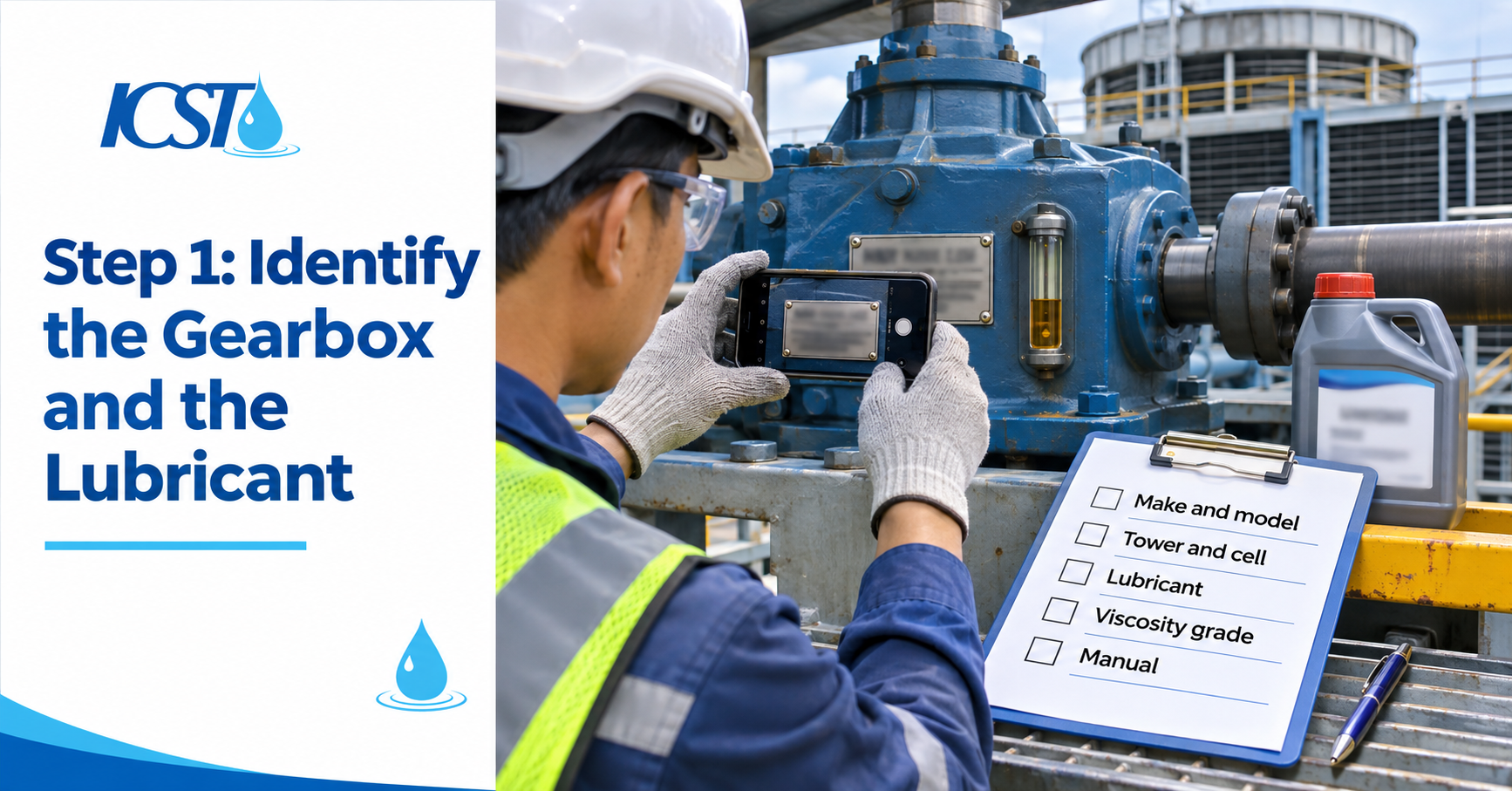
Use the same checklist for all tower gearboxes on site. Record these before you send anything:
- Gearbox make and model: copy it from the nameplate, and photograph the plate.
- Tower and cell reference: which unit the gearbox serves.
- Lubricant product: the exact oil name and type, including whether it is synthetic oil or mineral oil.
- Viscosity grade: the ISO VG grade stated by the OEM. ISO VG is a viscosity grading system set by the International Organization for Standardization.
- Manual and drawings: the document that applies to your gearbox.
Why Model Details Matter
OEM guidance changes from model to model. Two SPX Marley manuals show this clearly.
SPX Manual Z0238985
It covers the 10.1, 20.2, and 22.3 Series Geareducer. It describes a five-year oil change interval for Marley Gearlube, and a six-month interval for turbine-type mineral oil.
SPX Manual Z0490769
It covers models 2200, 2250, 2250S, and 2400. It asks for synthetic oil condition checks every six months, with a lab sample on extended intervals.
Do not copy these numbers to another gearbox. Use the manual for your own unit. If you are still choosing a unit, our cooling tower gearbox selection guide covers the selection side.
Step 2: Record the Operating History

The lab reads results against how the gearbox has run. Write down:
- Operating hours: total hours, and hours since the last oil change.
- Oil age and top-ups: dates and amounts of any oil added, and any oil level change.
- Shutdowns: long idle periods, and how often the tower starts and stops.
- Load conditions: normal duty, peak loads and any known overload.
- Site conditions: high humidity, high temperature, dust or splash exposure.
- Symptoms: noise, vibration, leaks, or a hotter casing, with dates.
Intermittent running and long downtime can let water condense in the oil, according to the Marley 2200 series manual. Note any such periods, because they help explain water content results.
Step 3: Record the Sampling Details
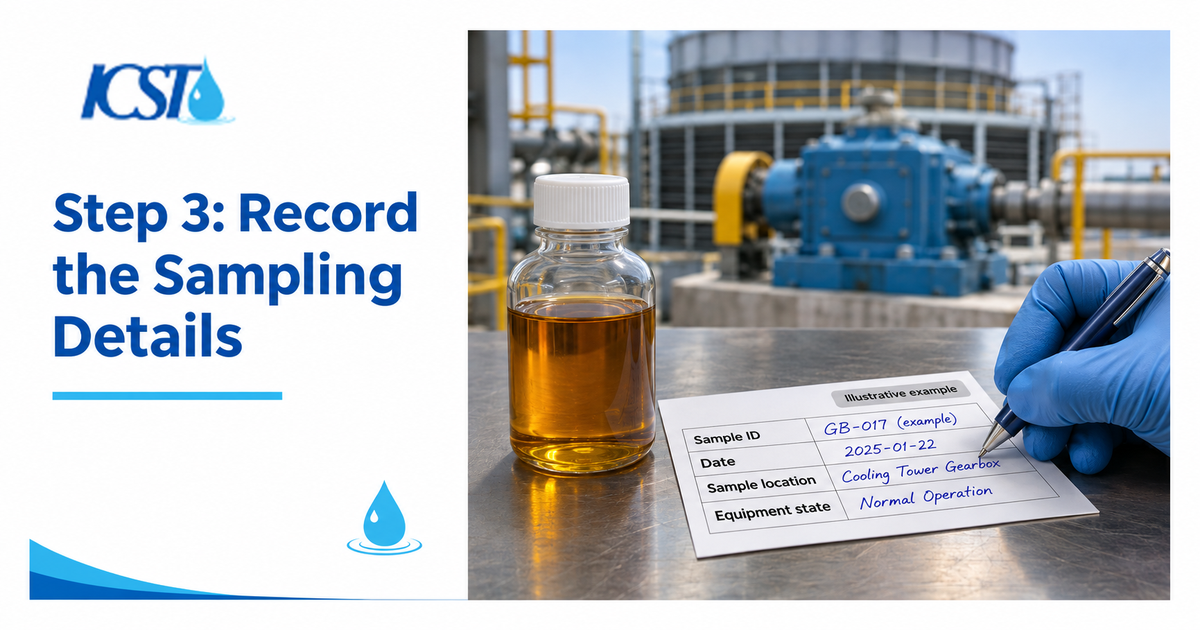
Every sample needs its own record:
- Sample ID and date: a unique label and the time taken.
- Sample location: the point approved by the OEM or lab.
- Method: the procedure used, and who took the sample.
- Equipment state: running, stopped, or recently stopped.
- Recent work: top-ups, an oil change, or repairs since the last sample.
- Previous samples: reports from the same gearbox, taken the same way.
Keep Collection Under the OEM and Lab Procedure
Sampling method and location must follow the OEM, lab, and site rules. Do not open, drain, or sample a running gearbox because of this guide. Where there is difficult access, ask your safety team and the lab how the sample should be taken.
Step 4: Know the Report Categories
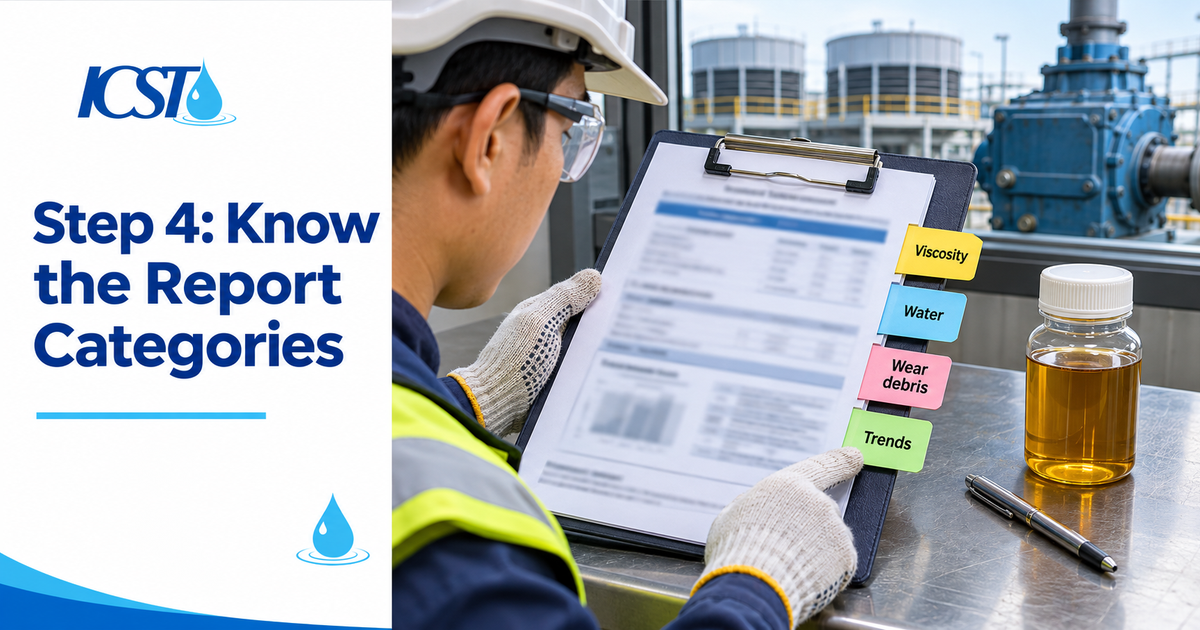
Lab formats differ, but most reports group results like this. Ask the lab to explain any limit it uses, because no single limit fits every gearbox.
Viscosity and Lubricant Condition
Viscosity shows how the oil flows, and it affects how well gears and bearings stay protected. A change from the expected grade can point to mixing, aging, or contamination. The lab may also report oxidation or acid number to describe chemical aging.
Water Content and Contamination
Moisture is a common concern in cooling towers. Water can weaken the protective oil film, and the Marley manuals mention checking samples for water, metal shavings, and sludge. Ask the lab how it measured the water content.
Wear Debris and Particulate Contamination
Wear metals such as iron and copper can suggest where wear debris is coming from. The size, amount, and trend matter more than one reading. Dust or dirt in the oil may also show a vent or seal problem.
Trends and Context
A result is easiest to read next to previous samples. Keep every report in one file, so the lab can see how the gearbox changes over time.
Step 5: Compare With Temperature and Vibration Evidence
Oil results are stronger when other evidence agrees or disagrees with them. Add these to the package:
- Oil temperature: casing or sump readings, if your site records them.
- Vibration monitoring: recent readings and their dates.
- Vibration analysis: reports from a qualified analyst, if available.
- Sound and heat: unusual noise, or heat near the gearbox.
These checks sit inside predictive maintenance. For the wider program, see our cooling tower predictive maintenance program guide.
Copyable Oil Sample Information Form
Copy this table into your maintenance system. The values are an illustrative example, not real data.
| Field | What to record | Illustrative example |
| Sample ID and date | Unique label and date | GB-017, 11 Nov (example) |
| Tower and cell | Unit the gearbox serves | Tower 2, Cell 4 (example) |
| Gearbox make and model | From nameplate | As per nameplate photo |
| Lubricant | Product name and viscosity grade | As per OEM manual |
| Operating hours | Total, and since last oil change | Example only |
| Oil changes and top-ups | Dates and amounts | Example only |
| Sample location and method | Approved by OEM or lab | Example only |
| Equipment state | Running, stopped, recently stopped | Stopped (example) |
| Symptoms | Noise, vibration, leaks, heat | None noted (example) |
| Previous report | Report number and date | Example only |
Questions to Send the OEM or Lab
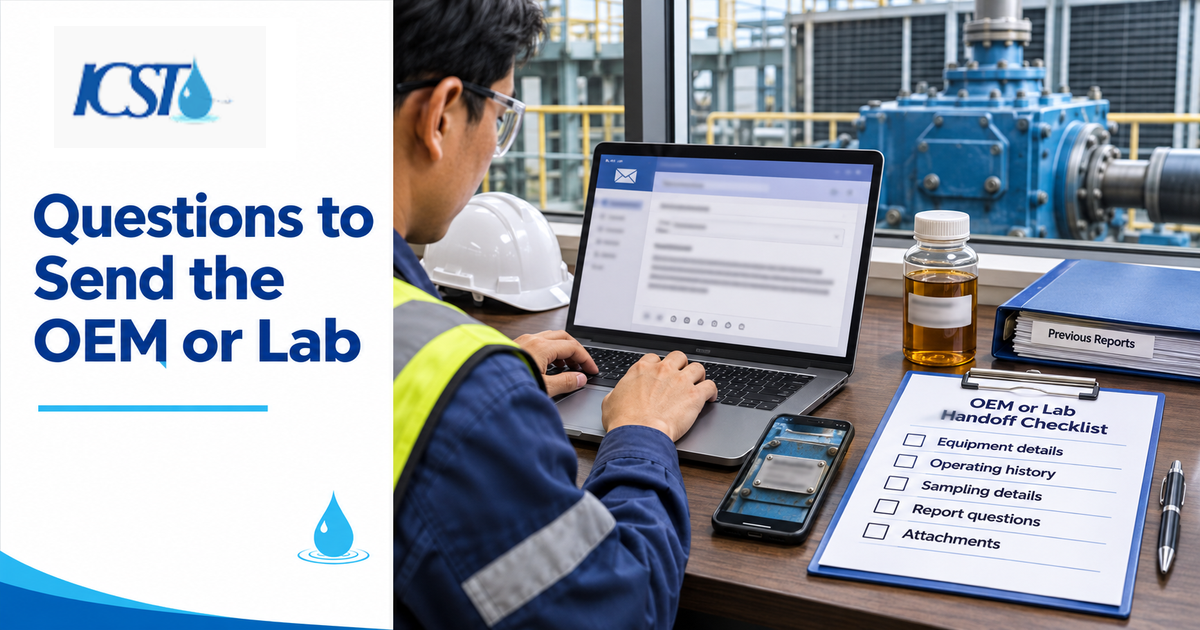
Ask these when you submit the sample:
- Method: is this sample location and method suitable for this gearbox?
- Limits: which limits apply to this lubricant and model?
- Results: what do the oil analysis results suggest, and what do they not suggest?
- Next step: should we take another sample, check the oil level, or inspect the gearbox?
- Evidence: which vibration or temperature records would help you?
Who Acts and When to Escalate
Assign a name to every finding, so nothing waits on “someone”.
- Operator: records the symptoms and keeps the log up to date.
- Maintenance planner: files the report and schedules follow-up.
- Reliability or OEM engineer: interprets the result and advises action.
- Supervisor: decides on shutdown, based on the OEM and site rules.
Escalate quickly if the report flags something unexpected, or if oil results and vibration readings both worsen. Acting early can avoid unplanned downtime and a significant cost later.
Next Records to Collect
- Follow-up sample: taken the same way, and at the same point.
- Inspection notes: what the technician saw, with dated photos.
- Action log: what was done, by whom, and when.
Final Thoughts
Good gearbox maintenance starts with good records. A clear sample form helps the lab, supports tower operations, and can reduce maintenance costs over time. It does not promise a longer equipment lifespan, because that depends on how the gearbox is run and maintained. A planned response is usually cheaper than corrective maintenance after a breakdown.
For more practical guides, visit the ICS Thailand blog. A good next read is the cooling maintenance schedule template. To discuss gearbox parts or support, contact ICS Thailand.
Frequently Asked Questions
How often should I take an oil sample?
There is no single interval. It depends on the OEM manual, the lubricant, the duty, and your site’s plan. The Marley 2200 series manual, for example, asks for a condition check every six months for its synthetic oil.
What if the report shows something abnormal?
Do not guess the cause. Send the report, your records, and any vibration or temperature data to the OEM or lab, and let a qualified person advise.
Can I use the same oil interval for every gearbox?
No. Intervals and oil requirements are model- and lubricant-specific. Always follow the manual for your gearbox.