adiabatic pre-cooling systems

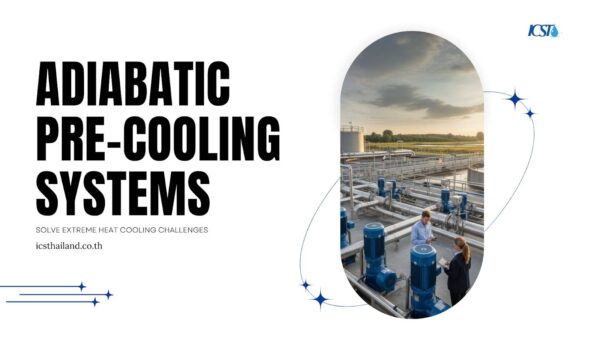
Guide to Adiabatic Pre-Cooling Systems

Adiabatic pre-cooling systems enhance cooling efficiency by lowering air temperature through evaporation before it reaches the heat exchanger coils. This process uses evaporative media or mist systems to cool air to near wet-bulb temperature, significantly improving system performance in hot climates.  These systems are ideal for industrial sites facing extreme heat, as they reduce energy…

Cooling Tower Drift Eliminator Performance

Cooling Tower Drift Eliminator Performance & Maintenance Guide

High cooling tower drift eliminator performance is crucial for operational efficiency and environmental compliance. By enhancing droplet separation. from exhaust air, these systems significantly lower the drift rate. This directly supports water loss prevention, cutting makeup water and chemical treatment costs. More importantly, effective drift elimination is a primary method for Legionella control, as it…

Cooling Tower Fill Media Types

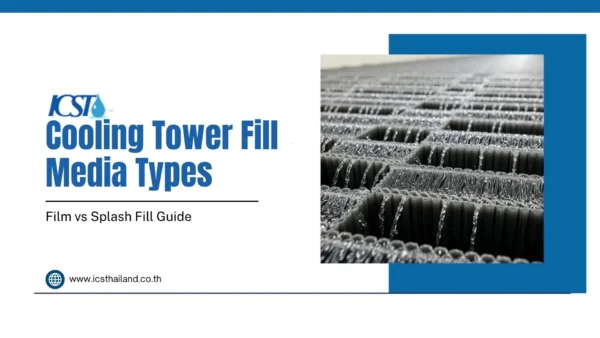
Cooling Tower Fill Media Types: Film vs Splash Fill Guide

Selecting the right cooling tower fill media types determines the overall performance and maintenance costs of your system. Two primary options dominate the market. These are film fill, which often utilizes PVC fill, and splash fill. Film fill delivers high thermal efficiency by maximizing the heat transfer surface. Splash fill provides exceptional durability and high…

dry cooling tower water scarce

Dry Cooling Tower Water Scarce: Zero Water, Full Efficiency

Dry cooling tower water scarce solutions eliminate water consumption by using air as the cooling medium instead of water evaporation. These systems rely on sensible heat transfer through finned-tube heat exchangers, ensuring zero water loss. Ideal for arid regions and industries facing water scarcity, dry cooling towers reduce dependency on water resources while maintaining efficient…

fluid cooler closed-loop cooling

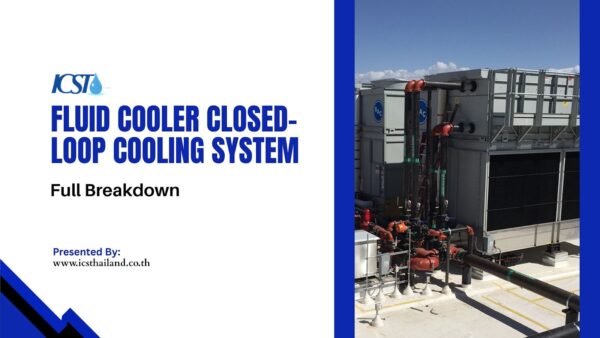
Fluid Cooler Closed-Loop Cooling: A Complete Guide

Fluid cooler closed-loop cooling represents a highly efficient method for rejecting heat from industrial processes. This technology utilizes a closed circuit system where the process fluid remains entirely contained within a coil bundle. By keeping the fluid separated from the outside air, this design ensures complete process fluid isolation and guarantees strict contamination prevention. These…

induced draft vs forced draft tower

Induced Draft vs Forced Draft Tower: 2026 Guide

Induced draft vs forced draft tower systems differ primarily in fan placement and airflow mechanics. Induced draft towers position fans at the top, creating a low-pressure zone that pulls air uniformly through the system, ensuring high energy efficiency and minimal air recirculation.  In contrast, forced draft towers place fans at the base, pushing air into…

package vs field erected cooling tower

Package vs Field Erected Cooling Tower: Which to Choose?

Need a quick comparison? A package cooling tower is a factory-assembled unit that offers a fast installation time, but it has a lower overall capacity. A field-erected tower requires on-site construction and features a custom design to handle massive heat rejection loads. Your decision ultimately depends on your required tower capacity, budget, and whether your…

crossflow cooling tower applications

Guide to Crossflow Cooling Tower Applications and Benefits

Understanding crossflow cooling tower applications is critical for facility managers. These systems rely on horizontal airflow and a simple gravity distribution system to cool hot water. Industrial plants and commercial buildings use them heavily. They offer significant benefits like low pump energy requirements and easy maintenance access. They do have some limitations. They require a…

natural draft cooling tower operation

Natural Draft Cooling Tower Operation Guide

Natural draft cooling tower operation relies on the chimney effect to efficiently remove heat from industrial processes. Warm air inside the tower rises due to its lower density, drawing cooler air from the base. This natural air circulation removes the necessity for mechanical fans, leading to lower energy usage and reduced maintenance expenses. The hyperbolic…

Psychrometric Cooling Tower

Psychrometric Cooling Tower Guide: Essential Engineering Tips

Engineers must master the fundamentals of a psychrometric cooling tower to design efficient heat rejection systems. Cooling tower performance depends on specific air properties, not just the air’s sensible heat. You must understand how moisture and heat interact to optimize cooling capacity. The study of these interactions provides the foundation for accurate performance predictions. Key…