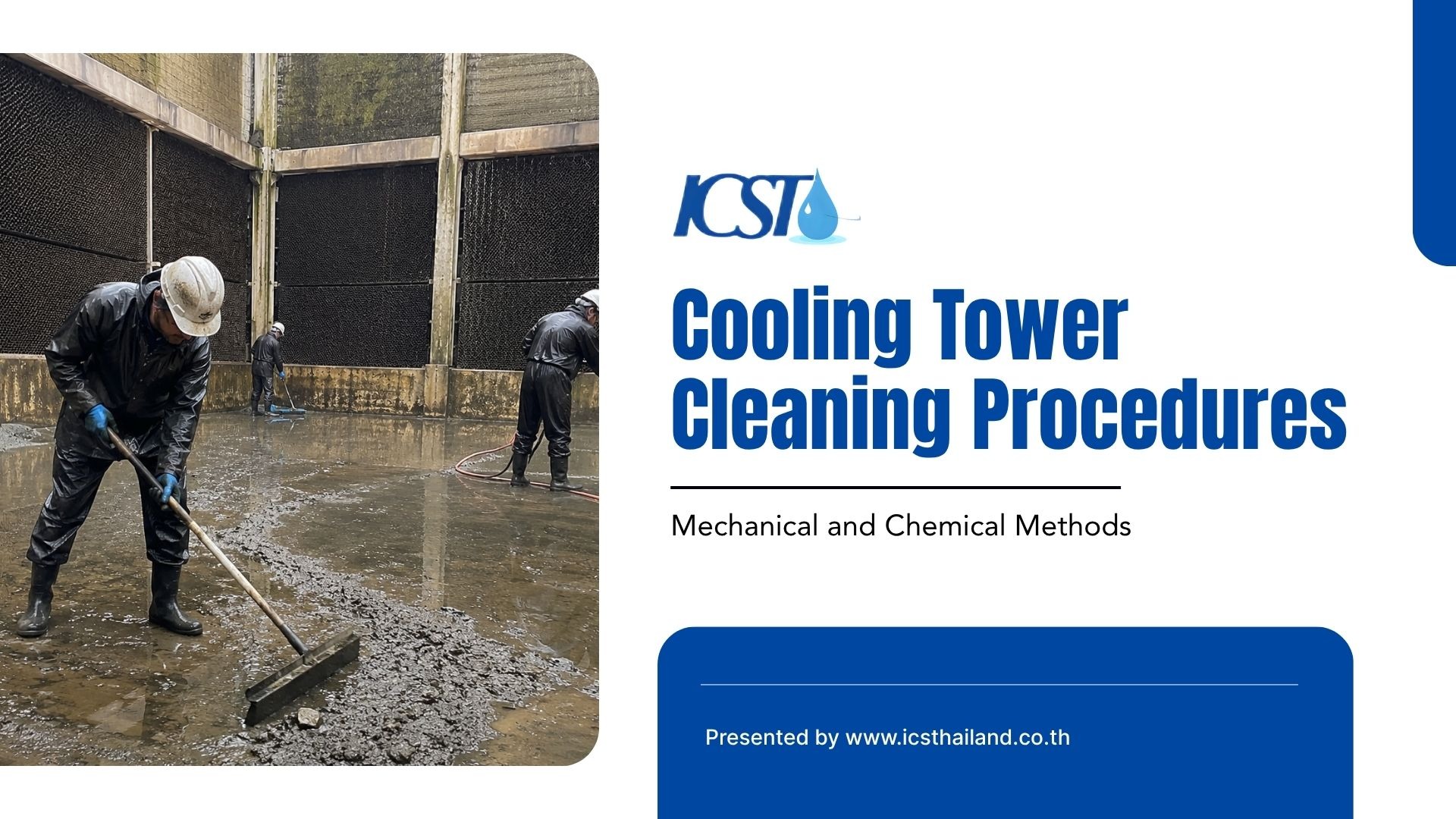
Proper cooling tower cleaning procedures combine both mechanical and chemical cleaning methods to remove scale, biofilm, sludge, algae, corrosion deposits, and microbiological contamination from the cooling system. Mechanical cleaning focuses on physically removing debris through methods like high-pressure jetting, vacuum cleaning, and manual scraping.
Chemical cleaning dissolves mineral scale and biological fouling using acids, dispersants, and biocidal shock treatments. A complete cleaning process also includes safe chemical disposal, post-cleaning inspection, water quality verification, and operational testing to restore thermal efficiency, reduce Legionella risk, and extend equipment lifespan.
Why Cooling Tower Cleaning Is Critical for System Performance
Cooling towers operate in harsh environments where warm water, airborne contaminants, and continuous evaporation create ideal conditions for fouling and contamination.
Without proper cooling tower cleaning procedures, these contaminants will build up over time, reducing cooling capacity and increasing operational costs.
How Fouling Reduces Cooling Efficiency
Fouling acts as an insulating barrier between process water and airflow. Even thin layers of scale or biofilm significantly reduce thermal transfer efficiency. Dirty fill media restricts airflow, increases fan static pressure, and raises approach temperatures.
As fouling worsens, operators experience:
- Higher condenser water temperatures
- Increased fan and pump energy consumption
- Reduced heat exchanger efficiency
- Increased chiller load
- Rising operational costs
Proper cooling tower cleaning procedures restore airflow and heat transfer surfaces, allowing the system to return to its designed thermal performance.
Operational Risks of Poor Cleaning Practices
Neglected cooling towers create multiple mechanical and operational problems. Sediment accumulates in cold-water basins, clogging strainers and restricting pump suction. Scale deposits narrow piping diameters and reduce nozzle spray efficiency.
Dirty systems commonly experience:
- Fill media collapse
- Pump cavitation
- Drift eliminator blockage
- Corrosion acceleration
- Reduced water distribution efficiency
- Mechanical vibration issues
Industrial facilities cannot maintain stable cooling performance without routine cleaning and inspection programs.
Legionella and Health Compliance Concerns
Cooling towers are one of the most common sources of Legionella bacteria outbreaks. Warm recirculating water and biological slime create ideal breeding conditions for harmful microorganisms.
Improperly maintained towers can aerosolize contaminated water droplets into surrounding areas, creating serious public health risks.
Modern cooling tower cleaning procedures include aggressive biocidal shock treatment to eliminate bacteria, algae, fungi, and biofilm colonies before system restart.
Types of Contamination Found Inside Cooling Towers
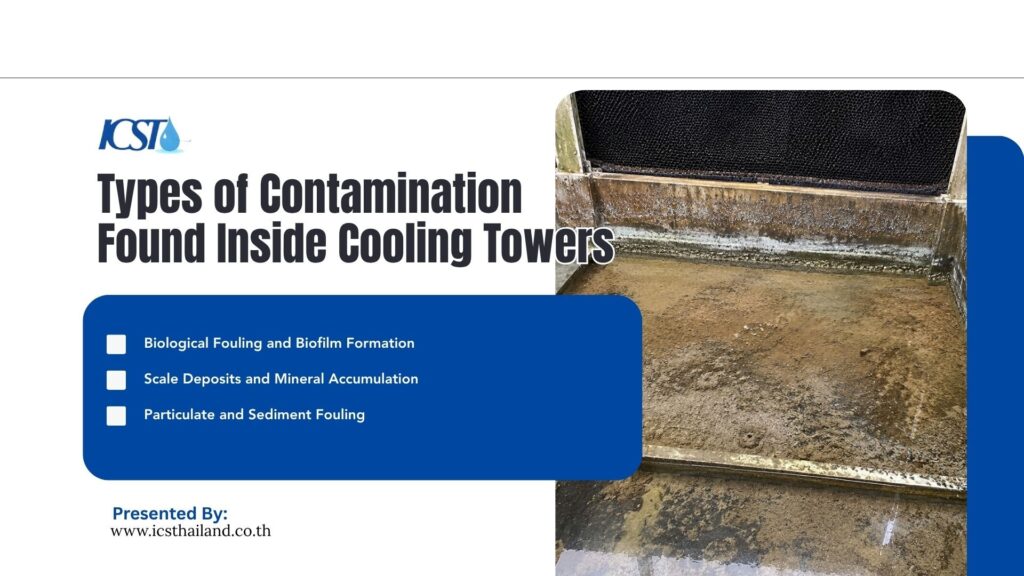
Biological Fouling and Biofilm Formation
Bacteria, algae, and fungi form thick organic layers called biofilm on wet surfaces. This slime insulates heat transfer surfaces, significantly reducing cooling efficiency.
Because biofilm protects harmful microorganisms from standard disinfectants, effective cooling tower cleaning procedures are essential to remove it completely.
Scale Deposits and Mineral Accumulation
Evaporation concentrates dissolved minerals inside the cooling system. Calcium carbonate, silica, magnesium, and sulfate compounds eventually precipitate onto heat transfer surfaces.
Hard scale deposits:
- Restrict water flow
- Increase thermal resistance
- Raise system pressure drop
- Reduce cooling efficiency
This is why many cooling tower cleaning procedures include specialized acid cleaning methods for mineral removal.
Particulate and Sediment Fouling
Airborne dirt and dust constantly enter the system through the air intake. Process contaminants and suspended solids settle in the low-velocity areas. Rust flakes drop from structural components into the cold-water basin. Fill packs trap these particles, which reduces the effective cooling surface area.
Pre-Cleaning Shutdown and Safety Procedures
System Isolation and Lockout/Tagout (LOTO)
As part of the cooling tower cleaning procedures, technicians must first isolate electrical systems before entering the tower. Proper lockout/tagout measures prevent accidental fan startup and pump activation during cleaning operations.
Critical isolation points include:
- Fan motors
- Pumps
- Chemical feed systems
- Electrical panels
- Automatic control systems
Draining the Cooling Tower Basin
Proper draining prepares the basin for thorough sludge removal. Operators must open drain valves and allow water to exit completely. Environmental containment measures prevent contaminated water from reaching storm drains. A dry basin allows technicians to assess the required cleaning effort accurately.
Personal Protective Equipment (PPE) Requirements
Workers must wear chemical-resistant gloves and protective coveralls. Respirators prevent the inhalation of dangerous aerosols and chemical fumes. Required PPE includes:
- Chemical-resistant gloves
- Respirators
- Safety goggles
- Waterproof suits
- Fall protection harnesses
- Hearing protection during high-pressure jetting
Pre-Cleaning Inspection Checklist
A visual inspection is a critical first step in our cooling tower cleaning procedures, helping technicians identify specific problem areas before they begin. Key areas to check include:
- Fill media, drift eliminators, and water distribution nozzles: Evaluate for any blockages or damage.
- Gearbox components and fan blades: Examine carefully for signs of wear or damage.
- Structural supports: Inspect to ensure there is no significant deterioration.
Mechanical Cooling Tower Cleaning Procedures
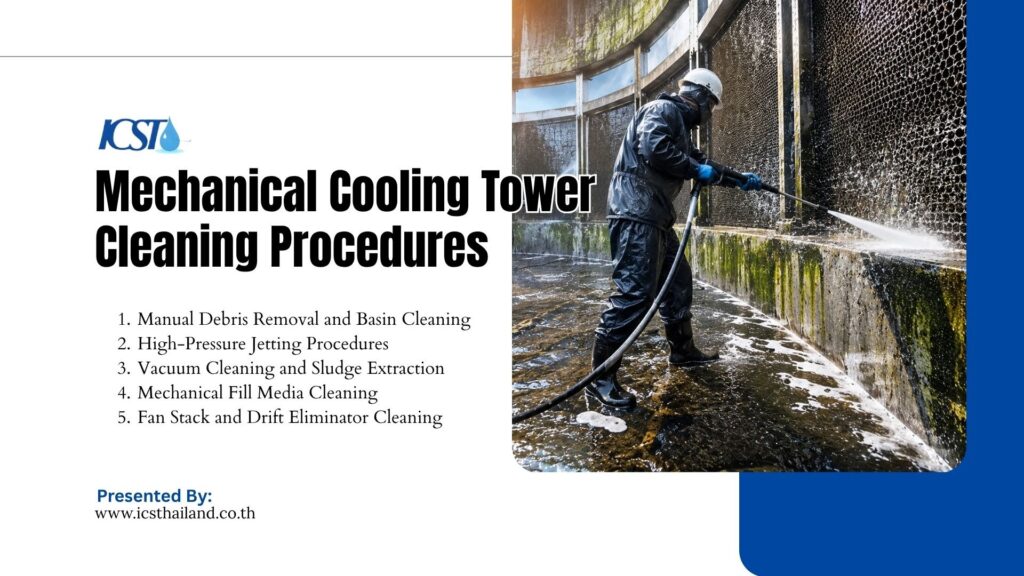
Manual Debris Removal and Basin Cleaning
Workers manually extract leaves, sludge, mud, and sediment from cold-water basins. Shovels and scrapers dislodge heavy accumulations effectively. Physical removal prevents debris from entering the pump suction line.
High-Pressure Jetting Procedures
High-pressure jetting is one of the most effective mechanical cleaning methods for cooling towers. Pressurized water removes hardened deposits from fill media, piping, and structural surfaces.
Typical jetting pressures range between 2,000 and 5,000 PSI, depending on material sensitivity.
Technicians use specialized nozzles to:
- Remove scale buildup
- Clean clogged nozzles
- Restore airflow passages
- Remove biological slime
Older PVC fill requires careful pressure control to prevent structural damage.
Vacuum Cleaning and Sludge Extraction
Industrial vacuum systems remove suspended solids and soft sludge without spreading contaminants throughout the tower.
Vacuum extraction is particularly effective for:
- Basin sediment
- Biological sludge
- Cooling tower debris
- Fine particulate contamination
Mechanical Fill Media Cleaning
Splash fill and film fill systems require different cleaning approaches. Technicians gently wash film packs to maintain their structural integrity. Older PVC fill remains highly fragile and breaks easily under mechanical stress. Careful handling extends the life of these critical internal components.
Fan Stack and Drift Eliminator Cleaning
Fan cylinders and louvers collect significant amounts of airborne dirt. Drift eliminators trap moisture and particulates before air exits the tower. Cleaning these sections restores proper air intake and exhaust flow. Restricted airflow drastically reduces the total cooling capacity.
Chemical Cleaning Methods for Cooling Towers
Acid Cleaning for Scale Removal
Acid cleaning procedures dissolve severe calcium carbonate scale effectively. Technicians circulate inhibited hydrochloric acid, sulfamic acid, or citric acid through the system. Circulation cleaning requires constant pH monitoring to prevent metal damage.
Common Acids Used in Cooling Tower Cleaning
Understanding acid properties helps engineers choose the right chemical. Select the appropriate acid based on scale composition and system metallurgy. Here is a comparison of common acids used in the industry.
| Acid Type | Cleaning Strength | Corrosion Risk | Application Suitability | Neutralization Method |
| Hydrochloric Acid | Very High | High | Heavy calcium carbonate scale | Sodium Hydroxide |
| Sulfamic Acid | Moderate | Medium | General maintenance descaling | Soda Ash |
| Citric Acid | Low | Low | Stainless steel and mild scale | Sodium Bicarbonate |
| Phosphoric Acid | Moderate | Medium | Iron oxide and light scale | Caustic Soda |
| Formic Acid | High | Medium | Organic scale deposits | Dilute Base Solutions |
Acid Cleaning Safety Precautions
Professional cooling tower cleaning procedures require strict acid handling protocols to prevent accidents and equipment damage. Following these safety measures is crucial for a safe and effective cleaning process.
Technicians must:
- Use corrosion inhibitors
- Maintain ventilation
- Neutralize spent acid
- Monitor pH continuously
- Prevent chemical overexposure
Improper acid handling creates severe safety and equipment risks.
Biocidal Shock Treatment Procedures
Biocidal shock dosing eliminates bacteria, algae, and Legionella colonies entirely. Technicians apply this treatment before and after the physical cleaning phase. Shocking the system ensures complete eradication of dangerous pathogens.
Oxidizing vs Non-Oxidizing Biocides
Chlorine and bromine act as powerful oxidizing agents. Isothiazolin and glutaraldehyde serve as highly effective non-oxidizing alternatives. Alternating these chemicals prevents bacteria from developing targeted resistance.
Shock Dosing Concentration Guidelines
Operators strictly monitor Oxidation-Reduction Potential (ORP) during treatment. Sufficient contact time guarantees complete microbial destruction. Safe concentration ranges protect the structural integrity of the tower.
Chemical Descaling and Dispersant Cleaning
Dispersants and surfactants break down organic binders in the sludge. Chelating agents capture metal ions to prevent them from redepositing. Sludge suspension chemicals keep particles floating for easy removal. These agents drastically improve the efficiency of the entire wash cycle.
Step-by-Step Cooling Tower Cleaning Procedure
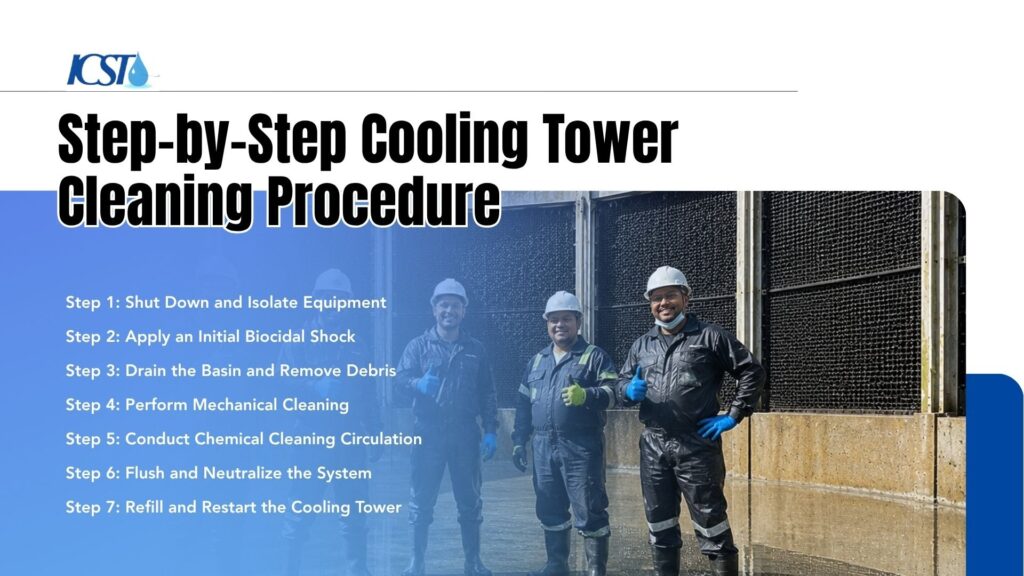
Step 1: Shut Down and Isolate Equipment
First, execute a safe system shutdown. Apply strict lockout tags to all energy sources to prevent accidental startups. Then, close the isolation valves to completely separate the tower from the main cooling loop. This crucial first step ensures the safety of the entire cleaning crew.
Step 2: Apply an Initial Biocidal Shock
Before opening the tower, apply a pre-clean disinfection to neutralize harmful bacteria like Legionella. This protects workers from exposure to dangerous biological aerosols during the cleaning process. Ensure the biocide circulates thoroughly through the entire system for maximum effectiveness.
Step 3: Drain the Basin and Remove Debris
Next, drain all the water from the tower basin. Manually remove all visible sediment and sludge. A complete sludge extraction is necessary to clear the basin, which provides a safe, clean working surface for the next steps.
Step 4: Perform Mechanical Cleaning
Now it’s time for the heavy lifting. Use high-pressure jets, brushes, and vacuums to clean all internal surfaces, paying special attention to the fill media, which is the primary heat transfer area. This mechanical action dislodges the bulk of the fouling material and is the most physically demanding part of the job.
Step 5: Conduct Chemical Cleaning Circulation
To dissolve any remaining mineral scale that mechanical cleaning couldn’t remove, circulate an acid solution through the system. You must constantly monitor the pH to protect the system’s metallurgy from corrosion. The duration of this step depends on the thickness of the scale.
Step 6: Flush and Neutralize the System
Thoroughly flush the system to push out all chemical residues. Use neutralizing agents to stabilize the water’s pH, bringing it back to a safe, neutral level. A complete rinse with clean water ensures no harmful chemicals are left behind.
Step 7: Refill and Restart the Cooling Tower
Before restarting, perform startup checks to verify that all components are functioning correctly. Once confirmed, refill the basin with fresh makeup water. Finally, conduct an operational verification to confirm that the system runs flawlessly and is ready to return to service.
Post-Cleaning Testing and Verification Procedures
Water Quality Testing After Cleaning
Following the cooling tower cleaning procedures, it’s crucial to verify the water quality. Conductivity and pH meters are used to measure the baseline water chemistry. Microbiological testing ensures no pathogens survived the shock treatment, and a suspended solids analysis confirms the flushing process worked perfectly.
Thermal Performance Verification
Engineers check the approach temperature and cooling range. Cooling efficiency restoration proves the maintenance was successful. Data logs record the performance improvement accurately.
Airflow and Fan Performance Checks
Technicians measure fan vibration and motor amperage directly. Airflow measurement confirms the fan pack operates without restriction. Drift inspection verifies that no excessive water loss occurs.
Visual Inspection After Cleaning
Inspectors look closely for residual scale or chemical residue. Corrosion exposure requires immediate protective coating application. Damaged components identified during this step demand swift replacement.
Cooling Tower Cleaning Frequency Recommendations
Operating conditions dictate how often facilities perform maintenance. Plant engineers adjust their cooling tower cleaning procedures and schedules based on environmental factors and regular monitoring to prevent unexpected performance drops.
| System Condition | Recommended Cleaning Frequency | Engineering Insight |
| Clean HVAC Systems | Every 6–12 months | Lower contamination loading limits fouling |
| Industrial Process Towers | Every 3–6 months | Higher fouling rates demand frequent care |
| High Dust Environments | Quarterly inspections | Increased particulate fouling blocks airflow |
| Legionella Risk Systems | Frequent microbiological cleaning | Health compliance priority dictates schedule |
| High Hardness Water Systems | Frequent descaling intervals | Higher scaling potential reduces efficiency |
Signs Your Cooling Tower Requires Immediate Cleaning
- Increased approach temperature: A decline in thermal performance is a key sign of fouling. If the system struggles to cool water effectively, you might notice the approach temperature metric steadily climbing over several weeks.
- Visible algae or slime: Visible signs of microbiological contamination, such as green or brown slime on the water’s surface or coating wetted areas, signal the need for immediate biocide intervention.
- Higher energy consumption: Fouling puts more strain on fans and pumps. If you notice motors drawing more power or a rise in energy bills, it could be because the system is working harder to move air and water through blockages.
- Foul odors or discolored water: Unpleasant smells around the equipment or dark, cloudy water can indicate biological contamination or a heavy load of sediment and organic material.
Conclusion
Effective cooling tower cleaning procedures integrate mechanical force with precise chemical application. Plant engineers successfully restore thermal efficiency by combining manual extraction, acid cleaning, and high-pressure jetting. Facilities eliminate microbiological risks permanently through scheduled biocidal shock treatments.
Proper chemical disposal and rigorous post-cleaning testing ensure environmental compliance and safe operation. Following these strict protocols guarantees maximum equipment lifespan and exceptional system reliability.
For expert cooling tower cleaning services, repairs, or high-quality parts, visit the ICST website today.
Frequently Asked Questions
How often should cooling towers be cleaned?
Most guidelines recommend cleaning every six to twelve months. However, towers in high-dust environments may need quarterly cleaning, and local health regulations can also dictate the specific schedule.
What is the purpose of biocidal shock treatment?
Biocidal shock treatment uses a high dose of chemicals to aggressively control bacteria like Legionella. This process strips away protective biofilms and resets the biological baseline of the water system.
Is acid cleaning safe for all cooling towers?
Acid cleaning is safe when performed by professionals who use targeted corrosion inhibitors. The specific chemicals used depend on the tower’s materials to prevent damage to metal surfaces.
What is high pressure jetting in cooling tower cleaning?
High pressure jetting uses water streams from 500 to 2,000 PSI to mechanically remove scale and debris. Technicians adjust the pressure to protect more fragile components like PVC fill.
Why is post-cleaning testing so important?
Post-cleaning testing verifies that all harmful pathogens have been removed and confirms that the cleaning chemicals have not compromised the system’s water chemistry, ensuring a safe operational restart.
What are the main steps in cooling tower cleaning?
The main steps involve mechanical cleaning to remove sludge, chemical cleaning (like acid washing) to dissolve scale, high-pressure jetting for tough deposits, and biocidal treatment to eliminate microbiological threats.