Explore ICST’s blog for expert insights and latest trends in industrial cooling solutions. Stay updated and optimize your plant’s performance today.
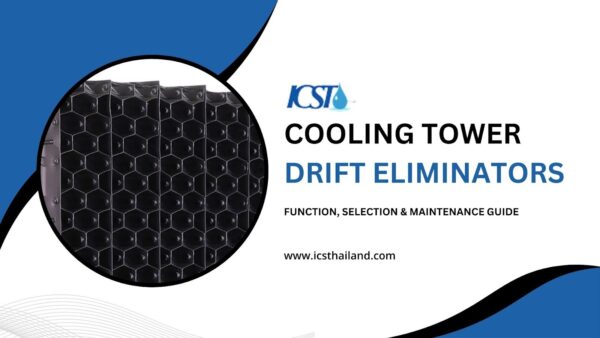
Cooling tower drift represents more than just water loss; it signifies energy waste, safety risks, compliance issues, and increased maintenance costs. Facility managers rely on cooling tower drift eliminators to serve as the primary defense against escaping moisture and chemicals. These critical components function as a sophisticated mist eliminator, protecting system integrity while ensuring compliance…
Is your operation ready for the new era of efficiency? As regulations evolve, the difference between leading facilities and lagging competitors often lies in a single, overlooked element: cooling tower fill media. This essential component is the driving force behind cooling efficiency, directly affecting your bottom line through energy savings and water conservation. With 2026…
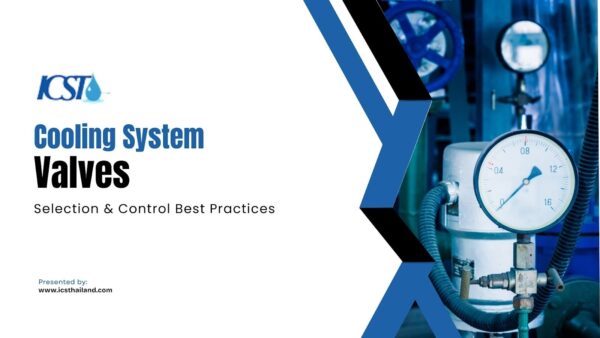
Efficient cooling systems don’t just happen; they rely on precise control at every step. At the heart of this process are cooling system valves, the unsung heroes that regulate flow and ensure your chillers and cooling towers perform at their best. Think of them as the gatekeepers of efficiency, keeping energy waste in check and…
Effective cooling tower water distribution is vital for maximizing thermal performance in today’s high-demand environments. As industries face rising heat loads from sources like AI data centers and advanced manufacturing, the need for precise distribution systems grows. Uniform water flow over the fill media ensures optimal air-to-water contact, which is essential for efficient heat transfer.…
The industrial landscape shifts constantly. The year 2026 marks a pivotal turning point for facility management. The practice of “safe over-sizing” has come to an end. Engineers once selected pumps far larger than necessary to ensure safety. Today, this practice represents a financial liability. Rising energy costs and strict Power Usage Effectiveness (PUE) mandates make…
Heat management is the silent workhorse of modern industry. From keeping massive turbines cool to pasteurizing the milk in your fridge, thermal regulation is critical for safety, efficiency, and product quality. At the heart of this process lies the industrial heat exchangers, a device that transfers heat between two or more fluids without mixing them.…
Industrial facilities rely on precise temperature control to maintain peak productivity and equipment integrity. From sprawling power plants to specialized manufacturing floors, operational efficiency hinges on the reliability of specific cooling system components. Understanding how these critical elements, such as various cooling tower parts, high-performance heat exchangers, and heavy-duty cooling pumps, interact is essential for…
Selecting the right cooling tower system is crucial for any facility aiming to maintain peak efficiency and reduce operating costs. With ever-tightening industrial requirements in 2026 and beyond, understanding the merits of each technology can make or break your long-term success. Are you deciding between a natural draft cooling tower and a mechanical alternative? You…
As energy costs rise and environmental regulations tighten, the industrial sector is under immense pressure to find sustainable cooling solutions. Traditional mechanical cooling methods, while effective, often consume excessive electricity and struggle to meet modern efficiency standards. This is where adiabatic cooling enters the conversation as a powerful alternative. This technology bridges the gap between…
For high-density computing and sensitive manufacturing, traditional open cooling systems present significant risks. The standards for 2026 demand greater precision and protection. Indirect cooling systems, specifically closed circuit cooling towers, are becoming the new benchmark for industries that cannot afford contamination or downtime. These systems deliver innovative, financially sound cooling solutions that shield your critical…