Explore ICST’s blog for expert insights and latest trends in industrial cooling solutions. Stay updated and optimize your plant’s performance today.
In 2026, procurement managers face a critical decision in local vs international cooling suppliers—balancing the speed and agility of local cooling vendors against the engineering depth, compliance, and reliability of international cooling brands. This ongoing trade-off continues to shape modern industrial cooling and HVAC procurement strategies. Global sourcing trends are shifting. We see a strong…
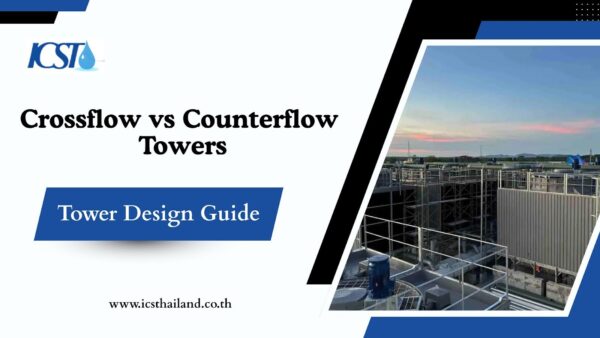
Ever wondered how massive industrial and HVAC systems manage to stay cool under pressure? Or why do some cooling towers perform better and last longer than others? Cooling towers are the unsung heroes of temperature regulation, but for facility managers and engineers, choosing the right one is more than just a technical decision—it can affect…
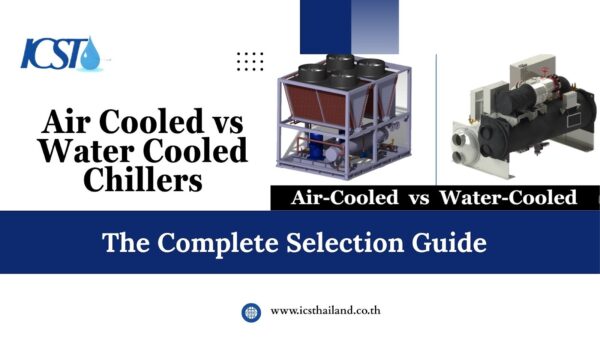
Industrial cooling systems represent a significant capital investment and a long-term operational commitment. Choosing the correct equipment impacts your facility’s energy bills, maintenance schedules, and overall reliability for decades. This guide assists engineers and facility managers in navigating the complex decision of air cooled vs water cooled chillers to ensure optimal system performance. What Is…
Understanding Natural Draft vs Mechanical Draft Cooling is one of the most critical decisions in industrial heat rejection system design. This choice determines operational efficiency, energy consumption, and capital investment requirements for decades of facility operation. The Natural Draft vs Mechanical Draft Cooling comparison centers on airflow generation. Natural draft uses buoyancy through hyperbolic tower…
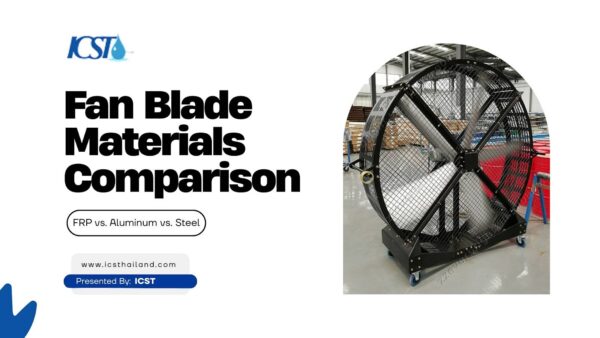
A thorough fan blade materials comparison is essential because the fan blade serves as the engine of your cooling system. It is the component that dictates both power consumption and thermal performance. The physics of airflow are clear: an efficient blade moves more air with less energy. However, the material used to construct that blade…
Cooling systems serve as the operational heart of many industrial facilities. When these systems fail, the consequences ripple outward immediately, threatening production timelines, environmental safety, and human health. An effective strategy for cooling system crisis communication determines whether a facility recovers quickly or faces long-term reputational and financial damage. This guide provides a comprehensive blueprint…
A single point of failure often destroys operational uptime. In many industrial facilities, a municipal water main break acts as that critical failure point. While engineers frequently design electrical redundancy with generators and UPS systems, they often overlook the essential need for cooling tower emergency water solutions. This oversight creates a dangerous gap. In high-density…
Industrial cooling systems are the circulatory system of many manufacturing and processing facilities. When they fail, the impact is immediate and severe. Production halts, expensive machinery risks overheating, and safety hazards spike. In these high-pressure moments, panic is the enemy and protocol is the solution. This guide outlines a structured approach to cooling system emergency…
In the modern industrial landscape, a Cooling System Business Continuity is far more than a simple utility. It serves as the operational backbone for data centers, pharmaceutical manufacturing, and heavy industry. When power fails, backup generators often engage immediately. However, if the cooling infrastructure falters, the timeline for disaster accelerates rapidly. Research indicates that high-density…
In mission-critical sectors like data centers, hospitals, and heavy industry, a cooling failure is not a minor inconvenience. It is a catastrophic event. The mandate for resilience is clear: backup cooling systems are no longer an optional upgrade but a fundamental requirement for operational continuity. The financial impact of downtime can be staggering. Defining the…